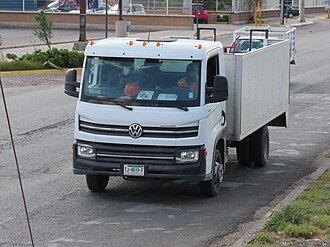
Volkswagen Delivery: The Compact Truck Family Built for Modern Urban Freight
The Volkswagen Delivery is one of the best-known light and medium-duty truck families developed by Volkswagen Caminhões e Ônibus, particularly in the Latin American market. Designed around the realities of urban distribution, regional freight and vocational transportation, the Delivery has built its reputation by combining truck-like durability with dimensions and driving characteristics that make it practical in increasingly crowded cities. Unlike heavy highway tractors designed to spend most of their working lives pulling large trailers, Delivery trucks are intended to spend their days making deliveries, navigating narrow streets, stopping frequently and carrying a wide variety of bodies and cargo. This makes maneuverability, visibility, payload efficiency and ease of operation just as important as engine power.
The Delivery name covers a broad range of vehicles rather than one single specification. Depending on the market and generation, the family has included compact models suitable for urban delivery as well as larger versions capable of handling significantly heavier loads. Volkswagen’s current Brazilian range includes models such as the Delivery 9.180, 11.180, 13.180, 17.210 and 17.210 4×4, while the broader Delivery family has also evolved to include alternative-fuel and electric variants. This diversity is one of the reasons the name has remained relevant: an operator can choose a Delivery according to payload, route, terrain and body requirements instead of adopting a one-size-fits-all truck.
The Origins of the Volkswagen Delivery
A Truck Designed Around Urban Distribution
The fundamental idea behind the Delivery family was relatively straightforward: create a truck that could perform the work required by commercial operators without becoming unnecessarily large or cumbersome. Urban freight has its own unique demands. A vehicle may need to enter narrow streets, make repeated stops, reverse into loading areas, operate close to pedestrians and other vehicles, and spend considerable portions of its working day accelerating and braking. A conventional heavy-duty truck can accomplish these tasks, but its dimensions and operating costs may make it inefficient.
Volkswagen therefore approached the Delivery as a purpose-built commercial tool. Compact external dimensions were combined with a cab designed to give the driver good visibility and relatively easy access. The result was a vehicle that retained the visual and structural characteristics of a proper truck while remaining much easier to use in dense urban environments.
This approach proved particularly relevant in Brazil, where distribution networks often combine major highways with crowded urban areas and smaller regional roads. A truck delivering food, beverages, parcels, building materials or retail goods may have to travel long distances between cities before spending hours navigating local streets. A vehicle optimized exclusively for either highway or city operation would not necessarily be ideal for this mixed duty cycle.
Evolution Through Several Generations
The Delivery concept has evolved considerably over time. Earlier generations established the basic identity of a compact Volkswagen commercial truck, while later versions introduced new engines, improved cabins, stronger chassis configurations and more sophisticated safety and emissions technology.
The family has also adapted to changes in the freight industry. Operators increasingly demand lower fuel consumption, greater driver comfort, improved safety and connectivity, while cities are placing greater emphasis on emissions and noise. These pressures have encouraged Volkswagen to expand the Delivery concept beyond conventional diesel propulsion and into electric vehicles.
The result is a truck family that combines a recognizable name with a continually changing technical foundation. The basic mission remains the same—efficient goods transportation—but the engineering used to achieve that mission has become increasingly sophisticated.
Design and Cab
Compact Dimensions With a Truck-Style Structure
One of the defining characteristics of the Delivery is its compact cab-over-engine configuration. Placing the cab above the front axle helps reduce the overall length of the truck while maximizing the available space for cargo. This is particularly useful in cities, where every additional centimeter of vehicle length can make turning, parking and loading more difficult.
The cab-over layout also provides the driver with a commanding view of the surrounding environment. In urban distribution, visibility is extremely important because the driver must constantly monitor traffic, cyclists, pedestrians, parked vehicles and loading areas. A truck that is easier to position accurately can save time on every delivery and reduce the stress associated with repeated maneuvering.
Access is another important consideration. Delivery drivers can enter and leave their vehicles many times during a working shift, so a cab designed around frequent access is more useful than a tall, difficult-to-enter heavy truck. This seemingly simple characteristic can have a major effect on productivity over the course of a year.
An Interior Designed for Daily Work
The interior of a Delivery is fundamentally a workplace. While luxury is not the primary objective, modern versions place greater emphasis on ergonomics, storage, seating and driver comfort. Controls are positioned so that frequently used functions can be accessed without excessive movement, while the driving position is intended to provide good visibility over the road and vehicle body.
This is particularly important because urban truck drivers may spend hours behind the wheel even when their average speed is relatively low. Frequent stops and starts can make city driving more tiring than steady highway cruising. Good seating, accessible controls and effective visibility can therefore contribute directly to driver productivity.
Engines and Performance
Diesel Power for Conventional Delivery Models
The diesel-powered Delivery range has traditionally emphasized relatively small-displacement engines capable of producing useful torque without excessive fuel consumption. Depending on the model and generation, engines have included Volkswagen’s own powerplants as well as MAN and Cummins units.
Current examples such as the Delivery 9.180 and 11.180 use the Cummins ISF 3.8 engine in the Brazilian market, producing around 175 horsepower and 600 Nm of torque. Larger models increase engine output to suit their greater gross vehicle weights and heavier operating cycles. The Delivery 17.210, for example, uses a 4.6-liter MAN D08 engine producing approximately 207 horsepower and 750 Nm of torque.
These figures may appear modest when compared with a 500-horsepower highway tractor, but that comparison misses the purpose of the Delivery. Urban distribution does not generally require enormous engine output. Instead, the ideal engine must provide sufficient torque for a loaded vehicle while remaining economical during repeated acceleration, stopping and low-speed operation.
The Importance of Torque
For a delivery truck, torque is particularly important because the vehicle frequently starts from rest while carrying a substantial load. A supermarket distribution truck, for example, may leave a warehouse fully loaded and then spend the next several hours stopping at multiple locations. Each restart requires the engine to overcome the inertia of the truck and its cargo.
A well-matched diesel engine can provide the necessary low- and mid-range torque without requiring excessive engine speed. Combined with an appropriate transmission and axle ratio, this creates a truck that feels responsive in normal working conditions while maintaining reasonable operating costs.
Transmission and Drivability
Manual and Automated Solutions
The Delivery family has used manual transmissions extensively, although modern commercial vehicle development has increasingly introduced automated transmission options. The exact gearbox depends on the model and market, but the underlying objective remains the same: match the engine’s torque curve to the vehicle’s operating requirements.
Manual transmissions can be attractive to operators because of their mechanical familiarity and potentially lower acquisition or maintenance costs. They also allow experienced drivers to select gears according to traffic and load conditions.
Automated transmissions, on the other hand, can reduce driver workload and make operation more consistent. In urban distribution, where a driver may perform hundreds of gear changes during a working day, automation can make the job considerably less tiring. The transmission can select gears according to engine speed, vehicle load and road conditions while allowing the driver to concentrate more closely on traffic and maneuvering.
Payload and Body Configurations
A Platform for Many Types of Freight
A truck chassis is only half of the transportation solution. The body mounted behind the cab determines what the vehicle can actually do, and the Delivery has been designed to accommodate a wide range of body types.
Common applications include dry freight boxes, refrigerated bodies, beverage bodies, curtainsiders, flatbeds, dropsides and specialized vocational equipment. This flexibility is crucial because urban freight is extremely diverse. A parcel company needs a different body from a bakery, while a construction supplier may require a completely different chassis arrangement.
The Delivery’s compact dimensions also make it attractive for applications where cargo volume is important but the available operating space is limited. A well-designed urban distribution truck can carry a useful amount of freight without occupying the road space associated with a much larger heavy-duty vehicle.
Matching Payload to the Chassis
Different Delivery models are designed for different gross vehicle weights, which means operators can select a truck according to the actual load requirements of the business. Choosing a vehicle that is too large can increase acquisition, fuel and maintenance costs, while selecting a truck that is too small can lead to overloading or insufficient cargo capacity.
This is why the breadth of the Delivery range matters. A small operator making local deliveries may find a compact 9-tonne-class truck ideal, while a larger regional distributor can move into a 13- or 17-tonne model without abandoning the Delivery platform.
The Delivery in Urban Logistics
Why Compact Trucks Matter
The growth of e-commerce has made urban delivery increasingly important. Consumers expect goods to arrive quickly, and retailers need frequent replenishment of stores and distribution points. At the same time, city streets have become more congested and restrictions on vehicle size, emissions and operating hours have become increasingly common.
A compact truck such as the Delivery can be particularly useful in this environment because it combines commercial payload capacity with relatively easy maneuverability. It can access areas that may be inconvenient for a full-size tractor-trailer combination while still carrying significantly more freight than a conventional van.
This middle ground is one of the truck’s greatest strengths. It occupies the space between light commercial vans and heavy trucks, providing a useful compromise for businesses whose cargo requirements exceed van capacity but do not justify a much larger vehicle.
The Volkswagen e-Delivery
Moving the Family Into Electric Transportation
One of the most important developments in the history of the Delivery name is Volkswagen’s move into electric propulsion. The Volkswagen e-Delivery extends the compact-truck concept into zero-tailpipe-emission urban transportation and is particularly relevant to distribution companies operating in cities with increasingly strict environmental requirements.
The e-Delivery was developed with urban applications in mind, where predictable routes and frequent stops can make battery-electric vehicles particularly practical. Electric drivetrains offer immediate torque, which is useful for a loaded truck repeatedly accelerating from low speeds. They can also reduce local noise and eliminate tailpipe emissions during operation.
Volkswagen Caminhões e Ônibus has offered different e-Delivery configurations, including versions around 11 and 17 tonnes. The precise range and battery specification depend on the particular model and operating configuration, but the basic philosophy is consistent: use electrification where predictable urban freight routes make it possible to replace conventional diesel operation.
Why Electric Delivery Trucks Make Sense
Urban freight is one of the areas where electric trucks can offer meaningful operational advantages. A delivery vehicle often returns to a depot at the end of the day, making centralized charging considerably easier than for long-haul trucks that may spend several days away from their base.
The stop-and-go nature of city driving can also favor electric propulsion. Regenerative braking allows some kinetic energy to be recovered whenever the vehicle slows down, improving overall energy efficiency. Instant electric motor torque also makes smooth launches possible without the need for conventional multi-speed gear changes.
For fleet operators, the transition to electric trucks is ultimately a question of route requirements, charging infrastructure, acquisition cost and total operating cost. The e-Delivery demonstrates that Volkswagen sees urban freight as one of the most practical starting points for commercial vehicle electrification.
Safety and Technology
Modern Expectations for Commercial Trucks
Today’s delivery trucks are expected to provide considerably more than basic transportation. Safety systems, electronic controls, connectivity and driver-assistance technology are increasingly important components of fleet vehicles.
Modern Delivery models incorporate improvements in braking systems, electronic management and driver ergonomics, while newer generations are designed to comply with increasingly demanding emissions and safety requirements. Depending on the model and equipment package, available technology can include electronic stability-related systems, ABS, traction-related functions and other driver-support features.
The importance of these technologies becomes particularly clear in urban environments. A delivery truck operates around pedestrians, cyclists and smaller vehicles, often in congested conditions. Anything that helps the driver maintain control and awareness can provide a meaningful safety benefit.
Why the Volkswagen Delivery Remains Competitive
The enduring strength of the Delivery is that it solves a very specific transportation problem extremely well. It is not intended to replace every other type of truck. Instead, it provides a practical solution for businesses that need more cargo capacity and durability than a van but do not require the size and complexity of a heavy highway tractor.
Its compact cab-over design, range of payload capacities, flexible body configurations and evolving powertrain options make it adaptable to changing logistics requirements. The availability of diesel and electric models also means that the basic Delivery concept can remain relevant as transportation technology changes.
Perhaps most importantly, the truck has been developed around actual commercial use rather than simply around headline specifications. A delivery truck earns its value through thousands of small operational advantages: how easily the driver can enter the cab, how tightly the truck can turn, how much cargo it can carry, how efficiently it accelerates between stops and how reliably it returns to the depot every evening.
Volkswagen Delivery Technical Specifications
Because Delivery is a family of trucks rather than one individual model, specifications vary substantially by version, generation and market. The following table summarizes representative specifications for selected Brazilian-market models; exact figures should be checked against the specification sheet for the particular vehicle being considered.
| Specification | Delivery 9.180 | Delivery 11.180 | Delivery 13.180 | Delivery 17.210 |
|---|---|---|---|---|
| Typical application | Urban/regional distribution | Urban/regional distribution | Medium-duty freight | Heavy urban/regional freight |
| Wheel configuration | 4×2 | 4×2 | 4×2 | 4×2 |
| Engine | Cummins ISF 3.8 | Cummins ISF 3.8 | Cummins ISF 3.8 | MAN D08 |
| Displacement | Approx. 3.8 L | Approx. 3.8 L | Approx. 3.8 L | Approx. 4.6 L |
| Maximum power | Approx. 175 hp | Approx. 175 hp | Approx. 175 hp | Approx. 207 hp |
| Maximum torque | Approx. 600 Nm | Approx. 600 Nm | Approx. 600 Nm | Approx. 750 Nm |
| Transmission | Manual, model-dependent | Manual, model-dependent | Manual, model-dependent | Manual/automated, depending on version |
| Gross vehicle weight | Approx. 9,000 kg class | Approx. 11,000 kg class | Approx. 13,000 kg class | Approx. 17,000 kg class |
| Cab layout | Cab-over-engine | Cab-over-engine | Cab-over-engine | Cab-over-engine |
| Primary role | City delivery | Distribution | Regional freight | Heavy urban/regional freight |
| Alternative powertrain availability | Family-dependent | Family-dependent | Family-dependent | Electric equivalent available in family |
*Specifications can vary according to model year, market, chassis configuration, transmission, emissions specification and optional equipment.
Conclusion
The Volkswagen Delivery has succeeded because it understands that urban freight requires a different kind of truck from long-haul transportation. A vehicle that spends its day navigating city streets needs compact dimensions, excellent visibility, easy access, dependable mechanical systems and enough payload capacity to make each trip productive. The Delivery brings these requirements together in a package that sits naturally between the light-commercial van and the full-size heavy truck.
Its evolution has also demonstrated the flexibility of the original concept. Diesel engines have become cleaner and more efficient, chassis configurations have expanded, driver environments have improved and electric propulsion has been introduced for urban applications. Yet the central mission remains unchanged: move goods efficiently, reliably and safely through the environments where businesses actually need trucks to work.
From a small urban distribution vehicle to a heavier 17-tonne-class workhorse, the Delivery family represents Volkswagen’s answer to one of the most important challenges in commercial transportation: how to carry more cargo without making the vehicle unnecessarily difficult or expensive to operate. As cities become denser and freight demand continues to grow, that balance is likely to remain just as important in the future as it has been throughout the Delivery’s history.
