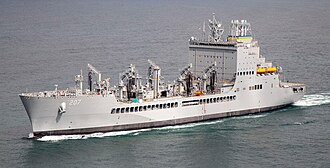
USNS Earl Warren (T-AO-207): Powering the Fleet Through the Next Generation of Naval Logistics
Modern naval warfare depends on far more than advanced warships, sophisticated aircraft, and highly trained sailors. Behind every aircraft carrier strike group, amphibious ready group, destroyer squadron, and independent deployment lies an extensive logistical network that ensures fuel, supplies, ammunition, food, spare parts, and essential equipment reach deployed forces wherever they operate. At the heart of this global support system are the replenishment ships operated by the United States Navy’s Military Sealift Command. Among the newest and most capable vessels joining this indispensable fleet is USNS Earl Warren (T-AO-207), a John Lewis-class fleet replenishment oiler designed to sustain American naval operations across every ocean of the world. Although these ships rarely receive the same public attention as aircraft carriers or guided missile destroyers, they represent one of the most critical elements of modern maritime strategy because no fleet can remain effective for extended periods without reliable logistical support.
USNS Earl Warren embodies the Navy’s continuing investment in operational endurance, global mobility, and expeditionary logistics. Rather than carrying missiles or fighter aircraft, the ship’s primary mission is to deliver fuel and essential supplies directly to naval vessels while both ships remain underway. This capability, known as underway replenishment, allows combat ships to remain on station for weeks or even months without returning to port for refueling. The strategic implications of this capability are enormous. It enables the United States Navy to maintain a continuous presence across vast maritime regions, rapidly respond to international crises, reassure allies, deter aggression, and project power far from American shores. Without ships such as USNS Earl Warren, even the world’s most advanced combat vessels would face severe operational limitations.
As one of the newest members of the John Lewis-class fleet oiler program, T-AO-207 incorporates modern engineering, improved fuel efficiency, enhanced survivability features, environmentally responsible technologies, and advanced cargo handling equipment. The ship continues a long tradition of naval replenishment vessels while introducing improvements intended to support the operational requirements of the twenty-first century. Designed to serve for decades, USNS Earl Warren will become an indispensable component of the Navy’s worldwide logistics enterprise, ensuring that combat forces remain supplied regardless of where future missions take them.
The Legacy Behind the Name Earl Warren
USNS Earl Warren honors one of the most influential public servants in American history. Earl Warren served as the 30th Governor of California before becoming the 14th Chief Justice of the United States, a position he held from 1953 until 1969. During his tenure as Chief Justice, Warren presided over numerous landmark Supreme Court decisions that significantly influenced American constitutional law, civil rights, criminal justice, and the interpretation of equal protection under the law. His leadership shaped generations of legal thought and left a lasting impact on American society that continues to be studied and debated by scholars, historians, and legal professionals.
Naming a John Lewis-class replenishment oiler after Earl Warren reflects the Navy’s broader practice of honoring distinguished American leaders whose public service contributed to the nation’s development. Unlike earlier generations of fleet oilers that frequently carried the names of rivers, the John Lewis class recognizes prominent civil rights leaders, public officials, and individuals whose contributions extended beyond military service. This naming convention emphasizes the idea that national strength depends upon both military readiness and the civic institutions that sustain democratic government.
The decision to commemorate Earl Warren aboard a Military Sealift Command vessel also symbolizes the essential but often understated nature of logistical support. Just as Warren’s influence was exercised through institutions rather than battlefield command, USNS Earl Warren strengthens American naval power by enabling combat forces rather than directly engaging enemy targets. Its mission illustrates that successful military operations depend not only upon combat capability but also upon careful planning, efficient logistics, and sustained operational support.
The Evolution of Fleet Replenishment
Throughout much of naval history, fleets were constrained by the availability of nearby ports where ships could replenish fuel, water, food, and ammunition. Sailing fleets depended upon favorable winds and regular access to coastal bases, while early steam-powered navies required frequent refueling stops that limited operational flexibility. During the twentieth century, however, advances in underway replenishment fundamentally transformed naval strategy. Rather than returning to port, combat ships could receive fuel and supplies directly from specially designed support vessels while remaining underway. This innovation dramatically increased operational endurance, allowing fleets to remain deployed across entire oceans for prolonged periods.
During World War II, underway replenishment proved essential to Allied victory across the Pacific. The enormous distances separating American bases from combat areas made continuous at-sea logistics indispensable. Fleet oilers, ammunition ships, supply vessels, and repair ships created a mobile logistical infrastructure that enabled aircraft carriers, battleships, cruisers, destroyers, submarines, and amphibious forces to conduct sustained operations thousands of miles from home ports. This concept continued throughout the Cold War and remains a cornerstone of American maritime strategy today.
Modern replenishment operations have become increasingly sophisticated. Today’s fleet oilers transfer not only fuel but also aviation fuel, lubricants, fresh water, provisions, packaged cargo, and other mission-critical supplies. Advanced pumping systems, computerized cargo management, precision navigation equipment, and improved replenishment stations allow transfers to occur efficiently even under challenging sea conditions. USNS Earl Warren represents the latest stage in this continuing evolution, combining decades of operational experience with modern engineering solutions designed to improve efficiency, safety, and reliability.
The John Lewis-Class Fleet Oiler Program
The John Lewis class was developed to replace the aging Henry J. Kaiser-class fleet replenishment oilers that had served the United States Navy for decades. While the Kaiser class provided exceptional logistical support throughout countless deployments, advances in environmental regulations, fuel efficiency, cargo handling technology, and survivability standards made a new generation of replenishment ships increasingly desirable. The Navy therefore initiated the John Lewis-class program to ensure that future carrier strike groups and expeditionary forces would continue receiving dependable logistical support well into the middle of the twenty-first century.
The new class emphasizes greater fuel capacity, improved cargo transfer capability, modern automation, enhanced damage control systems, and compliance with current environmental standards. Designers also incorporated lessons learned from decades of operational experience, seeking to reduce maintenance requirements while improving overall reliability. These improvements allow Military Sealift Command to operate a more capable and efficient logistics fleet capable of supporting increasingly sophisticated naval operations across multiple theaters simultaneously.
Construction of USNS Earl Warren
USNS Earl Warren is being constructed by General Dynamics NASSCO in San Diego, California, one of America’s premier builders of auxiliary naval vessels and commercial ships. The construction process demonstrates the remarkable complexity involved in creating a modern replenishment ship. Although the vessel lacks the missile launchers and radar arrays commonly associated with front-line combatants, it incorporates an extensive network of cargo handling equipment, pumping systems, fuel storage tanks, propulsion machinery, electrical generation systems, navigation technology, communications infrastructure, firefighting equipment, and environmental protection systems. Every component must function reliably because any failure during replenishment operations could affect multiple deployed warships.
Construction begins with modular fabrication techniques in which individual hull sections are assembled separately before final integration within the shipyard. This approach allows numerous teams to work simultaneously, improving efficiency while maintaining strict quality standards. Thousands of engineers, naval architects, welders, electricians, software specialists, pipefitters, machinists, and quality assurance inspectors contribute to every phase of the project. After structural assembly, technicians install complex piping systems capable of safely transporting millions of gallons of fuel, followed by cargo handling equipment, navigation systems, communications networks, and propulsion machinery. Extensive testing accompanies every stage of construction before the vessel eventually undergoes dockside evaluations and sea trials designed to verify performance under realistic operating conditions.
Design Philosophy and Engineering
Unlike warships optimized for combat, the design philosophy behind USNS Earl Warren focuses on endurance, reliability, cargo capacity, operational efficiency, and global sustainability. The ship is intended to spend extended periods supporting deployed naval forces across multiple oceans while requiring minimal maintenance interruptions. Engineers therefore emphasized robust propulsion systems, efficient fuel management, extensive redundancy, and simplified maintenance procedures throughout the vessel’s design. Automation reduces routine workload while allowing civilian mariners and embarked military personnel to manage complex replenishment operations safely and effectively.
Particular attention has also been devoted to environmental performance. Modern emissions control technologies, improved fuel efficiency, ballast water management systems, and pollution prevention measures help ensure compliance with contemporary international maritime regulations. These improvements reflect the Navy’s recognition that future logistical operations must balance military effectiveness with responsible environmental stewardship, particularly as replenishment ships routinely visit ports and operate in environmentally sensitive maritime regions around the world.
Propulsion and Operational Endurance
USNS Earl Warren employs a modern diesel-powered propulsion system engineered for long-distance deployments and exceptional fuel economy rather than maximum speed. Fleet oilers rarely operate independently at high speed; instead, they must reliably accompany carrier strike groups, amphibious ready groups, and other naval formations over extended periods while carrying enormous quantities of fuel and cargo. The propulsion plant therefore emphasizes dependable continuous operation, efficient fuel consumption, straightforward maintenance, and the ability to sustain global deployments under demanding operational conditions. Combined with large onboard fuel storage capacity and advanced engineering controls, these characteristics enable the vessel to serve as one of the logistical foundations upon which the operational reach of the United States Navy depends.
Replenishment Operations: Sustaining the Fleet at Sea
The defining mission of USNS Earl Warren (T-AO-207) is underway replenishment, a complex naval operation that allows combat vessels to receive fuel and supplies without interrupting their deployment. This capability is one of the most important logistical advantages possessed by the United States Navy because it allows carrier strike groups, amphibious forces, and independent warships to remain operational far from established bases. During a replenishment operation, USNS Earl Warren approaches another vessel while both ships maintain controlled speed and formation. Specialized equipment, including fuel hoses, transfer rigs, and cargo handling systems, enables personnel aboard both ships to move essential resources safely across the gap between vessels.
Replenishment at sea requires exceptional coordination, precision navigation, and extensive training. Small variations in speed, course, or ocean conditions can affect the safety of the operation, meaning bridge teams, deck crews, engineers, and cargo specialists must work together with complete synchronization. Modern replenishment systems are designed to improve efficiency and reduce risks, but the process remains one of the most demanding forms of naval seamanship. The ability to perform these operations successfully represents decades of accumulated experience within the United States Navy and Military Sealift Command.
USNS Earl Warren is designed primarily to deliver petroleum products, including marine diesel fuel and aviation fuel, to deployed naval forces. Fuel is the lifeblood of modern naval operations because virtually every component of a fleet depends on energy availability. Aircraft require aviation fuel, surface ships require propulsion fuel, and support systems require electrical power. By transporting enormous quantities of fuel and transferring it directly at sea, fleet oilers enable combat forces to maintain operational momentum without returning to port.
In addition to fuel, the ship supports broader logistics requirements by carrying fresh water, provisions, spare parts, and other essential supplies. Although the vessel is not a combatant, its ability to keep warships operational makes it a strategic asset. A carrier strike group supported by reliable replenishment ships can operate across thousands of miles of ocean while maintaining the readiness necessary for deterrence and crisis response.
The Role of Military Sealift Command
USNS Earl Warren operates under the United States Navy’s Military Sealift Command (MSC), the organization responsible for providing ocean transportation and logistical support to the Navy and Department of Defense. Unlike commissioned warships operated by Navy sailors, Military Sealift Command vessels are generally crewed by civilian mariners working alongside a smaller number of Navy personnel who manage specialized military functions. This operating model allows the Navy to maintain a large and flexible logistics fleet while efficiently utilizing experienced civilian maritime professionals.
Civilian mariners aboard MSC ships perform many of the same demanding responsibilities required aboard commercial vessels while supporting military missions around the world. They operate propulsion systems, manage navigation, conduct cargo operations, maintain engineering equipment, and ensure the ship remains ready for deployment. Their work often takes place far from public attention, yet their contributions are essential to maintaining the operational reach of American naval forces.
The relationship between Military Sealift Command and the active-duty Navy demonstrates the importance of teamwork within modern military logistics. Combat ships provide offensive and defensive capabilities, while MSC vessels provide the endurance and sustainability necessary for prolonged operations. Together, these organizations create a global maritime network capable of responding rapidly to emergencies, supporting allies, and maintaining a continuous naval presence.
Strategic Importance of USNS Earl Warren
The strategic importance of USNS Earl Warren extends far beyond its immediate replenishment mission. In an era of renewed maritime competition, logistics has become one of the most important factors influencing naval effectiveness. A fleet may possess advanced weapons and highly capable ships, but without fuel and supplies those assets cannot remain deployed. Fleet oilers therefore represent a critical connection between naval power and operational endurance.
The vast geographic responsibilities of the United States Navy require forces to operate simultaneously in multiple regions, including the Indo-Pacific, Atlantic, Mediterranean, Middle East, and Arctic environments. Maintaining readiness across such enormous distances requires a dependable network of support vessels capable of moving resources wherever they are needed. USNS Earl Warren contributes directly to this mission by increasing the Navy’s ability to sustain operations far from American shores.
The ship is also an important component of deterrence. A visible and capable naval presence can reassure allies and discourage potential adversaries from challenging international maritime stability. The knowledge that American forces can remain deployed for extended periods because of a robust logistics system strengthens the credibility of U.S. commitments around the world. In this sense, the impact of USNS Earl Warren extends beyond transportation and supply; it contributes to strategic influence.
Humanitarian Assistance and Disaster Response
Although designed primarily for naval logistics, ships such as USNS Earl Warren also possess significant value during humanitarian assistance and disaster relief operations. Natural disasters frequently damage ports, airports, roads, and fuel infrastructure, making traditional supply routes difficult or impossible to use. A fleet oiler can provide valuable support by operating offshore while delivering fuel and logistical resources to ships, aircraft, and relief organizations working in affected regions.
The ability to transport large quantities of fuel and supplies makes replenishment vessels useful during international relief efforts where infrastructure has been severely damaged. Naval forces responding to hurricanes, earthquakes, tsunamis, or other emergencies often depend on a reliable supply chain to operate helicopters, rescue equipment, medical facilities, and engineering teams. USNS Earl Warren contributes to this broader capability by ensuring that deployed forces have the resources necessary to sustain operations during extended humanitarian missions.
Environmental Considerations and Modern Naval Logistics
The design of USNS Earl Warren reflects the increasing importance of environmental responsibility within modern maritime operations. Large auxiliary ships consume significant quantities of fuel and operate across sensitive marine environments, making efficiency and pollution prevention essential considerations. The John Lewis-class incorporates improvements intended to reduce emissions, improve fuel management, and comply with evolving maritime environmental standards.
Modern naval logistics increasingly emphasizes efficiency because improved fuel economy provides both environmental and strategic advantages. A ship that consumes fuel more efficiently can operate longer, reduce logistical demands, and lower overall operational costs. These benefits become especially important during extended deployments where supply chains may stretch across thousands of miles.
The Future of Fleet Oilers in Naval Operations
As naval technology continues to evolve, the importance of logistics ships will remain constant. Future conflicts are expected to involve longer distances, more distributed operations, and increasingly complex supply requirements. Advanced combat systems, unmanned platforms, and new operational concepts will only increase the demand for reliable maritime support. Ships such as USNS Earl Warren provide the foundation necessary for these future capabilities to function effectively.
The John Lewis-class fleet oilers represent a long-term investment in naval readiness. Their service lives are expected to extend for decades, during which they will support multiple generations of sailors, Marines, aircraft, and surface combatants. While technological advances will continue to transform warfare, the fundamental requirement for fuel, supplies, and logistical support will remain unchanged. The ability to sustain forces at sea will continue to determine the effectiveness of maritime power.
Technical Specifications of USNS Earl Warren (T-AO-207)
The following table summarizes publicly available information about USNS Earl Warren and the John Lewis-class fleet replenishment oiler program. Some operational details, including exact cargo capacities, defensive procedures, and mission-specific capabilities, are not publicly released.
| Specification | Details |
|---|---|
| Ship Name | USNS Earl Warren |
| Hull Number | T-AO-207 |
| Class | John Lewis-class fleet replenishment oiler |
| Operator | Military Sealift Command |
| Type | Fleet replenishment oiler |
| Builder | General Dynamics NASSCO, San Diego, California |
| Length | Approximately 742 feet (226 meters) |
| Beam | Approximately 106 feet (32 meters) |
| Displacement | Approximately 49,000 tons full load |
| Propulsion | Diesel propulsion system designed for long-range endurance |
| Speed | Approximately 20 knots |
| Crew | Civilian mariners with Navy support personnel |
| Primary Mission | Underway replenishment of fuel, supplies, and logistical materials |
| Fuel Capability | Carries marine fuel and aviation fuel for deployed naval forces |
| Cargo Capability | Liquid cargo, provisions, spare parts, and fleet support materials |
| Replenishment Systems | At-sea fuel transfer rigs and cargo handling equipment |
| Primary Users Supported | Aircraft carriers, destroyers, cruisers, amphibious ships, and other deployed naval units |
| Service Role | Global naval logistics, fleet sustainment, humanitarian support, and expeditionary operations |
Conclusion: The Essential Power of Naval Logistics
USNS Earl Warren (T-AO-207) represents the vital but often overlooked foundation of American maritime power. While aircraft carriers, submarines, and destroyers capture public attention because of their combat capabilities, fleet oilers provide the endurance that allows those vessels to operate effectively across the globe. Without reliable logistical support, even the most advanced warships would be limited by fuel shortages, supply constraints, and the need to return frequently to port.
As a John Lewis-class fleet replenishment oiler, USNS Earl Warren combines modern engineering, efficient operations, and decades of naval logistics experience into a single highly capable platform. Its mission is not defined by weapons or combat engagements but by the ability to keep the fleet moving, supplied, and ready. Through its service with Military Sealift Command, the ship will contribute to deterrence, crisis response, allied cooperation, and the sustained global presence that defines modern American naval strategy.
Carrying the name of Earl Warren, a leader remembered for public service and institutional dedication, the ship represents another form of national strength: the ability to organize, support, and sustain complex missions over time. USNS Earl Warren demonstrates that victory at sea depends not only on those who operate combat vessels but also on the logistics professionals who ensure those forces have what they need to succeed. For decades to come, the ship will quietly perform one of the most important missions in the maritime domain—keeping the fleet ready wherever duty calls.
