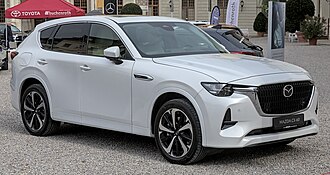
Mazda CX-60 as a Used Car: Is Mazda’s Premium SUV a Smart Second-Hand Buy?
The Mazda CX-60 is an unusual proposition on the used-car market. It is a relatively young SUV, having gone on sale in Europe in 2022, yet it already occupies an interesting position between mainstream family SUVs and established premium models such as the BMW X3, Audi Q5, Mercedes-Benz GLC and Volvo XC60. Mazda developed the CX-60 on a new rear-wheel-drive-oriented platform and introduced an ambitious range of powertrains, including a plug-in hybrid and an inline-six diesel mild hybrid. The result is a vehicle that feels substantially more sophisticated than Mazda’s older SUVs, but also one that introduced considerably more technical complexity than many buyers may expect from the brand.
For someone shopping for a nearly new or lightly used SUV, this makes the CX-60 particularly interesting. A used example can offer a lot of equipment, strong performance and a premium-looking cabin for considerably less than its original list price. However, the first CX-60s were also among the earliest vehicles to use Mazda’s new platform, new eight-speed automatic transmission and new electrified powertrains, and early cars experienced some teething issues. Consequently, buying a used CX-60 requires a slightly different approach from buying a mature Mazda model such as a CX-5. The key is not simply finding the cheapest example, but finding one with a documented history, completed software and technical updates, and a powertrain that suits the way you actually drive.
What Makes the Mazda CX-60 Different?
The CX-60 was designed to move Mazda further upmarket. Unlike the front-wheel-drive-based CX-5, the CX-60 uses a longitudinal engine layout and a rear-wheel-drive-based architecture, with all-wheel drive available on several versions. This gives Mazda considerably more freedom when developing larger engines and creates a driving character that is noticeably different from many conventional family SUVs. The range includes a 2.5-litre four-cylinder petrol plug-in hybrid and a 3.3-litre straight-six diesel mild hybrid, with power outputs varying according to drivetrain and specification.
The dimensions reinforce its position as a substantial family SUV. The CX-60 is about 4.75 metres long, 1.89 metres wide and 1.68 metres high, with a generous 2.87-metre wheelbase. Mazda quotes 570 litres of luggage space in five-seat configuration and up to 1,726 litres with the rear seats folded, making it a genuinely useful family vehicle rather than simply a style-focused crossover.
Styling is another reason to consider it. The CX-60 has a relatively restrained appearance, with a long bonnet, prominent front grille and proportions that emphasize its longitudinal powertrain. Inside, Mazda attempted to create a more luxurious atmosphere through higher-grade materials and minimalist design. Well-equipped Takumi and Homura versions can feel surprisingly close to premium competitors in terms of ambience, although some details still reveal the CX-60’s mainstream Mazda origins.
Which Engine Is Best in a Used Mazda CX-60?
The 3.3-Litre Diesel Mild Hybrid
The 3.3-litre diesel is arguably the most distinctive engine in the CX-60 range. It is a six-cylinder inline diesel rather than the four-cylinder diesel engines commonly found in this class, and Mazda combined it with a 48-volt mild-hybrid system. The 200 PS rear-wheel-drive version produces 450 Nm, while the 254 PS all-wheel-drive version produces 550 Nm. Both use an eight-speed automatic transmission.
For high-mileage drivers, this engine makes a strong case for itself. The substantial torque gives the CX-60 effortless acceleration, particularly when overtaking or towing, while the long-legged character of the six-cylinder engine suits motorway driving extremely well. Mazda’s official figures also demonstrate why the diesel attracted so much attention: the 200 PS rear-wheel-drive version was quoted at approximately 5.0 l/100 km combined under WLTP, while the all-wheel-drive versions were around 5.2–5.3 l/100 km depending on specification.
The 254 PS AWD version is especially appealing if performance matters. With 550 Nm and all-wheel drive, it combines the smoothness of a straight-six with the ability to move the substantial CX-60 with authority. The downside is complexity. There is the diesel engine itself, the mild-hybrid system, emissions-control hardware, an eight-speed automatic gearbox and, on AWD versions, the additional drivetrain hardware. A comprehensive service history is therefore much more important than simply looking at the odometer.
The 2.5-Litre Plug-In Hybrid
The other major CX-60 powertrain is the 2.5 e-Skyactiv PHEV. It combines a four-cylinder 2.5-litre petrol engine with an electric motor and a 17.8 kWh lithium-ion battery. The system produces 327 PS and 500 Nm, while power is transmitted through an eight-speed automatic gearbox to all four wheels. Mazda lists a 7.2 kW onboard charger for the PHEV.
On paper, this is an exceptionally strong combination. The PHEV provides considerably more power than the diesel models, while the electric motor can make the vehicle feel very responsive around town. For an owner who can charge at home or at work and regularly drives relatively short distances, the plug-in hybrid can also reduce petrol consumption dramatically compared with using the combustion engine for every journey.
However, a used PHEV should be bought according to its intended use rather than its headline fuel-consumption figure. Official laboratory consumption figures are useful for comparing vehicles but can be very different from real-world results when a PHEV is not charged regularly. If you cannot plug the car in, the additional weight and complexity of the hybrid system make less sense.
The battery itself is a 17.8 kWh unit weighing around 176 kg, according to Mazda’s technical documentation. That substantial battery contributes to the CX-60 PHEV’s high kerb weight, but it also gives the vehicle genuine electric-driving capability rather than simply using a small battery as a mild hybrid.
What Problems Should You Look For When Buying a Used CX-60?
Early Cars Deserve Extra Attention
The most important point for a used CX-60 buyer is that the earliest cars were not necessarily as polished as later examples. The vehicle introduced a new platform, new engines, a new transmission and extensive electronic systems almost simultaneously. Independent reliability assessments have noted early software and gearbox-related issues, with later production benefiting from updates and fixes.
This does not mean that every 2022 or early 2023 CX-60 is problematic. It means that the purchase process should include checking the car’s VIN with a Mazda dealer and confirming that all applicable recalls, software updates and technical campaigns have been completed. A vehicle with a complete dealer history and evidence of updates can be a much safer purchase than an apparently cheaper example with an unclear background.
Check the Automatic Transmission Carefully
The eight-speed automatic is central to the CX-60 experience, so it deserves particular attention during the test drive. The transmission should engage smoothly when selecting Drive or Reverse, and gear changes should not be accompanied by persistent hesitation, harsh jolts or unexplained delays.
Pay attention when the car is cold as well as when it is fully warmed up. A short test drive around a dealership may not reveal every issue. Try gentle acceleration, stronger acceleration, low-speed manoeuvres and motorway speeds. Any unusual behaviour should be investigated before buying rather than dismissed as the character of the gearbox.
Inspect the Suspension and Ride Quality
Ride comfort is one area where prospective buyers should drive the CX-60 before making a decision. Some versions, particularly those fitted with larger wheels, can feel relatively firm over poor roads. This is especially relevant in countries where potholes, broken asphalt and rough urban streets are common.
The CX-60’s chassis is fundamentally capable, but a vehicle that feels impressive on smooth roads may be less convincing over damaged surfaces. Check the tyres carefully for uneven wear, inspect the wheels for impact damage and listen for suspension noises. A used car with expensive 20-inch wheels may also cost more to keep on the road than an otherwise identical example on smaller wheels.
Is the CX-60 Practical as a Family SUV?
The CX-60 is certainly large enough for family duties. Its 2.87-metre wheelbase provides a substantial cabin, while the 570-litre boot is competitive with many vehicles in the segment. With the rear seats folded, the available cargo volume rises to 1,726 litres.
Nevertheless, practicality is not the CX-60’s single greatest strength. Some reviews have pointed out that rear passenger accommodation is adequate rather than class-leading, particularly considering the vehicle’s exterior dimensions.
For a family of four, there should be little reason for concern, but buyers who regularly carry three adults in the back should test the rear seats personally. The raised centre section and overall cabin shape mean that the CX-60 does not necessarily feel as spacious inside as its exterior dimensions might suggest.
How Does the CX-60 Drive?
Driving enjoyment is one of the strongest reasons to consider a CX-60. Mazda has historically emphasized steering feel and chassis balance, and the CX-60 continues that philosophy while moving into a larger and more powerful vehicle category. The rear-wheel-drive-based architecture gives the SUV a different character from many front-driven rivals.
The six-cylinder diesel is particularly interesting. Its smooth power delivery and substantial torque make it feel more relaxed than many four-cylinder diesel SUVs. The 254 PS AWD version is also genuinely quick, with Mazda quoting a 0–62 mph time of 7.4 seconds, while the 200 PS rear-wheel-drive version takes 8.4 seconds.
The PHEV is faster still. Its combined 327 PS and 500 Nm provide performance that would have been impressive even in a conventional sports-oriented SUV, and independent specification data puts its 0–100 km/h time at approximately 5.8 seconds.
That performance does come with a caveat: the CX-60 is not a lightweight vehicle. The PHEV’s large battery adds significant mass, while even the diesel versions are substantial vehicles. The result is more about effortless performance and stability than nimble handling.
Which Used Mazda CX-60 Should You Buy?
For most buyers, a later, well-documented 3.3-litre diesel is arguably the most interesting CX-60 if annual mileage is high and long-distance driving is common. The 200 PS RWD model is particularly appealing if AWD is unnecessary, while the 254 PS AWD version makes more sense for drivers who need maximum traction, towing ability or performance.
The PHEV is the better option for a different kind of driver: someone who can charge frequently and spends a significant proportion of their time on shorter journeys. Its performance is excellent, and electric driving can make it remarkably smooth around town. But it should not be purchased purely because its official consumption number looks exceptionally low.
In either case, later examples deserve serious consideration. Independent reliability commentary specifically recommends looking toward later 2023 and 2024 cars because many early teething problems had been addressed through updates.
What Should You Check Before Buying?
A thorough pre-purchase inspection is particularly valuable with a CX-60 because of its technical sophistication. Start with the service history and establish whether servicing has been carried out according to Mazda’s requirements. Then have the VIN checked with a Mazda dealer for recalls, software campaigns and outstanding technical actions.
During the test drive, check the gearbox at different temperatures, test all driving modes and examine the operation of the infotainment and driver-assistance systems. Check the charging system carefully on PHEV versions and, where possible, verify that the battery and charging equipment operate correctly.
The inspection should also cover brakes, suspension, tyres, wheels, steering and underbody components. Finally, examine the bodywork closely for accident repairs. Premium-looking SUVs can be expensive to repair after even relatively minor damage, particularly when they have advanced sensors, cameras and large alloy wheels.
Mazda CX-60 as a Used Car: Final Verdict
The Mazda CX-60 is an ambitious used-car proposition and one of the more interesting relatively young SUVs on the European market. It combines distinctive styling, a high-quality interior, rear-wheel-drive-based engineering and unusual powertrains that are difficult to find elsewhere in the segment. The 3.3-litre straight-six diesel is particularly distinctive, while the 327 PS PHEV offers an impressive combination of performance and electric capability.
Its biggest weakness is also connected with its ambition. The CX-60 introduced a lot of new technology in a short period, and early vehicles experienced software, transmission and setup issues. That makes buying the cheapest possible example a poor strategy. Instead, look for a later car with a complete history, documented updates and a successful inspection.
Ultimately, the CX-60 makes the most sense for a buyer who wants something more distinctive than the usual premium SUV and is prepared to do a little more homework before purchasing. Choose carefully and the CX-60 can deliver an unusual blend of refinement, performance, efficiency and driving enjoyment at a used-car price that makes considerably more sense than its original premium positioning.
Mazda CX-60 Technical Specifications
The table below summarizes representative European specifications. Exact figures can vary according to model year, drivetrain, wheels and equipment level. Mazda’s current technical documentation lists the three principal versions as the 2.5 PHEV AWD, 3.3 diesel MHEV RWD and 3.3 diesel MHEV AWD.
| Specification | 2.5 e-Skyactiv PHEV | 3.3 e-Skyactiv D MHEV 200 | 3.3 e-Skyactiv D MHEV 254 |
|---|---|---|---|
| Engine | 2.5-litre petrol + electric | 3.3-litre inline-6 diesel + MHEV | 3.3-litre inline-6 diesel + MHEV |
| Displacement | 2,488 cc | 3,283 cc | 3,283 cc |
| Cylinders | 4 | 6 | 6 |
| Maximum power | 327 PS | 200 PS | 254 PS |
| Maximum torque | 500 Nm | 450 Nm | 550 Nm |
| Transmission | 8-speed automatic | 8-speed automatic | 8-speed automatic |
| Drive | AWD | RWD | AWD |
| Battery | 17.8 kWh lithium-ion | 0.3 kWh lithium-ion | 0.3 kWh lithium-ion |
| Electric motor | Yes | Yes | Yes |
| Fuel tank | Approx. 50 L | 58 L | 58 L |
| Length | 4,745 mm | 4,745 mm | 4,745 mm |
| Width | 1,890 mm | 1,890 mm | 1,890 mm |
| Height | Approx. 1,675 mm | Approx. 1,675 mm | Approx. 1,675 mm |
| Wheelbase | 2,870 mm | 2,870 mm | 2,870 mm |
| Ground clearance | Approx. 176–182 mm | Approx. 174–179 mm | Approx. 173–179 mm |
| Boot capacity | 570 L | 570 L | 570 L |
| Maximum cargo volume | 1,726 L | 1,726 L | 1,726 L |
| 0–62 mph | Approx. 5.8 sec | 8.4 sec | 7.4 sec |
| Top speed | Approx. 124 mph / 200 km/h | 132 mph / 212 km/h | 136 mph / 219 km/h |
| Maximum towing capacity | 2,500 kg | 2,500 kg | 2,500 kg |
| Production introduction | 2022 | 2022 | 2022 |
The technical figures above are based primarily on Mazda’s European specification documents; equipment, weights, performance and consumption figures can change with model year and wheel/trim combination.
