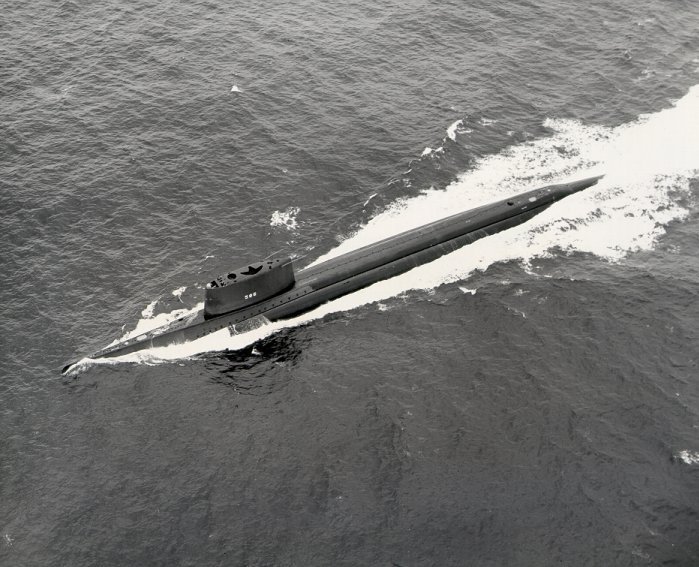
USS Triton SSRN-586
USS Triton (SSRN-586) was a pioneering vessel in the United States Navy, marking a significant milestone in submarine technology and capabilities. Commissioned in 1959, Triton was the world’s largest and most advanced submarine of its time. Unlike conventional submarines, Triton was specifically designed as a radar picket submarine, tasked with surveillance and reconnaissance missions in support of the Navy’s strategic objectives during the Cold War era. Its unique design featured a distinctive “teardrop” hull shape, which provided enhanced stability and maneuverability for extended submerged operations.
One of the most remarkable achievements of USS Triton was its historic submerged circumnavigation of the Earth. In 1960, under the command of Captain Edward L. Beach Jr., Triton embarked on a record-setting voyage known as Operation Sandblast. Over the course of nearly three months, Triton traveled approximately 41,500 nautical miles (76,900 kilometers), circumnavigating the globe entirely submerged. This unprecedented feat demonstrated the submarine’s endurance, range, and operational capabilities, showcasing the strategic potential of nuclear-powered submarines for global maritime missions.
Despite its groundbreaking accomplishments, USS Triton’s service life was relatively brief. In 1969, Triton was decommissioned and eventually scrapped, marking the end of an era in naval exploration and submarine warfare. However, its legacy lives on as a testament to the ingenuity, bravery, and technological advancements that characterized the United States Navy during the Cold War period. Triton’s achievements continue to inspire future generations of submariners and naval strategists, highlighting the importance of innovation and forward-thinking in maintaining maritime superiority.
Armament of USS Triton (SSRN-586)
USS Triton (SSRN-586) was a radar picket submarine rather than a conventional attack submarine. As such, its armament differed from that of typical submarines designed for offensive operations. Here are the primary armaments of USS Triton:
- Radar and Sonar Systems: Triton was equipped with advanced radar and sonar systems for surveillance, reconnaissance, and detection purposes. These systems allowed Triton to detect and track surface vessels, aircraft, and other submarines, providing valuable intelligence to the Navy.
- Defensive Measures: While specific details may vary, Triton likely had defensive measures such as anti-aircraft guns or surface-to-air missiles for self-protection against potential threats encountered during its surveillance missions. These defensive armaments would have been aimed at warding off enemy aircraft or surface vessels.
- None Offensive Weaponry: Unlike attack submarines, which are armed with torpedoes and missiles for offensive operations, Triton did not carry such armaments. Its primary mission was surveillance and reconnaissance rather than engaging in direct combat.
It’s important to note that the armament of USS Triton was tailored to its role as a radar picket submarine, emphasizing its capabilities for surveillance and intelligence gathering rather than offensive engagements.
Dimensions of USS Triton (SSRN-586)
USS Triton (SSRN-586), a radar picket submarine, was one of the largest submarines built for its time. Here are the approximate dimensions of USS Triton:
- Length: USS Triton had a length of approximately 447 feet (about 136 meters). This measurement includes the entire length of the submarine’s hull from the tip of the bow to the end of the stern.
- Beam: The beam, or width, of USS Triton was approximately 37 feet (about 11 meters). This measurement represents the widest point of the submarine’s hull.
- Draft: The draft of USS Triton, which refers to the depth of the submarine below the waterline, was approximately 31 feet (about 9.4 meters). This measurement indicates how deep the submarine sits in the water when fully submerged.
These dimensions made USS Triton one of the largest submarines of its time and allowed it to accommodate the specialized equipment and systems required for its radar picket missions.
