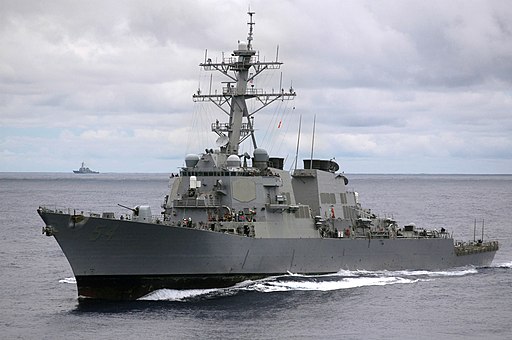
USS Curtis Wilbur (DDG-54)
USS Curtis Wilbur (DDG-54): A Guardian of the Seas
The USS Curtis Wilbur (DDG-54) is a cornerstone of the U.S. Navy’s Arleigh Burke-class guided-missile destroyers, renowned for their versatility, technological sophistication, and combat prowess. Named after Curtis D. Wilbur, the 43rd Secretary of the Navy, this ship carries a legacy of service and resilience. Commissioned in 1994, the Curtis Wilbur has played an integral role in U.S. naval operations worldwide, embodying the Navy’s commitment to maintaining maritime security and projecting power.
This article provides an in-depth exploration of the USS Curtis Wilbur, from its design and capabilities to its operational history and strategic importance.
Historical Background
The USS Curtis Wilbur is the fourth destroyer in the Arleigh Burke class, which was conceptualized during the Cold War to counter Soviet naval threats. The class was named after Admiral Arleigh Burke, a World War II naval hero and Chief of Naval Operations. These ships were designed to be multi-mission platforms capable of excelling in anti-air warfare (AAW), anti-surface warfare (ASUW), anti-submarine warfare (ASW), and ballistic missile defense (BMD).
The Curtis Wilbur was laid down on March 12, 1992, at the Bath Iron Works shipyard in Maine, launched on May 16, 1993, and commissioned on March 19, 1994. Since its commissioning, the ship has served extensively in the U.S. Seventh Fleet, based in Yokosuka, Japan, as part of the Navy’s forward-deployed forces in the Indo-Pacific.
Design and Features
The Arleigh Burke-class destroyers, including the USS Curtis Wilbur, are engineered for survivability, speed, and versatility. With their robust Aegis Combat System and advanced weaponry, these ships represent the pinnacle of naval engineering.
1. Physical Specifications
- Displacement: Approximately 8,315 tons (full load)
- Length: 505 feet
- Beam: 66 feet
- Draft: 31 feet
- Speed: Over 30 knots
- Range: Approximately 4,400 nautical miles at 20 knots
The Curtis Wilbur is powered by four General Electric LM2500 gas turbines, providing it with the power and agility to respond rapidly to emerging threats.
2. Aegis Combat System
At the heart of the USS Curtis Wilbur’s capabilities is the Aegis Combat System, an integrated naval weapons system designed to track and engage multiple targets simultaneously. Key components include:
- SPY-1D radar: A powerful, phased-array radar capable of tracking air, surface, and ballistic missile threats.
- Command and Control System: Provides real-time data fusion and threat prioritization, enabling swift and accurate decision-making.
- Vertical Launch System (VLS): Houses up to 90 missile cells, loaded with a variety of munitions for different missions.
3. Weapon Systems
The USS Curtis Wilbur is heavily armed, making it a formidable force in any combat scenario:
- Standard Missiles (SM-2/SM-3/SM-6): Used for air and ballistic missile defense.
- Tomahawk Cruise Missiles: Long-range, precision-strike capability against land targets.
- RUM-139 VL-ASROC (Anti-Submarine Rockets): For engaging underwater threats.
- Harpoon Anti-Ship Missiles: Designed to strike surface targets.
- Mk 45 5-inch/54 caliber naval gun: A versatile weapon for surface and shore bombardment.
- Phalanx CIWS (Close-In Weapon System): A last-ditch defense against incoming missiles and aircraft.
- Torpedo Tubes: Armed with Mk 46 or Mk 50 torpedoes for anti-submarine warfare.
4. Sensors and Communication
The ship features a suite of advanced sensors and communication systems to detect, track, and engage threats across multiple domains:
- Sonar Systems: Including hull-mounted sonar and towed arrays for submarine detection.
- Electronic Warfare Suite: For radar jamming and countermeasures.
- Link 16 Data Network: Ensures seamless communication and coordination with other naval and allied forces.
5. Aviation Capabilities
The Curtis Wilbur includes a flight deck and facilities to support MH-60R Seahawk helicopters, enhancing its anti-submarine, search-and-rescue, and reconnaissance capabilities.
Operational History
Since its commissioning, the USS Curtis Wilbur has participated in a wide range of operations, from humanitarian missions to high-stakes security patrols in contested waters. Its forward-deployed status in Japan has placed it at the forefront of U.S. naval strategy in the Pacific.
1. Humanitarian and Disaster Relief
The ship has been involved in several humanitarian missions, including disaster relief efforts in the wake of natural calamities. Notably, the Curtis Wilbur supported operations following the 2011 Tōhoku earthquake and tsunami in Japan, providing aid and logistical support to affected areas.
2. Freedom of Navigation Operations (FONOPs)
The Curtis Wilbur has conducted multiple FONOPs in the South China Sea, challenging excessive maritime claims and reinforcing international norms under the United Nations Convention on the Law of the Sea (UNCLOS). These missions are critical to ensuring freedom of navigation in one of the world’s most strategically significant waterways.
3. Ballistic Missile Defense
As a BMD-capable destroyer, the Curtis Wilbur has played a key role in monitoring and intercepting missile threats. The ship often participates in joint exercises and real-world operations aimed at countering missile proliferation in the region, particularly from North Korea.
4. Multinational Exercises
The ship has participated in numerous multinational naval exercises, including:
- RIMPAC (Rim of the Pacific Exercise): The world’s largest naval exercise.
- Malabar Exercise: Strengthening cooperation among the U.S., India, Japan, and Australia.
- Keen Sword: A joint exercise with Japanese forces to enhance interoperability.
Strategic Importance
The USS Curtis Wilbur serves as a critical component of the U.S. Navy’s forward presence in the Indo-Pacific. Its deployment in Yokosuka ensures rapid response to regional crises and strengthens alliances with key partners such as Japan, South Korea, and the Philippines. The ship’s presence also acts as a deterrent against potential adversaries, signaling the U.S. commitment to maintaining peace and stability in the region.
Modernization and Future Outlook
The USS Curtis Wilbur has undergone periodic upgrades to maintain its relevance in an era of evolving threats. Recent enhancements include:
- Upgraded Aegis Baseline: Improved software and hardware for better missile defense and situational awareness.
- Integrated Fire Control (NIFC-CA): Enables coordinated attacks with other ships and aircraft.
- Cybersecurity Upgrades: To counter increasingly sophisticated cyber threats.
Looking ahead, the Curtis Wilbur will remain an essential asset as the U.S. Navy pivots towards countering peer adversaries such as China and Russia. Its role in the Indo-Pacific will likely expand, including greater integration with allied forces and participation in emerging mission areas like unmanned systems and electronic warfare.
Conclusion
The USS Curtis Wilbur (DDG-54) exemplifies the enduring strength and adaptability of the Arleigh Burke-class destroyers. With its advanced systems, diverse mission capabilities, and forward-deployed presence, it continues to safeguard U.S. interests and promote stability in some of the world’s most contested regions. As both a guardian of the seas and a symbol of American naval power, the Curtis Wilbur is poised to meet the challenges of the 21st century.
_underway_in_the_Pacific_Ocean.jpg)