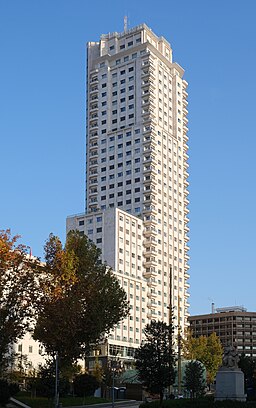
Torre de Madrid
Torre de Madrid: A Historical and Architectural Landmark in Madrid
Torre de Madrid, also known as the Tower of Madrid, is one of the city’s most prominent and recognizable skyscrapers. Standing tall in the heart of Madrid, this iconic structure is a symbol of the city’s post-war modernity and its ambition to become a global metropolis. Located in the central area of Plaza de España, the tower boasts a rich history, architectural significance, and cultural importance. Over the years, it has evolved from being a symbol of Francoist architecture to becoming an integral part of Madrid’s skyline.
Designed by the Spanish architect Francisco Javier Sáenz de Oiza and completed in 1957, the Torre de Madrid was initially constructed as a hotel and office building. It represented a break from Spain’s more traditional architectural styles and marked the country’s desire to modernize and embrace the post-war architectural boom. Today, the tower remains a key feature of the cityscape, continuing to play a role as both a commercial and residential building.
Architectural Design and Structure
Post-War Modernism
Torre de Madrid was one of the first skyscrapers built in Madrid after the Spanish Civil War and stands as a significant example of post-war modernist architecture. At the time of its construction, the building was a reflection of Spain’s economic ambitions and the desire to modernize its infrastructure. The design of the tower, though monumental, was based on simple yet effective principles of modernism, focusing on verticality, functionality, and the use of new materials.
The building’s height—at 142 meters (466 feet)—was impressive for its time, making it one of the tallest buildings in Spain when it was completed. The tower’s cylindrical shape and streamlined profile were revolutionary in the context of the 1950s architectural landscape in Madrid, which was still predominantly composed of low-rise, classical structures.
Facade and Materials
The facade of the Torre de Madrid is made of concrete and granite, materials that were chosen for their durability and strength. The building is characterized by clean lines, a minimalist approach to ornamentation, and the use of large windows that provide ample natural light to the interior spaces. The vertical emphasis of the structure, with its narrow yet imposing appearance, allows the tower to stand out against the more traditional buildings surrounding it.
At the top of the building, there are observation decks and a viewing area that offers panoramic views of the city. The tower’s design incorporates a flat roof with a slightly curved top, a feature that was meant to give the building a modern, futuristic look while remaining consistent with the urban skyline.
Renovations and Modern Upgrades
Over the years, the Torre de Madrid has undergone various renovations to adapt to the changing needs of its residents and occupants. In recent years, the building has been converted into a mixed-use structure, combining residential apartments, commercial spaces, and offices. The interior has been modernized, with state-of-the-art facilities, sustainable technologies, and stylish upgrades, while still preserving the essence of its original design.
Torre de Madrid as a Cultural and Economic Hub
A Symbol of Post-War Spain
When the Torre de Madrid was completed in 1957, it was seen as a symbol of Spain’s post-war recovery and the country’s movement towards modernization. The building, which was initially conceived as a luxury hotel and commercial space, represented a break from the traditional architecture of Madrid and was a clear indicator of the country’s desire to position itself as a progressive, industrialized nation on the European stage.
At the time of its opening, the Torre de Madrid was the tallest building in Spain and one of the most ambitious architectural projects in the country. This towering structure became a symbol of the country’s emerging urban identity and was celebrated as a marvel of modern engineering.
A Hub for Business and Commerce
Throughout its history, Torre de Madrid has served as a key location for business and commerce. The building’s upper floors housed offices for multinational companies, financial institutions, and cultural organizations. Its central location in Plaza de España made it a highly desirable space for businesses looking to establish a prominent presence in Madrid.
Today, the tower is home to a variety of companies, businesses, and organizations, contributing to Madrid’s role as a major economic center in southern Europe. Torre de Madrid continues to be a significant player in the city’s business and economic life, attracting a diverse range of tenants from various sectors.
The Torre de Madrid’s Role in Madrid’s Urban Landscape
Iconic Landmark
Located at Plaza de España, one of Madrid’s central and most significant public spaces, Torre de Madrid has become a defining feature of the city’s skyline. The tower, with its imposing height and unique design, stands in contrast to the more classical architecture surrounding it, making it a focal point of the area.
For decades, the tower has been part of the architectural conversation in Madrid. Its role as a symbol of modernity in the heart of the city has made it one of the most photographed buildings in the capital, admired by both locals and tourists alike. It has been a constant presence in the background of many iconic views of Madrid, including those from the nearby Gran Via and the Royal Palace.
Integration with the Urban Environment
Torre de Madrid’s location also plays a vital role in connecting different parts of the city. Positioned at the crossroads of several major streets and transportation hubs, the tower serves as a key access point for people traveling through the city. The nearby metro stations and bus lines further enhance the building’s connectivity, making it easily accessible for both residents and visitors.
Visiting Torre de Madrid
Public Accessibility
While the Torre de Madrid is primarily a commercial and residential building, it remains an essential part of Madrid’s public landscape. Visitors to the Plaza de España area can enjoy the views of the tower from the surrounding gardens and public spaces. The observation decks and other areas of the building may occasionally be open to the public for events or special exhibitions, offering a rare opportunity to experience the building’s impressive interior and its panoramic views of the city.
Cultural Events
The Torre de Madrid has also hosted several cultural events and exhibitions over the years, especially focusing on art, architecture, and Madrid’s urban development. The building’s role as a center for cultural activity has helped maintain its relevance in a city that continually strives to innovate while honoring its past.
Conclusion
Torre de Madrid stands as one of the most important and iconic landmarks in Madrid’s architectural landscape. From its post-war origins as a symbol of modernization to its present-day role as a business and residential hub, the tower reflects the evolution of the city itself. Its striking design, central location, and rich cultural history make it an enduring symbol of Madrid’s past, present, and future. Whether you’re admiring it from a distance or visiting it up close, Torre de Madrid remains a testament to the city’s dynamic urban identity.
