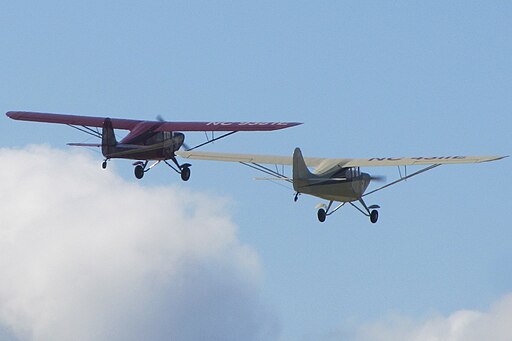
Aeronca 11 Chief
Aeronca 11 Chief: A Timeless Classic in General Aviation
The Aeronca 11 Chief, often referred to simply as the “Chief,” is a renowned light aircraft that embodies the golden era of aviation. Produced by the Aeronca Aircraft Corporation, the Chief was designed to provide affordable and accessible flying for the burgeoning post-war civilian aviation market. With its elegant design, gentle flying characteristics, and versatility, the Aeronca Chief earned its place as a favorite among private pilots, flight schools, and aviation enthusiasts.
This article delves into the history, design, flying characteristics, variants, and enduring legacy of the Aeronca 11 Chief. Whether you’re an aviation historian, a vintage aircraft enthusiast, or simply curious about the aircraft, the Aeronca Chief’s story offers fascinating insights into the evolution of general aviation.
Origins and History of the Aeronca 11 Chief
The Aeronca Aircraft Corporation, founded in 1928, was one of the first companies in the United States to specialize in manufacturing affordable and lightweight aircraft. By the late 1930s, Aeronca had established itself as a leader in the industry with the introduction of the Aeronca C-2, C-3, and Aeronca K models.
During the 1930s and 1940s, Aeronca released a series of tandem-seat (fore-and-aft seating) designs, such as the Aeronca 7 Champion, which became highly popular. However, to cater to a different segment of the market, Aeronca sought to develop a side-by-side, two-seat aircraft that would appeal to private pilots seeking a more comfortable and practical flying experience.
In 1946, the company introduced the Aeronca 11 Chief, designed as a complement to the tandem-seat Aeronca Champ. The Chief, with its side-by-side seating arrangement and sleeker aesthetic, was aimed at private owners and flight schools. Although it competed directly with the popular Piper J-3 Cub and Taylorcraft, the Chief offered distinct advantages in terms of cabin comfort and overall styling.
Design and Features
The Aeronca 11 Chief’s design was guided by the principles of simplicity, functionality, and affordability. Its streamlined appearance, efficient construction, and practical features made it an attractive option for a wide range of pilots.
Airframe and Structure
The Chief features a high-wing configuration, which provides excellent visibility for pilots and passengers and enhances overall stability in flight. Its fuselage is constructed with a lightweight welded steel-tube frame, while the wings are built using wooden spars and ribs, both covered in durable aircraft fabric. This combination of materials results in a lightweight yet sturdy airframe.
Cockpit and Seating
One of the Chief’s distinguishing features is its side-by-side seating configuration for two occupants. This layout was a departure from the tandem seating found in the Aeronca Champ and was particularly popular among private owners, as it allowed for easier communication between pilot and passenger. The cockpit is spacious and well-lit, thanks to large windows, and features a straightforward control layout that emphasizes simplicity and ease of use.
Landing Gear
The Chief employs a tailwheel (taildragger) landing gear configuration, which was standard for light aircraft of its time. Although tailwheel aircraft require a bit more skill to manage during takeoff and landing, the Chief’s forgiving nature and stable ground handling made it approachable for many pilots.
Engine and Performance
The Aeronca 11 Chief was powered by a variety of small, air-cooled engines, depending on the variant. Early models were typically equipped with the Continental A-65, a 65-horsepower engine, while later variants used more powerful engines like the Continental C85 or C90, producing up to 90 horsepower.
With a cruising speed of around 85–90 mph (137–145 km/h) and a range of approximately 300 miles (480 km), the Chief was not built for speed but excelled as a reliable and efficient personal aircraft. Its low operating costs and fuel efficiency made it an economical choice for pilots.
Flying Characteristics
The Aeronca 11 Chief is celebrated for its gentle and predictable flying characteristics, which make it an ideal aircraft for training and recreational flying.
- Stability and Control: The Chief is known for its stable flight behavior and easy control inputs, which provide confidence to beginner pilots while still offering a rewarding experience for seasoned aviators.
- Forgiving Nature: Its low stall speed and docile handling characteristics make the Chief particularly forgiving during takeoff, landing, and recovery from pilot errors.
- Visibility: The high-wing design and large windows offer excellent visibility, enhancing situational awareness during flight and taxiing.
- Ground Handling: While tailwheel aircraft can be challenging to manage on the ground, the Chief’s well-designed landing gear geometry minimizes ground-loop tendencies.
Variants of the Aeronca 11 Chief
The Aeronca 11 Chief was produced in several variants, each catering to specific needs or incorporating improvements over the original design.
Aeronca 11AC Chief
The original version of the Chief, powered by a Continental A-65 engine, which delivered 65 horsepower. This model became a popular choice for recreational pilots and flight schools.
Aeronca 11BC Chief
This upgraded variant featured a more powerful Continental C85 engine, producing 85 horsepower. The increased power improved performance, particularly in terms of climb rate and payload capacity.
Aeronca 11CC Super Chief
The Super Chief was an enhanced version of the aircraft, equipped with a Continental C90 engine producing 90 horsepower. It offered improved performance for longer flights or operation in more demanding conditions.
Conversion to Tricycle Gear
In the 1950s, some Aeronca Chiefs were converted from tailwheel to tricycle landing gear to make them easier to handle on the ground. These modified aircraft were marketed as the “Tri-Chief.”
Legacy and Enduring Appeal
The Aeronca 11 Chief holds a special place in the history of aviation as one of the classic light aircraft of the mid-20th century. While it was eventually overshadowed by more modern aircraft, the Chief remains a favorite among vintage aviation enthusiasts for several reasons:
- Nostalgia: The Chief is a symbol of the post-war aviation boom and the simplicity of flying during that era.
- Affordable Ownership: Restored Aeronca Chiefs are often available at relatively affordable prices, making them an attractive option for pilots looking to own a piece of aviation history.
- Ease of Maintenance: The aircraft’s simple construction and widely available parts make it easy to maintain and repair.
- Vintage Aviation Community: The Chief has a devoted following in the vintage aircraft community, where its charm and history are celebrated at fly-ins, airshows, and aviation events.
Conclusion
The Aeronca 11 Chief is a testament to the ingenuity and craftsmanship of its era. Designed for simplicity, affordability, and reliability, it provided countless pilots with their first taste of flying and became a cherished companion for recreational aviators. Even today, the Chief continues to inspire and delight those who appreciate the beauty of vintage aircraft and the timeless joys of flight.
Whether you’re a pilot, an aviation enthusiast, or a historian, the Aeronca 11 Chief offers a glimpse into an aviation era defined by innovation, passion, and accessibility. For many, the Chief is not just an airplane—it’s a piece of living history that continues to take to the skies.
