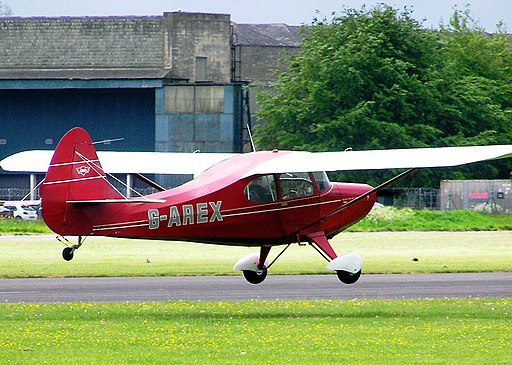
Aeronca 15AC Sedan
Aeronca 15AC Sedan: A Versatile Post-War General Aviation Aircraft
The Aeronca 15AC Sedan is a noteworthy light aircraft from the post-World War II era, produced by the Aeronca Aircraft Corporation. Introduced in 1948, the Sedan was designed to meet the needs of pilots seeking a more robust and capable airplane for personal, business, and utility use. With its four-seat configuration, all-metal wings, and rugged construction, the 15AC Sedan stood out in the competitive general aviation market of the late 1940s and early 1950s.
Although it had a relatively short production run, the Aeronca Sedan earned a reputation for its reliability, versatility, and performance in challenging environments. This article explores the design, history, performance, and legacy of the Aeronca 15AC Sedan, highlighting its enduring appeal among pilots and vintage aircraft enthusiasts.
Origins and Development of the Aeronca 15AC Sedan
In the years following World War II, the aviation industry underwent a dramatic transformation. As thousands of military pilots returned home, the demand for civilian aircraft surged, creating an unprecedented boom in the general aviation market. Aeronca, already a well-established manufacturer of light aircraft, sought to expand its lineup to appeal to a broader audience.
While the company had enjoyed success with smaller, two-seat models such as the Aeronca Chief and Aeronca Champ, the need for a larger and more capable aircraft became evident. The 15AC Sedan was Aeronca’s response to this demand—a rugged, high-wing, four-seat airplane designed for a variety of missions, from family trips to bush flying.
The Sedan represented a departure from Aeronca’s earlier fabric-covered, tandem-seat aircraft. With its all-metal wings and side-by-side seating, the 15AC Sedan was aimed squarely at competing with other popular four-seat airplanes of the era, such as the Cessna 170 and the Piper PA-14 Family Cruiser.
Design and Construction
The Aeronca 15AC Sedan was a product of thoughtful design, combining simplicity, durability, and practicality.
Airframe and Materials
The Sedan features a high-wing monoplane design, offering excellent visibility and stable flight characteristics. While the fuselage is constructed using a steel tube frame covered with fabric, the wings are all-metal, which was a notable advancement for Aeronca at the time. This combination of materials provides a lightweight yet robust structure, capable of withstanding the demands of rough-field operations.
Cabin and Interior
The Sedan’s cabin is spacious and comfortable, accommodating up to four occupants in a side-by-side seating arrangement for the front seats and a full-width bench seat in the rear. The cabin’s large windows flood the interior with natural light and enhance visibility for both pilots and passengers. With a maximum payload of approximately 950 pounds, the Sedan is well-suited for carrying passengers, luggage, or equipment.
Engine and Performance
The Aeronca 15AC Sedan is powered by the Continental C-145-2 engine, a six-cylinder, air-cooled powerplant producing 145 horsepower. This engine provides reliable performance, enabling the Sedan to cruise at around 110 mph (177 km/h) and achieve a range of approximately 500 miles (805 km). The combination of fuel efficiency and sufficient power makes the Sedan a versatile aircraft for both short and long-distance flights.
Landing Gear
The aircraft is equipped with conventional (tailwheel) landing gear, which is robust enough to handle unpaved runways and backcountry airstrips. This design feature, along with its high-wing configuration, made the Sedan popular among bush pilots and operators in remote areas.
Flying Characteristics
The Aeronca 15AC Sedan is celebrated for its docile and predictable handling, making it an excellent choice for pilots of varying experience levels.
- Stability: The Sedan’s high-wing design provides inherent stability, making it a forgiving airplane in most flight conditions.
- Control Response: Control inputs are smooth and well-balanced, allowing for precise handling without being overly sensitive.
- Takeoff and Landing: The tailwheel configuration requires some skill for ground handling, particularly in crosswind conditions, but the Sedan’s sturdy landing gear and predictable behavior make it manageable for experienced pilots.
- Versatility: The aircraft performs well in a variety of environments, from paved runways to grass fields and gravel strips, underscoring its utility as a backcountry aircraft.
Versatility and Utility
The Aeronca Sedan’s four-seat configuration, ample cargo capacity, and reliable performance made it a versatile aircraft capable of fulfilling a wide range of roles:
- Personal Aviation: Families and private pilots appreciated the Sedan’s ability to carry multiple passengers and luggage for recreational trips.
- Flight Training: Its stable flying characteristics and straightforward design made the Sedan a popular choice for advanced flight training.
- Bush Flying: The rugged construction and tailwheel configuration enabled the Sedan to operate effectively in remote and challenging environments.
- Business Use: Small businesses used the Sedan for transportation and light cargo hauling.
Decline and Legacy
Production of the Aeronca 15AC Sedan ceased in 1951, after approximately 561 units had been built. Aeronca decided to exit the light aircraft market altogether and focus on manufacturing components for the aerospace and defense industries. Despite its relatively short production run, the Sedan developed a loyal following among pilots and remains highly regarded in the vintage aviation community.
Enduring Appeal
Today, the Aeronca Sedan continues to capture the imagination of aviation enthusiasts for several reasons:
- Durability: Many Sedans are still flying today, a testament to their solid construction and reliable performance.
- Simplicity: The aircraft’s straightforward design makes it relatively easy to maintain and operate.
- Vintage Charm: The Sedan’s classic lines and nostalgic appeal make it a favorite at airshows and fly-ins.
Specifications of the Aeronca 15AC Sedan
- Crew: 1 (pilot)
- Capacity: 3 passengers
- Length: 22 ft 10 in (6.96 m)
- Wingspan: 36 ft 2 in (11.02 m)
- Height: 6 ft 9 in (2.06 m)
- Empty Weight: 1,250 lb (567 kg)
- Gross Weight: 2,200 lb (998 kg)
- Maximum Speed: 123 mph (198 km/h)
- Cruise Speed: 110 mph (177 km/h)
- Range: 500 miles (805 km)
- Powerplant: 1 × Continental C-145-2, 145 hp (108 kW)
Conclusion
The Aeronca 15AC Sedan represents a unique chapter in the history of general aviation. Designed during a period of rapid growth and innovation, the Sedan offered pilots a reliable and versatile aircraft that balanced comfort, utility, and affordability.
While its production run was short-lived, the Sedan’s legacy endures among vintage aircraft enthusiasts, bush pilots, and those who appreciate the charm of classic aviation. For anyone fortunate enough to fly or own one, the Aeronca Sedan is not just an airplane—it’s a timeless piece of aviation history that continues to inspire admiration and respect.
