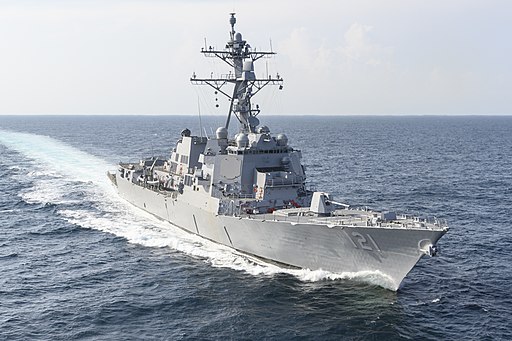
USS Frank E. Petersen Jr. (DDG-121)
USS Frank E. Petersen Jr. (DDG-121): A Modern Tribute to a Pioneering Naval Leader
The USS Frank E. Petersen Jr. (DDG-121) is a guided missile destroyer of the Arleigh Burke-class, one of the most advanced and versatile classes of destroyers in the United States Navy. The ship is not only a symbol of technological advancement but also a tribute to the legacy of one of the U.S. Navy’s most distinguished leaders, Admiral Frank E. Petersen Jr., the first African American to become a general officer in the Marine Corps and the first African American aviator in the Marine Corps. Commissioned in 2025, the USS Frank E. Petersen Jr. stands as a proud testament to the courage, dedication, and innovation of both the ship’s namesake and the broader U.S. military community.
Background and Significance of the Ship’s Name
Admiral Frank E. Petersen Jr. made history as a trailblazer for African Americans in the military, breaking barriers in an era when opportunities for minorities in the armed forces were limited. Born on March 31, 1932, in Topeka, Kansas, Petersen enlisted in the Marine Corps in 1950 and eventually earned his wings as a pilot. Over the course of his illustrious career, he not only distinguished himself in combat but also played a significant role in advancing integration and inclusion within the armed services. Petersen’s accomplishments, which included serving in both the Korean and Vietnam Wars, earned him numerous awards, including the Navy Distinguished Service Medal and the Legion of Merit.
Named in his honor, the USS Frank E. Petersen Jr. serves as a poignant reminder of the courage and determination that defined Petersen’s career and the legacy of service to country. The ship’s commissioning in 2025 marked not only the culmination of years of design and development but also a personal acknowledgment of the contributions made by those like Petersen, who paved the way for future generations of military leaders.
The Arleigh Burke-Class Destroyer
The USS Frank E. Petersen Jr. (DDG-121) is part of the Arleigh Burke-class of destroyers, a class that has proven itself as a formidable force in naval operations for more than three decades. These ships are known for their cutting-edge technology, versatility in missions, and advanced warfare capabilities. The Arleigh Burke-class has been in service since the early 1990s, with the DDG-121 being one of the more recent iterations, equipped with the latest advancements in both weaponry and defensive systems.
Dimensions and Performance:
The USS Frank E. Petersen Jr. measures approximately 510 feet (155 meters) in length, with a beam of around 66 feet (20 meters) and a draft of 31 feet (9.4 meters). This gives the ship an impressive size, allowing it to carry a wide range of weapon systems and accommodate over 300 crew members, including officers and enlisted personnel. The vessel is powered by four gas turbines, enabling a top speed of over 30 knots (about 35 miles per hour). This speed and mobility are essential for the ship’s role in rapid response and deployment to various global hotspots.
Weapons and Systems:
The USS Frank E. Petersen Jr. is equipped with some of the most advanced weapon systems in the U.S. Navy. At its core, the ship is designed for multi-mission operations, including air defense, anti-submarine warfare, anti-surface warfare, and land attack. One of the most notable features of the Arleigh Burke-class is its Aegis Combat System, a sophisticated radar and weapons control system that allows the ship to detect, track, and intercept a wide range of airborne and surface threats.
Aboard the USS Frank E. Petersen Jr., the Aegis Combat System is paired with the SPY-1D radar, which provides 360-degree coverage to track incoming threats. This system enables the ship to provide layered defense for a naval group or an entire task force. Additionally, the ship is outfitted with vertical launch systems (VLS), capable of launching a variety of missiles, including Standard Missile-6 (SM-6) for air defense, Tomahawk missiles for long-range strikes, and ASROC (Anti-Submarine Rocket) for anti-submarine warfare.
The USS Frank E. Petersen Jr. is also equipped with advanced close-in weapons systems (CIWS) to protect against fast-moving threats, such as anti-ship missiles, and provides close-range defense for the ship and nearby vessels. With advanced sonar systems, including the bow-mounted sonar array and towed sonar, the ship is highly effective in detecting and countering submarine threats.
Crew and Operations:
A key element of any warship is its crew, and the USS Frank E. Petersen Jr. is no exception. The ship’s crew comprises highly trained individuals who operate the vessel’s complex systems and manage its weapons, sensors, and defense technologies. These crew members are a part of the ongoing tradition of excellence that has been cultivated in the U.S. Navy, with an emphasis on leadership, teamwork, and technical expertise.
The ship’s complement typically includes a mix of officers, including the ship’s commanding officer, executive officer, and department heads, along with a range of enlisted personnel. Together, they execute the diverse mission set that the destroyer is designed for, ranging from deterrence and defense to humanitarian missions and disaster relief operations. Additionally, the USS Frank E. Petersen Jr. is capable of deploying with an embarked aviation unit, such as helicopters, to further enhance its operational capabilities.
Operational Role and Capabilities
The USS Frank E. Petersen Jr. will serve in a variety of roles as part of the U.S. Navy’s fleet, participating in everything from deterrence and defense to high-intensity conflict and peacekeeping missions. Its primary missions include:
1. Air Defense: The ship’s Aegis Combat System and advanced radar capabilities make it a key asset in protecting the fleet from airborne threats. It can detect and engage multiple targets at once, ensuring that both the ship itself and other naval assets in its vicinity are protected.
2. Anti-Submarine Warfare: Equipped with advanced sonar systems and anti-submarine weaponry, the USS Frank E. Petersen Jr. is highly capable of detecting and neutralizing submarine threats. The destroyer can deploy anti-submarine rockets and launch sonar-equipped torpedoes to protect itself and others in its strike group from submerged threats.
3. Land Attack: The Tomahawk missiles aboard the USS Frank E. Petersen Jr. provide the ship with the capability to conduct precision strikes against land-based targets. This can include strategic targets such as command centers, military infrastructure, and high-value enemy assets.
4. Humanitarian Assistance and Disaster Relief: Beyond its combat capabilities, the USS Frank E. Petersen Jr. is equipped to provide humanitarian assistance during natural disasters or crisis situations. Its extensive medical facilities, embarked helicopters, and logistics support systems make it well-suited to provide aid to affected regions.
5. Multi-National Cooperation and Joint Operations: The ship is capable of working in joint task forces with allied nations and other branches of the U.S. military, helping foster international cooperation and enhancing global security.
Conclusion
The USS Frank E. Petersen Jr. (DDG-121) is a modern marvel of naval engineering and technology. More than just a vessel of war, it symbolizes the resilience and progress of the U.S. military, particularly in terms of racial integration and diversity, as represented by the legacy of Admiral Frank E. Petersen Jr. The ship’s advanced weaponry, multi-mission capability, and highly trained crew make it an indispensable asset in the United States Navy, capable of operating in virtually any domain and providing a significant deterrent to those who threaten international stability. Through its service, the USS Frank E. Petersen Jr. will honor the enduring legacy of its namesake while continuing to serve as a powerful protector of peace and freedom on the global stage.
_sailed_in_the_Gulf_of_Mexico_during_builder_sea_trials_in_August_2021.jpg)