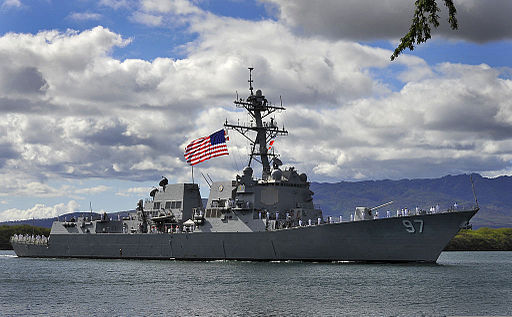
USS Halsey (DDG-97)
USS Halsey (DDG-97) is a state-of-the-art Arleigh Burke-class guided missile destroyer that represents the pinnacle of modern naval engineering and combat capability. As part of the United States Navy’s commitment to maintaining maritime superiority, this vessel combines advanced sensor technologies, a robust armament suite, and exceptional maneuverability. Named in honor of Fleet Admiral William F. Halsey, USS Halsey carries a proud legacy of leadership and innovation in naval warfare.
Historical Background and Legacy
Namesake and Inspiration
USS Halsey is named after Fleet Admiral William F. Halsey, a legendary figure renowned for his decisive leadership during World War II. His strategic brilliance and fearless command continue to inspire the ship’s crew and embody the Navy’s enduring tradition of excellence. The vessel’s name is a constant reminder of the high standards set by its namesake and the ongoing evolution of naval tactics and technology.
Evolution of the Arleigh Burke-Class
As a member of the Arleigh Burke-class, USS Halsey benefits from decades of iterative improvements in design and technology. Introduced in the 1990s, this class of destroyers has continually evolved to meet modern threats, integrating cutting-edge systems that enhance situational awareness, lethality, and survivability. USS Halsey reflects the culmination of these advancements, ensuring it remains a critical asset in the fleet.
Design and Construction
Construction Process and Timeline
USS Halsey was constructed through a highly coordinated process that merged traditional shipbuilding techniques with advanced modular construction methods. Built by a leading shipyard for the U.S. Navy, the destroyer underwent rigorous testing and trials before its commissioning. The streamlined production approach ensured that every component met the exacting standards required for modern naval operations.
Design Philosophy and Innovations
The design of USS Halsey emphasizes versatility, resilience, and efficiency. Every aspect of her construction—from the hull form to the integration of sophisticated combat systems—was optimized to support a wide range of mission profiles in both peacetime and combat scenarios.
Hull and Structural Integrity
The vessel’s hull is engineered for superior hydrodynamics and durability. Its sleek form minimizes drag, enhancing fuel efficiency and speed, while a reinforced structure ensures that the ship can withstand the stresses of high-speed maneuvers and adverse sea conditions. Advanced materials and construction techniques contribute to its long-term durability and reduced maintenance needs.
Stealth and Signature Management
Incorporating design features that reduce radar cross-section and infrared signature, USS Halsey is built to operate effectively in contested environments. The careful arrangement of superstructures and the use of radar-absorbent materials help to lower detectability, enhancing the ship’s survivability in modern warfare scenarios.
Technical Specifications
Dimensions and Displacement
USS Halsey (DDG-97) possesses dimensions typical of modern Arleigh Burke-class destroyers:
- Length: Approximately 505 feet (154 meters)
- Beam: Roughly 66 feet (20 meters)
- Draft: About 30 feet (9 meters)
- Displacement: Ranges between 9,200 and 9,700 tons at full load
These dimensions strike a balance between spaciousness for advanced systems and the agility necessary for rapid maneuvers in tactical operations.
Propulsion and Performance
Engine and Propulsion System
USS Halsey is powered by four General Electric LM2500 gas turbines arranged in a combined gas turbine and diesel (COGAG) configuration. This advanced propulsion system delivers over 100,000 shaft horsepower, enabling:
- High Speed: Top speeds exceeding 30 knots.
- Agility: Rapid acceleration and precise maneuverability critical for combat scenarios.
- Fuel Efficiency: Extended operational range for prolonged deployments.
Range and Endurance
With an impressive operational range of approximately 4,400 nautical miles at economical speeds, USS Halsey is designed for sustained operations across vast oceanic theaters. This endurance makes the ship an ideal platform for both blue-water operations and rapid response missions.
Armament and Combat Systems
USS Halsey is equipped with a comprehensive suite of weapons and defensive systems designed for multi-threat engagement across various domains.
Vertical Launch System (VLS)
A central feature of USS Halsey’s combat capability is its Mark 41 Vertical Launch System (VLS), which can deploy a variety of missiles including:
- Standard Missiles (SM-2/SM-6): For anti-air warfare and missile defense.
- Tomahawk Land Attack Missiles (TLAM): For precision strike operations against land targets.
- Anti-Submarine Missiles: Enhancing the ship’s capability to engage underwater threats.
The VLS provides rapid and flexible response options, allowing the vessel to adapt its missile loadout based on the evolving tactical situation.
Naval Gun and Close-In Weapon Systems
Complementing its missile systems, USS Halsey is armed with:
- A 5-inch (127 mm) Naval Gun: Capable of engaging surface targets, providing naval gunfire support, and performing shore bombardment.
- Close-In Weapon Systems (CIWS): Automated systems designed to detect and neutralize incoming threats such as anti-ship missiles and aircraft at close range.
Anti-Submarine Warfare (ASW) Capabilities
To counter underwater threats, USS Halsey is outfitted with torpedo tubes and advanced sonar systems. These tools enable the destroyer to detect, track, and engage enemy submarines, bolstering its multi-domain operational effectiveness.
Sensor Suite and Combat Management
Aegis Combat System
At the core of USS Halsey’s operational capabilities is the Aegis Combat System. This integrated command and control system processes data from various sensors to track and engage multiple targets simultaneously. The Aegis system provides:
- Real-Time Threat Analysis: Enabling rapid decision-making in dynamic combat environments.
- Network-Centric Warfare Integration: Facilitating communication and coordination with other naval assets.
Radar and Sonar Technologies
USS Halsey features the AN/SPY-1D(V) radar system, renowned for its capability to detect and track airborne and surface threats over long distances. Additionally, the vessel is equipped with advanced sonar systems that enhance its ability to conduct anti-submarine warfare, ensuring comprehensive situational awareness.
Operational Capabilities and Mission Roles
Multi-Mission Flexibility
USS Halsey is designed to execute a wide array of missions, reflecting the evolving nature of modern naval warfare. Its capabilities span:
- Air Defense: Protecting fleet assets from aerial and missile threats.
- Surface Warfare: Engaging enemy ships with precision missile strikes.
- Anti-Submarine Warfare: Utilizing sonar and torpedo systems to detect and neutralize underwater adversaries.
- Land Attack Operations: Employing Tomahawk missiles to conduct precision strikes on strategic land targets.
Integration into Carrier Strike Groups
As a key component of Carrier Strike Groups, USS Halsey operates in tandem with aircraft carriers, submarines, and other surface combatants. Its advanced communication systems and network-centric capabilities enable seamless coordination, ensuring a unified and adaptive response to emerging threats.
Modernization and Upgrades
Continuous Technological Enhancements
To remain at the forefront of naval technology, USS Halsey undergoes regular modernization programs. These enhancements include:
- Software Upgrades: Enhancements to the Aegis Combat System improve threat detection and response times.
- Sensor Improvements: Upgraded radar and sonar systems provide better resolution and range.
- Cybersecurity Enhancements: Strengthening digital defenses against potential cyber threats.
Future-Ready Design
The ship’s design and modular systems allow for the integration of emerging technologies. This future-proofing ensures that USS Halsey will continue to evolve in response to new threats and operational requirements, maintaining its status as a versatile and formidable asset.
Conclusion
USS Halsey (DDG-97) stands as a remarkable example of modern naval engineering and strategic innovation. With its advanced propulsion, robust armament, and cutting-edge sensor suite, the destroyer is well-equipped to meet the challenges of contemporary maritime warfare. Serving as a vital component of the United States Navy, USS Halsey not only honors the legacy of its namesake but also exemplifies the continued commitment to excellence, adaptability, and technological superiority in naval operations.
_arrives_at_Joint_Base_Pearl_Harbor-Hickam,_Hawaii_130214-N-WF272-012.jpg)