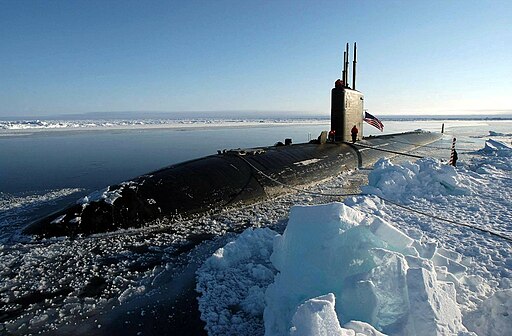
USS Hampton (SSN-767)
USS Hampton (SSN-767) is a Los Angeles-class nuclear-powered fast attack submarine that exemplifies the cutting-edge technology and operational versatility of modern naval warfare. Designed to conduct a wide range of missions—from anti-submarine warfare to intelligence gathering and strike operations—USS Hampton stands as a formidable asset within the United States Navy. Its advanced systems, stealth features, and robust construction enable it to operate effectively in some of the most challenging maritime environments.
Historical Background and Naming
Heritage and Namesake
USS Hampton (SSN-767) is named in honor of the city of Hampton, Virginia, a locale steeped in maritime tradition and historical significance. The vessel’s name reflects the Navy’s longstanding tradition of linking its submarines to communities with deep naval roots, thereby fostering a sense of pride and connection between the Navy and the American public.
Service History and Legacy
Since its commissioning, USS Hampton has been an integral part of the Navy’s submarine force, contributing to various strategic operations and training exercises around the globe. Over its years of service, the submarine has participated in joint multinational exercises and has supported critical missions that underscore the importance of undersea warfare in maintaining maritime security and deterrence.
Design and Construction
Construction Process and Timeline
USS Hampton was constructed using a combination of traditional shipbuilding techniques and state-of-the-art modern fabrication methods. Built at a premier naval shipyard, the submarine underwent a meticulous construction process that emphasized quality control and precision engineering. Its construction involved modular assembly techniques that allowed for efficient integration of complex systems, ensuring that the vessel met the rigorous standards required for nuclear-powered platforms.
Design Philosophy and Innovations
The design of USS Hampton reflects a balance between stealth, speed, and operational endurance. Emphasizing a low acoustic signature and advanced hydrodynamics, the submarine is built to remain undetected while maneuvering rapidly through hostile waters. The integration of cutting-edge digital control systems and sensor technologies further enhances its ability to execute multi-domain operations.
Hull and Structural Integrity
The hull of USS Hampton is crafted from high-strength steel alloys, designed to withstand extreme pressure and stress during deep-diving operations. Its hydrodynamic shape minimizes drag, contributing to fuel efficiency and high-speed performance. Structural reinforcements are strategically placed to endure the rigors of prolonged undersea missions and to ensure the safety of the crew in adverse conditions.
Stealth and Signature Management
A critical aspect of the submarine’s design is its emphasis on stealth. Advanced sound-dampening materials and carefully engineered hull forms reduce the vessel’s acoustic signature, making it difficult for adversaries to detect. This signature management is complemented by state-of-the-art electronic countermeasures and decoy systems that further enhance its survivability in contested environments.
Technical Specifications
Dimensions and Displacement
USS Hampton (SSN-767) is designed with dimensions optimized for both operational performance and crew habitability:
- Length: Approximately 362 feet (110 meters)
- Beam: Around 33 feet (10 meters)
- Draft: Nearly 32 feet (9.8 meters)
- Displacement: Roughly 6,900 tons when surfaced and about 7,100 tons when submerged
These dimensions provide a balance that allows the submarine to navigate narrow channels and deep waters alike, while accommodating the extensive array of systems and living quarters required for extended deployments.
Propulsion and Performance
Nuclear Propulsion System
At the heart of USS Hampton is a nuclear propulsion system powered by a compact reactor. This reactor enables the submarine to operate with virtually unlimited range and endurance, limited only by food and crew requirements rather than fuel. The propulsion system generates enough power to drive the submarine at speeds exceeding 25 knots when submerged, offering rapid response capabilities in tactical situations.
Speed and Maneuverability
The advanced propulsion architecture, combined with precise digital control systems, allows USS Hampton to achieve high speeds and agile maneuverability. These characteristics are critical for both evading enemy detection and launching rapid offensive or defensive actions.
Armament and Combat Systems
USS Hampton is equipped with a formidable arsenal designed to engage multiple types of threats across various operational domains.
Torpedo Tubes and Missile Launch Capabilities
The submarine is armed with torpedo tubes capable of launching a variety of weapons, including:
- Mark 48 Advanced Capability (ADCAP) Torpedoes: Designed for anti-submarine and anti-surface warfare.
- Tomahawk Land Attack Missiles (TLAM): Providing precision strike capabilities against land targets.
- Advanced Cruise Missiles: Enhancing the vessel’s ability to project power beyond the immediate theater of operations.
Sensor Suite and Combat Management
USS Hampton employs an array of sophisticated sensors and combat management systems:
- Sonar Systems: State-of-the-art passive and active sonar arrays that allow the submarine to detect and track enemy vessels and underwater threats.
- Electronic Warfare Systems: Advanced digital systems designed to intercept and counteract enemy communications and radar signals.
- Combat Information Center (CIC): The nerve center of the submarine where data from various sensors is integrated, analyzed, and used to coordinate tactical decisions in real time.
Crew and Living Conditions
Accommodations and Crew Facilities
USS Hampton is designed to support a highly trained crew on long-duration missions. The vessel features modern living quarters, recreational areas, and training facilities that ensure the crew remains fit, alert, and ready for any operational challenge. The design also emphasizes efficiency in space utilization, allowing for optimal functionality without sacrificing comfort.
Operational Readiness and Endurance
The combination of nuclear propulsion and robust design means USS Hampton can remain deployed for extended periods. Its self-sufficient systems and onboard maintenance capabilities enable the submarine to conduct covert operations and participate in sustained surveillance missions without the need for frequent resupply stops.
Operational Capabilities and Mission Roles
Anti-Submarine and Anti-Surface Warfare
USS Hampton’s primary mission is to counter enemy submarines and surface vessels. With its advanced sonar and torpedo systems, the submarine is well-equipped to detect, track, and neutralize threats in the undersea domain. Its stealth and speed allow it to engage adversaries effectively while remaining undetected.
Intelligence, Surveillance, and Reconnaissance (ISR)
In addition to its combat roles, USS Hampton plays a vital part in gathering intelligence. Its sensor suite collects valuable data on enemy movements and environmental conditions, which is then relayed to command centers for strategic planning. This ISR capability makes the submarine a critical asset in both peacetime operations and conflict scenarios.
Special Operations Support
USS Hampton is also capable of supporting special operations forces (SOF). Its ability to deploy covertly and operate undetected in hostile environments makes it an ideal platform for missions that require precision insertion and extraction of elite personnel.
Modernization and Upgrades
Technological Enhancements
To maintain its edge in modern naval warfare, USS Hampton undergoes regular upgrades. These enhancements include:
- Software and Hardware Upgrades: Continuous improvements to the combat management system and sensor arrays enhance real-time threat detection and engagement.
- Enhanced Electronic Warfare Capabilities: Upgrades to countermeasure systems help to protect the vessel from emerging threats in the digital and electronic domains.
- Improved Crew Facilities: Modernization efforts also focus on improving the living conditions and training facilities onboard to ensure peak operational readiness.
Future-Ready Design
The modular design of USS Hampton allows for the integration of new technologies as they become available. This future-proofing strategy ensures that the submarine can adapt to evolving threats and maintain its operational effectiveness well into the future.
Conclusion
USS Hampton (SSN-767) is a prime example of modern undersea warfare technology, combining stealth, speed, and advanced combat systems in one formidable package. From its robust nuclear propulsion system to its sophisticated sensor and weapon suites, every aspect of the submarine’s design is aimed at maintaining naval superiority in an increasingly complex maritime environment. As part of the United States Navy’s enduring commitment to innovation and excellence, USS Hampton continues to play a crucial role in safeguarding national interests and projecting power beneath the waves.
