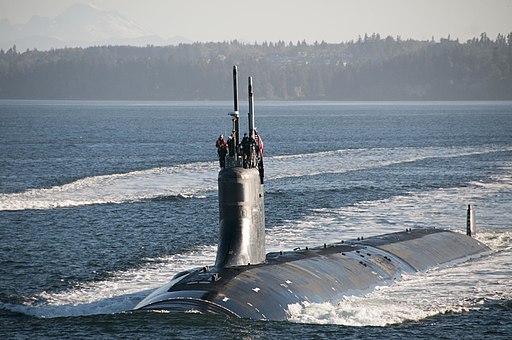
USS Jimmy Carter (SSN-23)
USS Jimmy Carter (SSN-23): America’s Most Mysterious Submarine
The USS Jimmy Carter (SSN-23) stands as one of the most secretive and technologically advanced vessels in the history of the United States Navy. As the third and final submarine in the Seawolf-class, this nuclear-powered fast attack submarine extends beyond traditional roles of undersea warfare. Named after the 39th President of the United States, himself a former submariner, the Jimmy Carter integrates a suite of specialized capabilities that set it apart from its sister ships and any other submarine in the world.
Development and Background
The Seawolf-class was conceived during the Cold War as a response to the increasingly quiet and capable Soviet submarine fleet. Designed to dominate deep-sea warfare, Seawolf-class submarines feature advanced sonar systems, high speed, deep diving capability, and extremely low acoustic signatures. While the original class was meant to include 29 boats, the end of the Cold War and budgetary constraints reduced the final number to just three: USS Seawolf (SSN-21), USS Connecticut (SSN-22), and USS Jimmy Carter (SSN-23).
What makes the USS Jimmy Carter unique, however, is that it is not merely the last of the Seawolf-class—it is a radical extension of the class’s potential. While its predecessors are focused on attack roles, Jimmy Carter has been extensively modified to carry out espionage, special operations support, and undersea engineering missions.
General Characteristics
- Type: Nuclear-powered fast attack submarine
- Class: Seawolf-class (modified)
- Hull Number: SSN-23
- Builder: General Dynamics Electric Boat Division
- Launched: May 13, 2004
- Commissioned: February 19, 2005
- Homeport: Naval Base Kitsap, Bangor, Washington
- Namesake: Jimmy Carter – 39th President of the United States, U.S. Navy submariner
Physical and Propulsion Specifications
- Displacement:
- Surfaced: Approximately 8,060 tons
- Submerged: Approximately 12,140 tons (increased from other Seawolf-class subs due to modifications)
- Length: 453 feet (138 meters)
- Extended from the original 353 feet to accommodate the MMP
- Beam: 40 feet (12.3 meters)
- Draft: 35 feet (10.7 meters)
- Propulsion System:
- One S6W nuclear reactor
- Two steam turbines
- One pump-jet propulsor (for quieter operation)
- Single shaft
- Speed:
- Submerged: Over 30 knots (exact speed classified)
- Test Depth: Estimated over 800 feet (classified exact maximum)
- Endurance: Practically unlimited (limited by crew supplies; nuclear reactor core can last 30+ years)
Unique Capabilities and Modifications
The most distinctive feature of the USS Jimmy Carter is the Multi-Mission Platform (MMP), an approximately 100-foot (30-meter) hull extension inserted forward of the sail. This module enables an unprecedented array of mission types, including:
1. Undersea Cable Operations
Jimmy Carter is reportedly equipped to tap undersea communication cables, a critical element of surveillance and intelligence gathering. It may be capable of deploying unmanned vehicles or divers to access and exploit cable data covertly.
2. Special Operations Support
The submarine is believed to support Navy SEALs and other special forces via a Dry Deck Shelter (DDS) or lock-in/lock-out chamber. This allows operatives to exit and return to the submarine while submerged. It likely carries advanced command-and-control infrastructure to manage covert missions.
3. Unmanned Vehicle Deployment
The MMP can launch and recover unmanned underwater vehicles (UUVs) or autonomous underwater drones, a capability increasingly vital for reconnaissance and mine detection in contested waters.
4. Advanced Sensors and Eavesdropping Gear
While much remains classified, intelligence experts suggest that Jimmy Carter contains highly specialized equipment for signals intelligence (SIGINT), electronic intelligence (ELINT), and acoustic surveillance.
Armament
Although its primary focus is on special missions, the Jimmy Carter retains formidable offensive capabilities consistent with Seawolf-class specifications:
- Torpedo Tubes: 8 x 660 mm (26 in) forward torpedo tubes
- Ordnance Capacity: Up to 50 weapons including:
- MK 48 ADCAP torpedoes
- Tomahawk Land Attack Missiles (TLAMs)
- Mines and potentially future hypersonic payloads
- Vertical Launch System: None (all weapons launched via torpedo tubes)
Crew and Habitability
- Complement:
- Around 140 total personnel
- Includes a specialized contingent for intelligence and special operations
- Habitability Features:
- Advanced accommodations and facilities
- Extended mission endurance and redundant life-support systems
- Special provisions for joint operations teams (e.g., SEALs or technical specialists)
Operational History
Due to the classified nature of its missions, the operational record of the USS Jimmy Carter remains mostly speculative. It is understood to operate in intelligence-heavy patrols, likely near undersea cables and in sensitive geopolitical zones. Reports suggest involvement in surveillance missions in the Pacific and Arctic regions.
In 2017, the submarine returned to port flying the Jolly Roger, a traditional but rare U.S. Navy practice signaling a successful combat or special mission. This underscored the speculation surrounding its nontraditional, high-stakes role in national security.
Strategic Role in the 21st Century
In an era of cyber warfare, hybrid threats, and great power competition, the USS Jimmy Carter represents a bridge between kinetic military operations and digital/intelligence warfare. It is uniquely suited for tasks that combine stealth, intelligence gathering, and undersea engineering—a submarine at the crossroads of old-school naval dominance and next-generation cyber-intelligence.
Its capabilities are especially relevant given rising tensions in the South China Sea, Arctic Circle, and North Atlantic, where Russia and China are investing heavily in both undersea warfare and subsea infrastructure.
Conclusion
The USS Jimmy Carter (SSN-23) is more than a warship—it is a floating black ops base, an intelligence collector, and a maritime engineering marvel. While much of what it does remains in the shadows, its very existence serves as a strategic deterrent, a technical triumph, and a symbol of American naval ingenuity.
Whether silently monitoring the deep or deploying elite forces beneath hostile waters, SSN-23 continues to play a critical, if largely unseen, role in defending U.S. interests around the globe.
