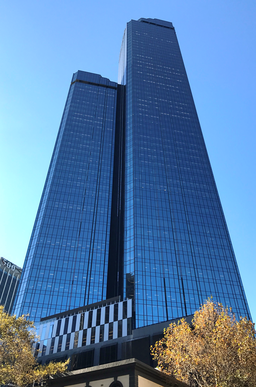
Rialto Towers
Rialto Towers: Melbourne’s Pioneering Skyscraper
Standing as a prominent fixture of the Melbourne skyline since the 1980s, Rialto Towers has long been regarded as one of Australia’s most iconic skyscrapers. Designed during a period of bold architectural ambition, the complex embodies the spirit of innovation, blending sophisticated design with robust engineering. Once the tallest office building in the Southern Hemisphere, Rialto Towers remains a symbol of Melbourne’s transformation into a global city.
Situated at 525 Collins Street in the heart of Melbourne’s Central Business District (CBD), the Rialto Towers complex is a stunning example of modernist skyscraper design, notable for its sleek glass façades and twin-tower configuration.
Architectural Vision
The architectural concept for Rialto Towers was developed by Gerard de Preu and Partners in collaboration with Perrott Lyon Mathieson. Their vision was to create a bold vertical form that made a powerful statement on Melbourne’s skyline while reflecting modern corporate ambitions.
The towers were named after the historic Rialto Building, part of the site’s original Victorian-era structures, and the design consciously incorporated elements of the historic streetscape into the new complex. This sensitive blending of old and new architecture was pioneering at the time and set a precedent for future developments in the city.
The twin towers — one taller than the other — create a dynamic composition that catches the changing light throughout the day, providing a constantly evolving visual experience.
Technical Specifications
- Taller tower height (roof): 251 meters (823 feet)
- Shorter tower height: 185 meters (607 feet)
- Floor count (taller tower): 63 floors
- Floor count (shorter tower): 41 floors
- Construction period: 1982 – 1986
- Primary use: Commercial office space
- Total floor area: Approximately 84,000 square meters
- Elevators: 43 lifts servicing different sections via sky lobbies
- Architects: Gerard de Preu & Partners in association with Perrott Lyon Mathieson
- Structural engineer: Irwinconsult
- Developer: Grollo Group (Bruno Grollo)
- Builder: Grollo Group
At the time of its completion in 1986, the taller tower of Rialto was the tallest building in Australia and the Southern Hemisphere, a title it held until it was surpassed by later projects like Melbourne’s Eureka Tower.
Structural Engineering and Design
Rialto Towers’ construction faced numerous engineering challenges, particularly given the variable soil conditions of Melbourne’s CBD and the need to integrate existing heritage structures on the site.
Key elements of the structural system include:
- Reinforced concrete cores: Each tower has a separate core providing lateral stability and housing elevators, staircases, and services.
- Steel-reinforced concrete columns: These columns support vertical loads, with high-strength materials used to minimize the footprint of internal structural elements.
- Deep foundation piles: Extending into Melbourne’s bedrock to provide strong anchorage, essential for such tall structures.
- Sky lobbies: The office floors are accessed via mid-tower sky lobbies, where passengers change from high-speed lifts to local lifts servicing individual floors. This configuration optimizes vertical transportation efficiency.
The towers’ façades also required careful engineering to handle the thermal expansion and contraction cycles typical of Melbourne’s temperate climate.
Façade and External Appearance
One of the most striking aspects of Rialto Towers is its façade treatment:
- Blue reflective glass curtain wall: Designed to reflect Melbourne’s often dramatic skies, the façade changes color throughout the day — from deep blue to silver and even golden hues during sunset.
- Aluminum framing: Provides lightweight support for the glass panels while maintaining strong weather resistance.
- Minimalist design language: The emphasis on clean lines and reflective surfaces marked a departure from the heavily textured or ornamental façades of earlier decades.
The twin-tower design ensures that light and shadow play dynamically across the building surfaces, enhancing its visual impact from various vantage points around the city.
Office Spaces and Interior Layout
At its core, Rialto Towers was designed to provide high-quality office environments that would meet the demands of modern businesses.
Interior features include:
- Large, flexible floor plates: Allowing customizable layouts to suit a variety of tenants, from multinational corporations to professional services firms.
- High ceiling clearances: Enhancing a sense of space and natural light penetration.
- Advanced building services: Including sophisticated air conditioning, lighting, and communication infrastructure.
- Executive floors: The uppermost levels provide premium office suites with panoramic views across Melbourne, Port Phillip Bay, and beyond.
Over the years, the interiors have been extensively refurbished to maintain world-class standards and meet evolving tenant expectations, including sustainability upgrades and smart building technologies.
Amenities and Features
Rialto Towers also offers a range of amenities to support business operations and employee wellbeing:
- Podium-level retail spaces: Cafés, restaurants, and service outlets cater to the daily needs of office workers.
- End-of-trip facilities: Modern showers, lockers, and secure bicycle parking encourage sustainable commuting.
- Car parking: Multi-level underground car park with over 400 spaces.
- Conference and event facilities: Versatile meeting rooms and boardrooms equipped with the latest audiovisual technology.
- Observation deck: The Rialto Observation Deck, located on the 55th floor, was a major tourist attraction from its opening in the late 1980s until its closure in 2009. It offered spectacular 360-degree views of the city and surrounding regions.
In 2017, a major redevelopment introduced the Rialto Regeneration Project, enhancing the podium and lower levels with new dining and business hubs.
Sustainability and Environmental Performance
While Rialto Towers was designed before sustainability became a major consideration, significant upgrades have since been made to improve environmental performance:
- 4.5-Star NABERS Energy Rating: Reflecting substantial investments in energy efficiency retrofitting.
- Water conservation systems: Installation of rainwater harvesting and water-efficient fixtures.
- Energy-efficient lighting and HVAC: Implemented during major refurbishments to reduce the building’s operational carbon footprint.
- Waste recycling programs: Rolled out across the complex to support Melbourne’s broader sustainability goals.
These initiatives have helped extend the life of the building and maintain its competitiveness in a market increasingly focused on green credentials.
Construction and Development Highlights
The construction of Rialto Towers was groundbreaking for Melbourne:
- Pioneering jump-form construction techniques: Enabled rapid vertical core construction.
- Complex site logistics: Required intricate planning, as construction had to proceed alongside the retention and restoration of historic Victorian-era buildings on Collins Street.
- High public interest: The project captured public imagination, with many Melburnians watching the twin towers rise steadily over the early 1980s.
Upon completion, Rialto Towers was a symbol of Melbourne’s ambition and a catalyst for further high-rise developments in the CBD.
Cultural and Urban Impact
Beyond its technical achievements, Rialto Towers played a pivotal role in redefining Melbourne’s urban character. It shifted the city’s business focus further west along Collins Street and contributed to the emergence of the western end of the CBD as a premium commercial precinct.
The building’s role as a visual and cultural landmark was solidified through its appearance in films, television shows, and tourism campaigns showcasing Melbourne’s modernization.
The regeneration project completed in the 2010s further cemented Rialto’s role as a dynamic urban destination, blending workspaces with hospitality and leisure offerings.
Conclusion
Rialto Towers remains a celebrated masterpiece of modern architecture and engineering in Australia. Its twin gleaming spires, innovative construction, and lasting cultural significance make it one of Melbourne’s defining skyscrapers. Even decades after its completion, Rialto continues to evolve, demonstrating the power of visionary design and the enduring appeal of skyscrapers that blend functionality, beauty, and ambition.
As Melbourne’s skyline grows ever taller and more complex, Rialto Towers stands proudly as a reminder of the boldness that first launched the city into the global architectural spotlight.
