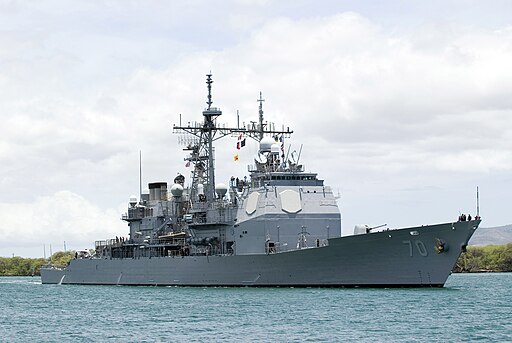
USS Lake Erie (CG-70)
USS Lake Erie (CG-70) is a Ticonderoga-class guided missile cruiser that has played a significant role in the United States Navy since her commissioning in the early 1990s. Named to honor one of the great American naval victories—the Battle of Lake Erie—this vessel combines advanced sensor and weapons suites with proven hull design and powerful propulsion. USS Lake Erie is not only a symbol of naval heritage but also a modern multi-role warship, capable of simultaneously delivering robust air defense, precision land strikes, and anti-submarine operations.
History and Legacy
Naming and Heritage
The name USS Lake Erie commemorates the decisive naval victory during the War of 1812, when American forces secured control of one of North America’s largest freshwater lakes. This historical nod serves as a reminder of the nation’s long-standing maritime tradition and underlines the importance of sea power in shaping U.S. security and global influence.
Construction and Commissioning
Built by Bath Iron Works in Bath, Maine, USS Lake Erie’s keel was laid down on March 6, 1990. She was launched on July 13, 1991 and commissioned in 1993, joining the Pacific Fleet with a homeport that has included Pearl Harbor and later San Diego. Her construction employed modern modular building techniques and state-of-the-art materials to ensure durability, reduced radar cross-section, and high survivability in multiple threat environments.
Design and Construction
Hull Design and Structural Considerations
USS Lake Erie is built to the Ticonderoga-class baseline, which is celebrated for its sleek, angular hull design. The vessel’s structure is optimized for both hydrodynamic efficiency and stealth. Constructed from advanced high-strength steel alloys, her hull supports an impressive array of weapons, sensors, and electronics while maintaining low observability. This design not only enhances performance in high-speed transit but also improves the ship’s ability to operate within contested environments.
Propulsion System and Performance
At the heart of USS Lake Erie’s performance is her propulsion system, consisting of four General Electric LM2500 gas turbines. These turbines drive two controllable-reversible pitch propellers and are paired with twin rudders, enabling the ship to reach speeds up to 32.5 knots. This powerful propulsion system provides both rapid acceleration and exceptional maneuverability. The design ensures that USS Lake Erie can conduct extended patrols while maintaining the speed necessary for fleet defense and dynamic positioning during complex operations.
Technical Specifications
General Characteristics and Dimensions
USS Lake Erie is a formidable presence at sea, and her technical specifications reflect her role as a high-endurance, multi-mission cruiser. Below is a summary of her key parameters:
| Parameter | Value |
|---|---|
| Class/Type | Ticonderoga-class Guided Missile Cruiser |
| Full Load Displacement | Approximately 9,600 long tons (9,800 t) |
| Overall Length | 567 feet (173 m) |
| Beam | 55 feet (16.8 m) |
| Draft | 34 feet (10.2 m) |
| Propulsion | 4 x GE LM2500 gas turbines, 2 shafts |
| Maximum Speed | 32.5 knots |
| Complement | About 30 officers and 300 enlisted personnel |
These dimensions provide the structural basis necessary to house a wide spectrum of weapon systems and sophisticated electronics while ensuring stability and speed.
Sensor and Electronic Warfare Systems
Modern warfare requires supreme situational awareness, and USS Lake Erie delivers this through an integrated suite of sensors and battle management systems. Key components include:
- AN/SPY-1 A/B Multi-Function Radar: The centerpiece of the Aegis Combat System, this radar enables 360-degree detection and tracking of airborne, surface, and even subsurface threats.
- Additional Radar Systems: The cruiser employs various radars for fire control (AN/SPG-62) and surface search (AN/SPS-73) that allow precise targeting.
- Sonar and Processing Suites: An array of active and passive sonar systems—including advanced data processors—facilitates anti-submarine warfare and environmental monitoring.
- Electronic Countermeasure Suites: Modern ECM systems protect the vessel by detecting and jamming enemy targeting signals, enhancing her survivability in contested areas.
Armament and Weapons Systems
USS Lake Erie is equipped with an impressive array of weaponry, making her a multi-mission asset capable of engaging threats in every domain.
Vertical Launch System (VLS)
The cruiser hosts two Mk 41 VLS, consisting of 61 cells each (totaling 122 cells). This system is versatile enough to launch a range of missile types, such as:
- Surface-to-Air Missiles: Including RIM-66M-5 SM-2MR Block IIIB and RIM-156A SM-2ER Block IV for medium- to long-range air defense.
- Ballistic Missile Defense: The VLS can launch RIM-161 SM-3 missiles for countering ballistic missile threats.
- Anti-Submarine Warfare: RUM-139A VL-ASROC missiles are among the armament to counter underwater adversaries.
- Land Attack Capabilities: BGM-109 Tomahawk cruise missiles offer precision strikes against strategic land targets.
Secondary and Close-In Systems
In addition to the VLS, USS Lake Erie is outfitted with several other key weapon systems:
- 5-inch/62 Caliber Mark 45 Gun: Provides a capable naval artillery platform for surface engagements and shore bombardment.
- Harpoon Missiles: Eight RGM-84 Harpoon anti-ship missiles extend her punch against surface vessels.
- Phalanx CIWS: Two Block 1B systems offer rapid-fire defense against incoming anti-ship missiles and close-range threats.
- Machine Guns and Torpedo Tubes: Multiple .50-caliber machine guns, Mk 38 25 mm systems, and Mk 32 triple torpedo tubes further enhance the ship’s defensive and offensive capabilities.
Aviation Support
USS Lake Erie is also configured to embark two MH-60R Seahawk helicopters. These rotary-wing assets provide extended reach for anti-submarine warfare, reconnaissance, and search and rescue operations, adding another layer of versatility to the cruiser’s overall capabilities.
Operational Capabilities
Multi-Domain Engagement
USS Lake Erie is designed to operate across a broad spectrum of naval missions. Her sophisticated sensor network and multi-layered weapon systems empower her to:
- Conduct Air Defense Operations: By integrating Aegis with an advanced VLS, the ship can track and engage multiple aerial threats, safeguarding carrier strike groups and expeditionary forces.
- Perform Precision Land Strikes: Tomahawk missiles enable the cruiser to deliver precise, long-range strikes against strategic ground targets.
- Counter Undersea Threats: Through dedicated anti-submarine systems and ASROC capabilities, USS Lake Erie contributes to fleet survivability in underwater domains.
- Support Surface Warfare: With anti-ship missiles and a heavy naval gun, the cruiser is well-equipped for engagements against enemy surface vessels.
Integration into Carrier Strike Groups
In modern naval operations, interoperability and network-centric warfare are paramount. USS Lake Erie is an integral component of carrier strike groups, coordinating with other ships, aircraft, and command centers. This integration ensures comprehensive situational awareness and rapid response during complex, multi-threat operations. Her robust communications systems and data processing capabilities allow her to serve as both a primary defensive platform and a force multiplier in offensive scenarios.
Modernization and Future Upgrades
Technological Enhancements
To maintain its competitive edge in a rapidly evolving threat landscape, USS Lake Erie undergoes routine modernization. Upgrades typically focus on:
- Improving Sensor Resolution: Enhancements to radar and sonar systems increase detection range and tracking accuracy.
- Upgrading Missile Mediums: The integration of next-generation missile interceptors and updated variants of existing systems ensures continued effectiveness against evolving threats.
- Enhancing Cyber and Data Fusion Capabilities: Modern digital systems improve networking with allied forces and allow rapid dissemination of tactical data, bolstering the overall performance of the Aegis system.
Sustaining Operational Relevance
Regular system upgrades and technological refreshes ensure that USS Lake Erie remains a formidable asset well into the future. By incorporating new developments in stealth, automation, and electronic warfare, the cruiser continuously adapts to address emerging challenges and secure the maritime domain.
Conclusion
USS Lake Erie (CG-70) stands as a testament to modern naval engineering and strategic foresight. With a proud heritage that ties back to one of America’s greatest naval victories, the cruiser combines advanced sensors, an array of lethal weapon systems, and robust propulsion to maintain maritime superiority. Whether integrated into a carrier strike group or deployed independently for specific missions, USS Lake Erie’s multi-domain capabilities secure her role as a versatile guardian of the sea. As modernization initiatives propel her into the future, the vessel will continue to serve as a critical pillar of U.S. naval power and a symbol of enduring maritime excellence.
_arrives_at_Naval_Station_Pearl_Harbor_for_Rim_of_the_Pacific_(RIMPAC)_2008.jpg)