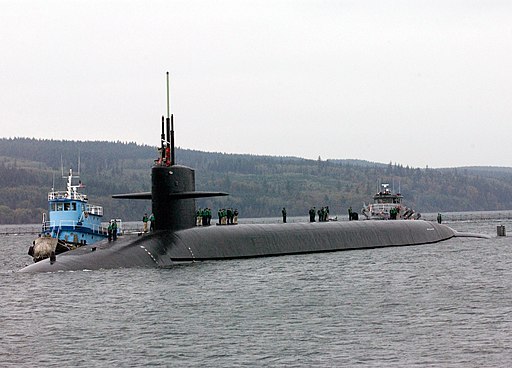
USS Louisiana (SSBN-743)
USS Louisiana (SSBN-743): A Pinnacle of Strategic Deterrence
The USS Louisiana (SSBN-743) stands as one of the most sophisticated instruments of modern strategic deterrence. As the 18th and final Ohio-class ballistic missile submarine, this vessel merges cutting-edge nuclear propulsion, advanced stealth technology, and formidable offensive capabilities into a single seaborne asset. Named in honor of the State of Louisiana, the USS Louisiana not only bears a storied name but also represents the enduring commitment of the United States to nuclear deterrence and maritime superiority.
Historical Background
Namesake and Legacy
The name “Louisiana” carries significant historical weight. This vessel is the fourth commissioned ship to bear the name, paying homage to a state known for its rich heritage, resilience, and cultural diversity. By adopting this name, the submarine not only celebrates regional pride but also reinforces the longstanding tradition of excellence in naval service that the United States Navy upholds.
Construction and Commissioning
The USS Louisiana embarked on her journey at a time when advances in submarine technology were essential to maintaining strategic balance.
- Ordered: December 19, 1990
- Keel Laid Down: October 23, 1992 at General Dynamics Electric Boat in Groton, Connecticut
- Launched: July 27, 1996
- Commissioned: September 6, 1997
Since entering service, the USS Louisiana has undergone several operational transitions, including a significant homeport shift from Kings Bay, Georgia, to Naval Base Kitsap in Bangor, Washington. This relocation has allowed the submarine to better integrate with the Pacific Fleet and reinforce U.S. presence across strategic littorals.
Design and Technical Specifications
Engineered to operate in the depths of the world’s oceans, the USS Louisiana (SSBN-743) exemplifies the pinnacle of submarine design and technical innovation. The following sections explore her design characteristics in detail.
General Dimensions and Displacement
The physical size and buoyant characteristics of the submarine are both a testament to robust naval engineering and a source of operational versatility:
- Displacement:
- Surfaced: Approximately 16,764 long tons
- Submerged: Approximately 18,750 long tons
- Length: Approximately 560 feet (170 meters)
- Beam: Approximately 42 feet (13 meters)
- Draft: Approximately 38 feet (12 meters)
These dimensions ensure a balance between stealth, stability, and the capacity to host a range of systems—from advanced reactors to ballistic missile launch containers.
Propulsion and Performance
At the heart of the USS Louisiana is a state-of-the-art nuclear reactor system which provides virtually unlimited endurance and rapid response capabilities:
- Nuclear Propulsion:
- Reactor Type: S8G pressurized-water reactor (PWR)
- Engine Arrangement: Coupled with two geared turbines that drive a single shaft
- Power Output: The propulsion system produces a staggering 60,000 shaft horsepower, enabling dynamic maneuvers and efficient long-term operation.
- Speed and Depth:
- Top Speed: In excess of 25 knots
- Test Depth: Capable of operating safely at depths greater than 800 feet (approximately 240 meters)
The integration of nuclear propulsion not only ensures that the submarine can remain on patrol for extended periods without refueling but also contributes to a reduced thermal and acoustic signature—a critical feature for remaining undetected in hostile environments.
Armament and Offensive Systems
The USS Louisiana is primarily designed as a strategic deterrent, with an armament suite focused on long-range ballistic missile capabilities complemented by defensive weapons:
Ballistic Missile System
- Trident II D5 SLBMs:
- Missile Count: 24 missile tubes
- Warhead Capacity: Each missile has the ability to be configured with multiple independently targetable reentry vehicles (MIRVs), each carrying nuclear warheads.
- Range: The Trident II D5 provides a global strike capability with ranges exceeding 12,000 kilometers, ensuring that the very presence of the submarine serves as a powerful deterrent.
Conventional Armaments
- Torpedo Armament:
- Torpedo Tubes: 4 × 533 mm torpedo tubes
- Torpedo Type: Typically armed with MK-48 ADCAP torpedoes for self-defense against underwater threats, including enemy submarines and surface vessels.
While the primary offensive mission is nuclear deterrence, the incorporation of conventional armaments allows the USS Louisiana flexibility in dynamic threat scenarios where defensive measures become paramount.
Sensor and Communication Suites
For a vessel that operates largely in the shadows of the deep ocean, advanced sensor systems are essential:
- Sonar Systems:
- Modern sonar arrays—including both active and passive systems—enable the detection and classification of threats well beyond visual range.
- These systems are crucial for navigation, target tracking, and situational awareness in complete darkness.
- Communication Networks:
- Encrypted and secure communication channels allow the submarine to remain in constant contact with command centers and other assets across the global theater.
- Satellite and underwater communication systems work in tandem to maintain connectivity, even in the most contested environments.
Crew and Habitability
A highly trained and versatile crew is the lifeblood of any submarine, and the USS Louisiana is no exception:
- Crew Complement: Approximately 15 officers and 140 enlisted personnel form the operational core.
- Dual-Crew Operation: Like other Ohio-class submarines, the USS Louisiana typically operates with two alternating crews (often referred to as the Blue and Gold crews) which allow for continuous deployment while ensuring that personnel receive adequate rest and training.
The design of the crew accommodations, command centers, and operational spaces ensures that personnel can remain effective during long patrols—even in the isolated and confined environment of a submerged vessel.
Operational Capabilities and Strategic Role
Nuclear Deterrence and Global Reach
The primary mission of the USS Louisiana is strategic deterrence. As part of the United States’ nuclear triad, her presence reinforces national security by ensuring a credible and survivable second-strike capability. The constant readiness of this ballistic missile submarine means that:
- Even under extreme conditions, the USS Louisiana can launch its payload of Trident II D5 missiles, drastically complicating enemy planning.
- The vessel’s stealth and extended patrol durations allow it to remain hidden in the vast expanses of the ocean floor, making it one of the most survivable components of U.S. nuclear forces.
Stealth and Survivability
The design choices made for the USS Louisiana focus heavily on reducing acoustic and thermal signatures:
- Acoustic Quieting: Advanced sound-dampening techniques and isolation mounts for machinery help minimize noise, making detection through sonar considerably more difficult.
- Hydrodynamic Shape: The hull design is optimized to reduce turbulence and drag, which not only improves speed but also minimizes the acoustic footprint.
- Operational Tactics: The use of alternating crew rotations and strategic patrol patterns enhance the likelihood that the submarine remains undetected across vast oceanic expanses.
Integration with Fleet Strategy
While operating independently as a strategic deterrent, the USS Louisiana is also a key component in larger naval operations:
- Coordinated Operations: The vessel’s ability to communicate securely with other platforms allows it to integrate into broader fleet strategies, including missile defense coordination and crisis response scenarios.
- Global Mobility: Her extensive range ensures that she can be deployed in any theater of operation, reinforcing American interests and sustaining deterrence globally.
The Future of Strategic Deterrence
As advances in technology and shifting geopolitical landscapes guide military strategy, the continued evolution of Ohio-class submarines like the USS Louisiana remains essential:
- Upgrade Potential: Modular design features allow for future technological enhancements, including improved sensor capabilities, upgraded communication systems, and potential propulsion innovations.
- Strategic Relevance: In an era defined by rapidly evolving threats, the ability to modernize ensures that this class of submarines will continue to serve as a cornerstone of the U.S. nuclear deterrence strategy for decades to come.
Conclusion
The USS Louisiana (SSBN-743) is a marvel of naval engineering—a fusion of robust design, relentless reliability, and powerful offensive capabilities. Its technical specifications, from a nuclear S8G reactor and stealth-enhanced hull to a globally impactful arsenal of Trident II D5 missiles, embody the strategic imperatives that define modern deterrence. Operating silently beneath the ocean’s surface, the USS Louisiana represents both a deterrent against potential adversaries and a formidable complement to the United States’ broader military strategy. As advancements in technology reshape the nature of conflict, this final Ohio-class submarine continues to underscore the indispensable role of strategic deterrence in preserving national security.
.jpg)