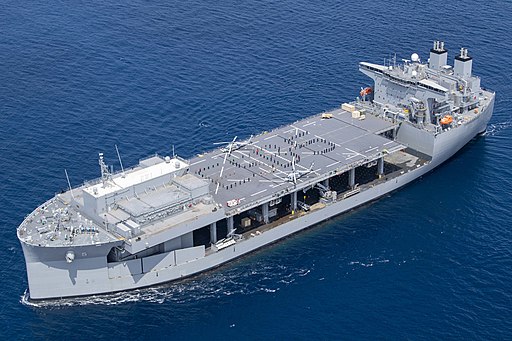
USS Miguel Keith (ESB-5)
USS Miguel Keith (ESB‑5) is one of the Lewis B. Puller‑class expeditionary mobile bases in service with the United States Navy. Originally designated as USNS Miguel Keith (T‑ESB‑5) before being commissioned, this vessel marks a transformative step in the Navy’s ability to project power ashore from the sea. Named for US Marine Corps Lance Corporal Miguel Keith—a recipient of the Medal of Honor for his heroic actions during the Vietnam War in 1970—the ship embodies the spirit of sacrifice and valor. Her name serves as a constant reminder of the legacy of bravery that inspires not only her crew but also future generations of service members.
Design and Construction
Heritage and Naming
The naming of USS Miguel Keith honors a Marine whose courageous actions on the battlefield have become legendary in modern military history. By bestowing his name on this expeditionary platform, the Navy pays tribute to his selflessness and determination while reinforcing the idea that the force projecting American power at sea is built upon the values of honor and sacrifice.
Construction and Build Process
USS Miguel Keith was built by the National Steel and Shipbuilding Company (NASSCO) in San Diego, California. Her construction reflects a blend of robust naval architecture and state‑of‑the‑art commercial technology. The vessel’s keel was laid on 30 January 2018, marking the commencement of a rigorous build process that included modern modular construction techniques. Launched on 10 August 2018 and officially commissioned on 8 May 2021, Miguel Keith was designed to offer unprecedented operational flexibility—able to transform from a floating command‑and‑control center to a dedicated base for special operations—all while operating under the laws of armed conflict.
Technical Specifications
The USS Miguel Keith (ESB‑5) is engineered to offer a versatile and mobile platform for a variety of missions. The technical parameters of the ship highlight the emphasis on substantial endurance, expansive operational capabilities, and support for aviation operations.
Dimensions and Displacement
- Length: Approximately 239 meters (785 feet)
- Beam: Approximately 50 meters (164 feet)
- Draft: About 10.5 meters (34.4 feet) at full load; up to 12.0 meters (39.4 feet) at the load line
- Displacement: Roughly 90,000 long tons (fully loaded)
These dimensions provide the vessel with a vast operational area and stability, ensuring that it can sustain prolonged operations at sea while supporting a wide range of deployment configurations.
Propulsion and Performance
- Propulsion System: Commercial diesel‑electric engines
- Maximum Speed: Approximately 17 knots (20 mph or 31 km/h)
- Range: Up to 9,500 nautical miles
- Endurance: Capable of long‑duration missions with logistics and resupply support
The commercial diesel‑electric propulsion system offers reliable performance with an impressive operational range. This enables USS Miguel Keith to operate far from port facilities for extended periods—a critical factor for expeditionary missions in remote or contested regions.
Crew and Complement
- Crew Composition: Approximately 19 officers and 231 enlisted personnel
- Additional Personnel: The ship can also support embarked forces, specialized units (such as Navy SEALs or Marine detachments), and mission‑specific teams via modular containerized facilities
While the core crew ensures the vessel’s day‑to‑day operations are efficiently managed, the design also provides significant additional space for temporarily boarding special operations forces and support personnel, reflecting the ship’s multi‑role nature.
Aviation and Mission Facilities
- Flight Deck and Hangar: Designed with a “four‑spot” flight deck configuration
- Aircraft Capability: Able to accommodate four helicopters simultaneously, typically including platforms such as the MH‑53E Sea Dragon or CH‑53E Super Stallion for vertical lift operations
- Modular Mission Deck: Offers flexibility to integrate containerized facilities, which may include additional berthing, command‑and‑control centers, logistical support areas, or even specialized equipment for disaster response
The expansive mission deck and aviation facilities enhance the ship’s ability to serve as a floating base. Whether supporting helicopter operations during power projection or serving as a logistics hub during humanitarian missions, USS Miguel Keith is designed for flexibility and rapid adaptation.
Operational Capabilities and Mission Profile
Expeditionary Mobile Base Concept
USS Miguel Keith embodies the concept of a “floating base” that expands the Navy’s reach far beyond traditional sea‑borne warfare. Her design facilitates multiple roles:
- Floating Command-and‑Control: The ship can serve as a mobile theater headquarters in support of joint operations.
- Amphibious Support: Capable of launching and supporting both aviation and small‑craft operations, she extends the Navy’s ability to project power ashore.
- Special Operations Support: With integrated facilities adaptable for special forces, the ship provides a secure platform for the insertion and extraction of elite teams.
- Humanitarian and Disaster Response: The large deck and modular capabilities allow her to be reconfigured rapidly to support logistics, medical aid, and reconstruction efforts in disaster‑stricken regions.
Integrated Communication and Command Systems
The vessel is equipped with advanced communications and command‑and‑control systems that enable seamless integration with regional and joint force structures. This digital integration ensures that the ship can function as a critical node in networked warfare environments, providing real‑time situational awareness and decision‑making support during complex operations.
Future Prospects and Flexibility
Modular and Adaptive Design
One of the key strengths of USS Miguel Keith is her inherent modularity. The open mission deck is designed to receive containerized mission modules that can be rapidly reconfigured according to emerging operational needs. This flexibility allows the ship to transition between a variety of roles with relative ease—whether it is augmenting naval special warfare operations or acting as a command center during humanitarian relief efforts.
Evolving Operational Doctrine
As modern conflicts demand greater agility and precision, platforms like USS Miguel Keith will increasingly serve as testbeds for emerging technologies and innovative doctrinal concepts. The vessel’s adaptability ensures that she remains a pivotal asset amid shifts in global naval strategy, maintaining persistent forward presence and assured power projection capabilities.
Conclusion
USS Miguel Keith (ESB‑5) stands as a testament to the evolving nature of maritime strategy in the 21st century. With dimensions that ensure stability and endurance, a propulsion system designed for extended operations, and a highly flexible mission deck capable of supporting aviation and special operations assets, she is a cutting‑edge expeditionary mobile base. Her heritage—steeped in the valor of a Medal of Honor recipient—reinforces the Navy’s commitment to honor and excellence.
As USS Miguel Keith continues to shape modern naval operations, her modular design and robust technical specifications enable the vessel to meet the complex challenges of multi‑domain warfare and humanitarian response. Her future upgrades and evolving role are sure to further cement her place as a central pillar of U.S. maritime strategy.
_underway_in_the_Pacific_Ocean_on_19_August_2021_(210819-N-WY048-2631).JPG)