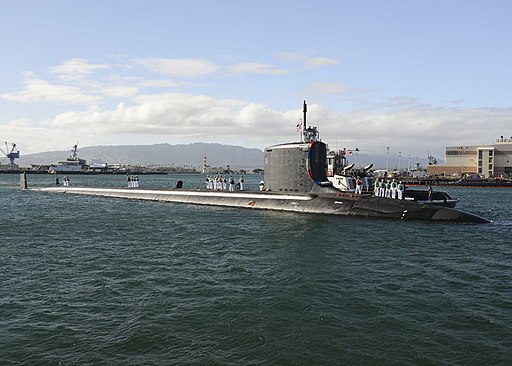
USS Mississippi (SSN-782)
The USS Mississippi (SSN‑782) is a modern embodiment of stealth, speed, and sophisticated warfare capability. As a member of the Virginia‑class, she is designed to perform a wide array of missions—from intelligence gathering and anti‐submarine warfare to land attack operations using precision-guided missiles. Named in honor of the state of Mississippi, her presence symbolizes strength, innovation, and the storied tradition of American naval power .
Historical Background
Contract Award and Construction
The journey of USS Mississippi began when the contract for her construction was awarded to the Electric Boat Division of General Dynamics on August 14, 2003. As part of the Navy’s broader modernization initiative, she was designed to incorporate lessons learned from previous generations of fast attack submarines while integrating advanced stealth and operational capabilities. Her keel was laid down on June 9, 2010—a milestone that marked the start of a meticulous construction process driven by precision engineering and budget-conscious planning .
Christening and Commissioning
USS Mississippi was christened on December 3, 2011, in Groton, Connecticut, with Allison Stiller serving as her sponsor. The submarine was delivered 12 months ahead of schedule and $60 million under the planned cost—a remarkable achievement that underscored the efficiency improvements in modern submarine construction. She was officially commissioned on June 2, 2012, in Pascagoula, Mississippi, and later assigned permanently to Submarine Squadron 1 at Joint Base Pearl Harbor-Hickam in Hawaii, where she continues to serve as a strategic deterrent in the Pacific theater .
Technical Specifications
A comprehensive look at USS Mississippi reveals a series of design decisions optimized for stealth, speed, and operational endurance.
Dimensions and Displacement
The vessel’s dimensions are finely tuned for optimal hydrodynamic performance and minimal acoustic signature:
- Length: 114.9 meters (377 feet)
- Beam: 10.3 meters (34 feet)
- Displacement: Approximately 7,800 tons (both light and full load are reported within this range, reflecting the efficiency of modern design)
These dimensions, while ensuring ample internal space for critical systems and crew accommodations, also contribute to a hull shape that minimizes drag and noise in underwater operations .
Propulsion and Performance
Nuclear Reactor and Power Generation
At the core of USS Mississippi’s operational prowess is her S9G pressurized water reactor. This advanced nuclear propulsion system provides:
- Power Output: Approximately 280,000 shaft horsepower (210 MW)
- Propulsion: Energy from the reactor is transferred through two steam turbines, which in turn drive a single-shaft pump-jet propulsor.
This configuration not only enables the submarine to achieve speeds exceeding 25 knots but also ensures that her range is virtually unlimited—the only constraints being maintenance cycles and crew endurance rather than fuel supply .
Test Depth and Operational Endurance
Engineered with a robust hull design, the USS Mississippi is rated for test depths exceeding 800 feet (approximately 250 meters). Her advanced pressure hull, complemented by cutting-edge noise-reduction technologies, allows her to operate silently in the deep ocean, minimizing the risk of detection by adversaries during extended missions.
Crew and Habitability
USS Mississippi is designed to support a crew of 132 officers and enlisted personnel. Despite the confined spaces inherent to a submarine, the design accommodates modern living and working conditions:
- Crew Facilities: Ergonomically optimized control centers, crew berthing areas, and recreational facilities have all been integrated to sustain high morale during long patrols.
- Operational Readiness: A combination of automated systems and streamlined workflows ensures that the crew can manage complex missions efficiently, even in high-stress undersea environments .
Design and Construction Features
Hull Design and Material Composition
The Virginia‑class design, as realized in USS Mississippi, prioritizes stealth, durability, and adaptability:
- Low Acoustic Signature: The hull incorporates advanced materials and noise-dampening technologies to produce a remarkably low acoustic profile, making the submarine difficult to detect.
- Material Use: A sophisticated blend of high-strength steel and composite materials improves structural integrity while also reducing overall weight, contributing to enhanced operational agility and fuel efficiency.
Integrated Systems for Reduced Maintenance
Modern construction techniques and innovative design approaches have enabled the USS Mississippi to achieve high standards of reliability while reducing lifecycle costs. The modular design allows for easier upgrades to critical combat systems and onboard sensors without extensive overhaul—ensuring that the submarine remains relevant in a rapidly evolving technological landscape .
Armament and Combat Systems
Weapons Capabilities
The USS Mississippi is built to be a versatile fight leader in undersea warfare with a complement of advanced weapon systems:
Tomahawk Cruise Missiles
- Land-Attack Ability: The submarine is capable of launching Tomahawk cruise missiles, which can strike high-value targets on land with incredible precision. This gives the vessel a potent offensive edge in strategic environments.
Torpedo Systems
- Torpedo Tubes: Featuring an array of torpedo tubes designed to launch heavy Mark 48 torpedoes, the vessel also supports quick reaction to both surface and subsurface threats.
- Multi-Mission Integration: These torpedo systems provide the dual benefits of anti-submarine warfare and self-defense, ensuring that the submarine retains tactical flexibility against multiple threat vectors.
Sensor Suites and Electronic Warfare Capabilities
Sonar and Field Detection
- Advanced Sonar Arrays: Utilizing both passive and active sonar capabilities, USS Mississippi is equipped to detect, classify, and track a variety of targets ranging from enemy submarines to surface vessels.
- Integrated Processing: The sensor data is fed into an advanced combat system that rapidly analyzes and processes information, enabling swift decision-making under combat conditions.
Electronic Countermeasures
- Stealth Integration: In addition to passive and active detection systems, the submarine features electronic countermeasures designed to neutralize incoming missiles and disrupt enemy sonar.
- Decoy and Jamming Systems: These systems provide layered defense, creating a dynamic shield that enhances survivability in contested environments .
Operational Capabilities and Strategic Role
Mission Versatility
The design of USS Mississippi enables her to participate effectively in a range of missions:
- Intelligence, Surveillance, and Reconnaissance (ISR): Equipped with a comprehensive sensor suite, the submarine can operate covertly to gather real-time intelligence in contested waters.
- Sea Denial and Power Projection: With a potent armament of torpedoes and cruise missiles, USS Mississippi plays a critical role in deterring enemy operations and projecting American naval power.
Strategic Deployment
Now assigned to Submarine Squadron 1 and based at Joint Base Pearl Harbor-Hickam, the USS Mississippi ensures a continuous U.S. presence in the Pacific. Her engineering excellence and rapid deployment capabilities enable her to serve as a deterrent to adversaries while also providing a platform for forward-deployed intelligence and combat operations.
Conclusion
The USS Mississippi (SSN‑782) exemplifies the triumph of modern naval engineering and operational versatility. With her advanced S9G nuclear reactor, sophisticated stealth-enhancing hull design, and integrated combat systems, she serves as a formidable guardian beneath the waves. From her early achievements in construction efficiency to her sustained operational excellence, USS Mississippi continues to push the boundaries of undersea warfare.
For those intrigued by the evolution of undersea platforms, further exploration of how Virginia‑class submarines harness next-generation technologies—such as improved sensor arrays and enhanced weapon integration—offers a deep dive into the future of naval combat. The legacy of USS Mississippi stands as a powerful reminder of America’s commitment to innovation, readiness, and maritime superiority.
_arrives_at_Pearl_Harbor_in_November_2014.JPG)