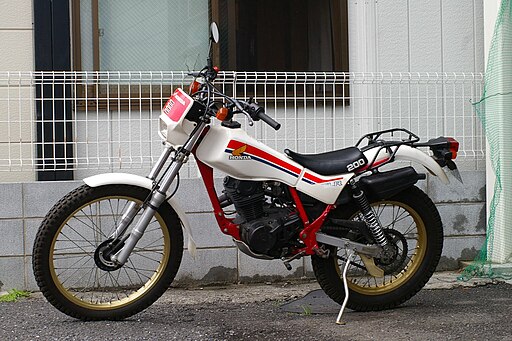
Honda TLR200 Reflex: Trials Precision Meets Everyday Versatility
Introduced in the mid-1980s, the Honda TLR200 Reflex carved its own niche as a trials-inspired machine that could also tackle fire roads and light trail duties. By blending feather-light weight, responsive handling, and a torquey four-stroke engine, Honda offered riders a bike that felt nimble enough for rock gardens yet comfortable enough for country-lane cruising. Even decades later, the TLR200 retains a cult following among riders seeking pure, analog feedback and playful performance.
Historical Context and Design Philosophy
Origins of the Reflex
When Honda collaborated with Montesa in the early ’80s, engineers set out to create a trails bike that bridged purpose-built trials machines and practical dual-purpose models. The result was the TLR200 Reflex, featuring trials-style ergonomics and chassis geometry married to a friendly four-stroke engine that prioritized tractable torque over peak horsepower.
Trials DNA Meets Everyday Use
Instead of sacrificing comfort for outright rock-climbing prowess, the Reflex offers a modest seat, a small luggage rack, and an efficient fuel tank. Its dual-purpose tires and optional lighting kits make it road-legal in many regions, so riders could roll from pavement straight into technical off-road sections without changing bikes.
Engine and Performance
Powerplant Architecture
Honda equipped the TLR200 with an air-cooled single-cylinder SOHC engine featuring two valves and a five-speed gearbox. The engine’s short stroke and oversquare bore deliver a lively midrange that’s perfect for low-speed maneuvers and quick bursts of acceleration on open trails.
Technical Specifications
| Specification | Detail |
|---|---|
| Engine Type | Air-cooled single-cylinder SOHC |
| Displacement | 194 cc |
| Bore × Stroke | 68 mm × 51 mm |
| Compression Ratio | 9.5 : 1 |
| Carburetor | 26 mm Keihin CV |
| Ignition | Digital CDI |
| Transmission | 5-speed manual |
| Final Drive | O-ring chain |
| Maximum Power | ~17 hp @ 8,000 rpm |
| Maximum Torque | ~14 Nm @ 6,500 rpm |
On-Trail Character
Low-end torque is the TLR200’s hallmark. You can slip the clutch, maintain a slight roll, and instantly feather your way over roots or small boulders. When you need more grunt, a twist of the wrist delivers smooth thrust without the snatchy behavior common to two-strokes of similar displacement.
Chassis, Suspension, and Handling
Frame Geometry
A lightweight steel tripod frame combines rigidity with a short wheelbase, so the Reflex turns on a dime. High ground clearance and a narrow profile let riders hug obstacles and pivot around technical sections with minimal effort.
Front Suspension
Non-adjustable 31 mm telescopic forks offer around 200 mm of travel. Their soft valving soaks up square-edged hits while preserving precise feedback, allowing you to feel subtle changes in terrain under the front wheel.
Rear Suspension
The Pro-Link® monoshock system provides roughly 180 mm of wheel travel. A single preload adjuster lets riders dial in sag based on riding style or luggage load, keeping the rear wheel planted in both climbs and descents.
Brakes and Wheels
A 240 mm hydraulic disc up front and a 110 mm drum at the rear form a balanced braking package. Spoked 21-inch front and 18-inch rear wheels accept a wide range of trials and dual-sport tires, making it easy to tailor grip to terrain.
Electrical System and Instrumentation
Lighting and Charging
Stock TLR200s shipped with a minimalist 6-volt system powering a halogen headlamp, taillight, and signals. Many owners upgrade to a 12-volt stator and LED lighting for improved nighttime visibility and reliability.
Cockpit Layout
A small analog speedometer houses odometer and warning lights. All switches are mechanical and color-coded, so even novice mechanics can trace wiring or replace bulbs without a wiring diagram.
Dimensions, Weight, and Ergonomics
| Dimension | Specification |
|---|---|
| Overall Length | 2,075 mm |
| Wheelbase | 1,375 mm |
| Seat Height | 880 mm |
| Ground Clearance | 290 mm |
| Fuel Capacity | 4.8 L |
| Wet Weight | 87 kg |
The high, thin seat and wide handlebar put you in an upright stance ideal for trials-style balance. Despite the lofty seat height, the narrow tank and frame give shorter riders confidence at stops, and the low center of gravity keeps the bike feeling light underfoot.
Maintenance and Reliability
Routine Service Items
• Oil and filter change every 1,000 km • Valve clearance check every 6,000 km • Carburetor jet cleaning or rebuild annually • Chain lubrication and adjustment every 500 km
Common Wear Points
Trials riding stresses spokes, wheel bearings, and footpeg mounts. Regular spoke tightening, bearing inspections, and bolt-torque checks keep the Reflex running true. The simple air-cooled design eliminates radiator leaks, but frequent off-road use calls for careful air filter maintenance.
Customization and Upgrades
Performance Enhancements
• Aftermarket slip-on exhaust for weight savings and freer breathing • High-flow air filter with matched jetting for crisp throttle response • Carbon-coated fork bushings to reduce stiction and improve suspension action
Comfort and Utility Mods
• Compact LED headlamp conversion for better night vision • Quick-release skid plate for easy cleaning and inspection • Lightweight luggage racks or modular soft bags for overland adventures
Community and Legacy
Riders passionate about trials riding often cross-pollinate in TLR200 forums and regional clubs. From city park trials meetups to backcountry rock crawls, the Reflex inspires camaraderie through shared stunts, maintenance tips, and modification guides. Its enduring popularity even spawned limited reissues in select markets, emphasizing the timeless appeal of a pure trials bike that can be ridden home on the road.
Conclusion and Further Exploration
The Honda TLR200 Reflex remains a singular offering: a trials-focused machine with enough everyday practicality to win hearts far beyond competition arenas. Its blend of light weight, linear torque, and straightforward mechanics ensures it still thrills riders looking for hands-on challenges.
