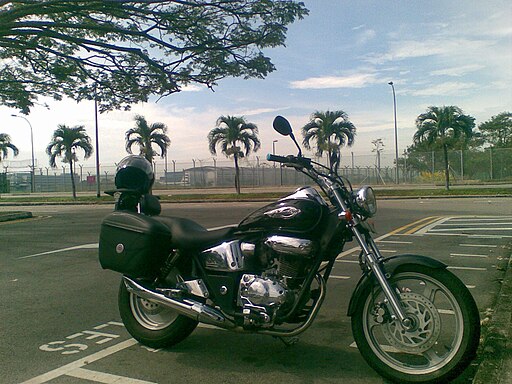
Honda Phantom VT750CII: The Stealth Cruiser Reimagined
Since its debut in the late 2000s, the Honda Phantom VT750CII has redefined cruiser aesthetics with its blacked-out styling, raw attitude, and surprising agility. By pairing a proven 745 cc V-twin powerplant with minimalist bodywork and drag-bar ergonomics, Honda created a bike that looks menacing at rest yet remains approachable on long rides and city streets alike.
Heritage and Design Philosophy
Emergence of the Phantom
In a market flooded with chrome-laden cruisers, Honda saw an opportunity to strip away excess and focus on pure form and function. The Phantom inherits mechanical DNA from the Shadow VT750C series, but its visual identity is one of intimidation and stealth. All major components—from the engine covers to the exhaust—arrive in matte black, reinforcing the blueprint of a modern-day urban outlaw.
Styling Cues and Rider Intent
The Phantom’s chopped fenders, bobbed rear end, and sculpted fuel tank create a low-slung silhouette. Its fat front tire and stubby headlamp nacelle blend trials-bike proportions with cruiser presence, hinting at nimble handling rather than lumbering mass. Every line and angle communicates raw performance, yet the bike retains enough comfort and practicality for daily use and weekend escapes.
Engine and Performance
V-Twin Powerplant
At the heart of the Phantom sits a 745 cc, liquid-cooled 52-degree SOHC V-twin. Honda’s engineers tuned the engine for ready torque in the low-to-mid rpm range, allowing effortless roll-on acceleration in traffic and confident throttle response when rolling onto twisty backroads.
Technical Specifications
| Specification | Detail |
|---|---|
| Engine Type | Liquid-cooled 52° V-twin, SOHC, 4-valve |
| Displacement | 745 cc |
| Bore × Stroke | 79 mm × 76 mm |
| Compression Ratio | 9.1 : 1 |
| Fuel System | PGM-FI electronic fuel injection |
| Maximum Power | 45 hp @ 5 600 rpm |
| Maximum Torque | 58 Nm @ 3 250 rpm |
| Ignition | Fully transistorized digital CDI |
| Transmission | 5-speed manual |
| Final Drive | Enclosed shaft drive |
On-Road Character
From a standstill, the Phantom delivers a strong, tractable pull. Clutch engagement is light, making U-turns and slow-speed maneuvers feel intuitive. Flat stretches invite a steady 100 km/h cruise with minimal vibration, while the midrange torque allows effortless overtaking without downshifting.
Chassis and Suspension
Frame Architecture
A steel twin-spray cradle frame anchors the Phantom’s components. The geometry delivers a 1 585 mm wheelbase that balances straight-line stability with cornering agility. Despite its cruiser stance, the Phantom changes direction more quickly than many of its peers.
Front Suspension
Nonadjustable 41 mm telescopic forks offer 120 mm of travel. Their firm-enough damping provides confidence under braking and through mid-corner bumps while retaining enough compliance for daily riding comfort.
Rear Suspension
A Pro-Link monoshock features five preload settings and 100 mm of travel. The easily accessible adjuster lets solo riders dial in ride height for a more planted feel or carry a passenger with minimal pitch change.
Brakes, Wheels, and Tires
Braking System
Up front, a 296 mm hydraulic disc paired with a two-piston Nissin caliper provides consistent bite. At the rear, a 180 mm drum brake balances stopping force for predictable deceleration without grabbing.
Wheel and Tire Package
| Position | Wheel Size | Tire Size |
|---|---|---|
| Front | 17 inch | 130/90-16 M/C 67H |
| Rear | 16 inch | 180/60-16 M/C 77H |
Spoked wheels reinforce the vintage-inspired theme while accommodating modern radial tires. The fat, low-profile rubber contributes to both the bike’s sleek look and its planted feel.
Dimensions, Weight, and Ergonomics
| Dimension | Measurement |
|---|---|
| Overall Length | 2 325 mm |
| Wheelbase | 1 585 mm |
| Seat Height | 685 mm |
| Ground Clearance | 120 mm |
| Fuel Capacity | 12.1 L |
| Wet Weight | 236 kg |
A low seat and forward controls place riders in a relaxed, slightly stretched posture. The narrow midsection of the tank allows easy foot placement, and the broad, flat bar gives leverage for steering. Despite its cruiser tag, the Phantom’s ergonomics reward spirited riding on winding roads.
Electrical and Instrumentation
Wiring and Charging
A 12-volt charging system powers the fuel-injected engine and all lighting. The minimalist loom and modular connectors simplify diagnostics and aftermarket wiring for accessories like heated grips or auxiliary lighting.
Gauge Cluster
A compact analog speedometer houses an odometer, trip meter, fuel warning light, and high-beam indicator. The uncluttered layout keeps the focus on the ride rather than on distracting data.
Fuel Economy and Range
On a mixed urban/highway route, the Phantom returns around 5 L/100 km. With its 12.1 L tank, riders can cover approximately 240 km between fill-ups. Steady highway cruising can push efficiency closer to 4.5 L/100 km.
Maintenance and Reliability
Honda’s shaft drive eliminates chain adjustment and lubrication chores. Routine service centers on oil and filter changes every 6 000 km, valve clearance checks at 12 000 km intervals, and brake fluid replacement every two years. The all-black finish masks minor blemishes, making cosmetic upkeep surprisingly low-key.
Customization and Aftermarket
• Full exhaust systems for weight savings and deeper tone • Performance air filters with remapped fuel injector modules • LED headlamp and turn-signal kits for modern illumination • Solo seats or low-profile cushions to refine rider posture • Custom paint accents or anodized finishes to break up the black-on-black motif
Rider Community and Legacy
Owners of the Phantom gather online in black-cruiser forums, share ride reports on social media, and showcase custom builds at local bike nights. The combination of reliable mechanics, distinctive styling, and friendly handling has created an active global community that celebrates the Phantom’s unique place in cruiser history.
Conclusion and Next Steps
The Honda Phantom VT750CII proves that less can truly be more. Its stripped-back style, torquey V-twin, and approachable ergonomics make it a compelling choice for riders who want attitude without complexity. For those looking to dive deeper, consider comparisons with the new Shadow Phantom 750, explore shaft-drive vintage cruisers, or examine suspension upgrades that further sharpen the Phantom’s edge on twisty roads.
