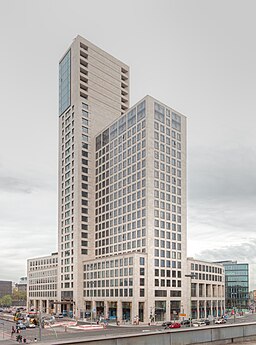
Waldorf Astoria Berlin
The Waldorf Astoria Berlin is a modern interpretation of timeless luxury, combining architectural sophistication with advanced engineering. Located in the heart of Berlin’s City West, near the historic Kaiser Wilhelm Memorial Church and the bustling Kurfürstendamm boulevard, this five-star hotel is part of the Zoofenster high-rise complex. Since its opening in 2013, the Waldorf Astoria Berlin has become a symbol of upscale hospitality and vertical urbanism in Germany’s capital.
Architectural Vision and Urban Integration
Strategic Location
The hotel occupies the lower floors of the Zoofenster tower, a mixed-use high-rise that anchors the revitalized City West district. Its proximity to major cultural landmarks, shopping destinations, and transport hubs makes it a prime location for both leisure and business travelers.
Design Philosophy
Designed by architect Professor Christoph Mäckler, the building reflects a blend of classical proportions and contemporary materials. The facade features natural stone cladding and vertical window bands, evoking early 20th-century skyscrapers while maintaining a distinctly modern silhouette.
Structural and Technical Specifications
Building Dimensions
- Total Height: 118 meters (roof height)
- Floors: 32 above ground, 3 basement levels
- Gross Floor Area: Approx. 52,000 m²
- Hotel Occupancy: Floors 1–15
- Total Rooms: 232 guest rooms and suites
Structural System
- Core Construction: Reinforced concrete core with shear walls for lateral stability
- Floor Slabs: Flat slab system with post-tensioned concrete for long-span flexibility
- Column Grid: 7.5 x 7.5 meter spacing to accommodate varied interior layouts
- Wind Load Resistance: Designed to withstand wind pressures up to 1.5 kN/m², typical for Berlin’s urban wind profile
Foundation and Substructure
- Foundation Type: Deep pile foundation with bored piles extending up to 30 meters
- Basement Use: Parking, technical rooms, service access, and spa infrastructure
- Waterproofing: Multi-layer membrane system with drainage channels and sump pumps
Facade and Envelope Engineering
Exterior Cladding
- Material: Jura limestone panels with stainless steel anchors
- Thermal Insulation: Mineral wool layers behind cladding for enhanced thermal performance
- Glazing: Triple-glazed units with low-E coatings and acoustic lamination
Performance Metrics
- U-Value (Facade): Approx. 0.85 W/m²K
- Solar Heat Gain Coefficient (SHGC): Optimized to reduce cooling loads while maintaining daylight
- Acoustic Rating: Up to 45 dB reduction for guest room windows
Mechanical, Electrical, and Plumbing (MEP) Systems
HVAC and Climate Control
- Heating: District heating connection with individual room thermostats
- Cooling: Chilled water system with fan coil units in guest rooms and public areas
- Ventilation: Mechanical ventilation with heat recovery units (HRUs) and air quality sensors
Electrical Systems
- Power Supply: Medium-voltage grid connection with backup diesel generators
- Lighting: LED fixtures throughout, with dimmable controls and daylight sensors
- Smart Controls: Building Management System (BMS) for HVAC, lighting, and security integration
Plumbing and Water Management
- Water Supply: Pressure-regulated system with anti-scald valves in guest bathrooms
- Sanitary Systems: Gravity drainage with vacuum-assisted toilets in select areas
- Greywater Recycling: Used for irrigation and non-potable applications in service zones
Interior Design and Guest Amenities
Room Configuration
- Standard Rooms: 42–50 m² with marble bathrooms and floor-to-ceiling windows
- Suites: Up to 200 m², including Presidential Suite with private terrace
- Acoustic Insulation: Double-wall construction and floating floors for noise isolation
Public Spaces
- Lobby: Double-height space with custom chandeliers and natural stone finishes
- Ballroom: Capacity for 200 guests, with retractable partitions and AV infrastructure
- Spa and Wellness: Guerlain Spa with treatment rooms, sauna, and indoor pool
Sustainability and Energy Efficiency
Certifications
- Energy Performance: Compliant with Germany’s EnEV standards
- Green Building Features: Designed to meet LEED Silver equivalency, though not formally certified
Sustainable Systems
- Lighting: Motion sensors and daylight harvesting in corridors and service areas
- Materials: Low-VOC paints, FSC-certified wood, and recycled content in carpets and furnishings
- Waste Management: On-site sorting and composting, with partnerships for recycling
Vertical Transportation and Accessibility
Elevator Systems
- Total Elevators: 6 guest elevators, 2 service elevators
- Speed: Up to 3.0 m/s with intelligent dispatching
- Accessibility: All elevators equipped with tactile controls, voice guidance, and emergency intercoms
Fire Safety and Egress
- Sprinkler Coverage: Full coverage in all guest rooms and public areas
- Smoke Control: Pressurized stairwells and mechanical smoke extraction
- Evacuation Routes: Dual staircases with fire-rated enclosures and refuge floors
Connectivity and Infrastructure
Transport Access
- Public Transit: Adjacent to Berlin Zoologischer Garten station (U-Bahn, S-Bahn, regional trains)
- Road Access: Direct connection to Hardenbergstraße and Kantstraße
- Parking: Underground garage with 150 spaces, including EV charging stations
Digital Infrastructure
- Telecom: Fiber-optic backbone with high-speed internet in all rooms
- Smart Room Features: Tablet-based controls for lighting, temperature, and concierge services
Conclusion
The Waldorf Astoria Berlin exemplifies the fusion of luxury hospitality and advanced engineering. From its robust structural core to its refined interior finishes, every aspect of the building reflects precision and elegance. As part of the Zoofenster complex, it contributes to Berlin’s evolving skyline while offering world-class amenities and sustainable design. Whether viewed as a technical achievement or a cultural landmark, the Waldorf Astoria Berlin stands as a testament to modern urban excellence.
