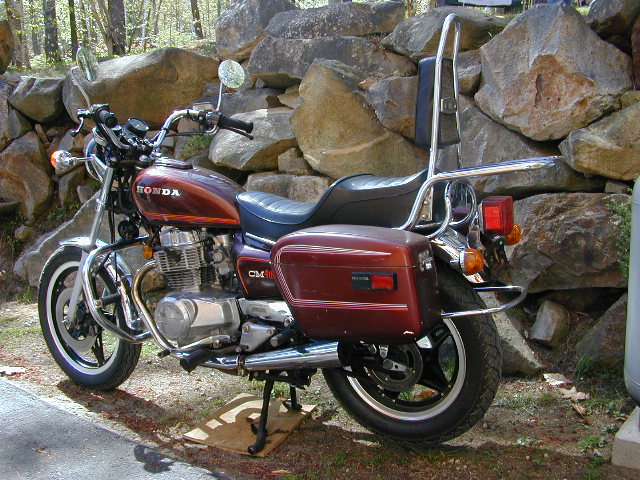
Honda CM400
The Honda CM400 emerged in the late 1970s as a versatile, approachable standard motorcycle aimed at riders seeking a balance between daily usability and engaging performance. Positioned between entry-level and mid-displacement bikes, the CM400 carved a niche for itself through reliability and user-friendly handling. Its simple air-cooled parallel-twin engine and classic styling appealed both to new riders stepping up from smaller machines and to seasoned enthusiasts looking for a dependable second bike. Over time, the CM400 has earned a reputation as a solid platform for customization, restoration projects, and affordable weekend rides.
Historical Context
Origins in the Honda CM Series
Honda introduced the CM series in 1978 to complement its popular CB lineup. While CB models focused on sporty performance, the CM machines, including the 400cc and 450cc variants, adopted a more relaxed geometry and cruiser-inspired aesthetic. This approach broadened Honda’s appeal in burgeoning North American and European markets where rider comfort and style carried as much weight as outright speed.
Market Positioning
Priced between economy commuter bikes and higher-priced sports models, the CM400 targeted young professionals and budget-conscious riders. Its approachable seat height, predictable power delivery, and low maintenance requirements made it an ideal choice for those seeking a do-it-all motorcycle. Honda’s emphasis on build quality translated to strong resale values, further reinforcing the CM400’s appeal among cost-savvy consumers.
Design and Aesthetics
Styling
The CM400’s design blended cues from cruisers and standard motorcycles. A teardrop fuel tank, softly contoured side panels, and a slightly stepped seat created a timeless silhouette. Chrome accents on the exhaust and fenders accentuated its retro charm while blacked-out engine casings added a touch of modern contrast.
Ergonomics
With a moderate 30-inch seat height and swept-back handlebars, the CM400 offered an upright riding posture that minimized fatigue on longer journeys. Foot pegs positioned slightly forward granted a relaxed stance without compromising control during spirited cornering. The generously padded saddle accommodated two riders comfortably, making the CM400 as suited to weekend jaunts as it was to daily commuting.
Engine and Drivetrain
Engine Architecture
At the heart of the CM400 lies a 395 cc air-cooled parallel-twin engine with a 360° crank layout. This configuration delivers a smooth, tractable powerband and a distinctive exhaust note. Dual overhead camshafts (DOHC) actuate four valves per cylinder, ensuring efficient breathing and a redline of 9,500 rpm.
Performance Figures
Peak power of approximately 37 hp at 9,500 rpm and torque of 22 lb-ft at 8,000 rpm positions the CM400 firmly in the middleweight category. Acceleration from 0–60 mph takes just over seven seconds, while the top speed hovers around 95 mph—adequate for highway cruising and occasional spirited runs through twisty backroads.
Transmission and Final Drive
Power is delivered to the rear wheel via a five-speed gearbox with a smooth shift action. A wet multiplate clutch offers light lever pull, ideal for stop-and-go traffic. Final drive is handled by a chain enclosed in a semi-guard tube, reducing maintenance upsets and keeping the chain drier.
Chassis and Suspension
Frame Construction
The CM400 utilizes a steel twin-downtube frame, prized for its durability and predictable flex characteristics. The simple yet stout design contributes to the motorcycle’s stable handling and ease of maintenance.
Front Suspension
Conventional telescopic forks with 5.1 inches of travel provide a compliant ride over uneven surfaces. Alloy fork legs resist deflection under braking, maintaining steering precision.
Rear Suspension
Dual shock absorbers, each adjustable for preload in three positions, manage rear compliance. With 4.5 inches of travel, the setup balances comfort and control, adapting well to solo and two-up riding.
Braking System
Front Brakes
A single 296 mm disc mated to a dual-piston caliper anchors the front end. It delivers strong, progressive stopping power and is complemented by a braided steel line on later models for improved lever feel.
Rear Brakes
At the rear, a sealed drum brake with a 130 mm diameter offers adequate deceleration and minimal maintenance. The enclosed design helps keep performance consistent in wet conditions.
Dimensions and Weight
The CM400’s compact footprint combines easy maneuverability with rider confidence. Key measurements and mass are summarized below:
| Specification | Metric | Imperial |
|---|---|---|
| Wheelbase | 1,420 mm | 55.9 in |
| Seat Height | 760 mm | 29.9 in |
| Ground Clearance | 120 mm | 4.7 in |
| Fuel Capacity | 12 liters | 3.2 US gallons |
| Dry Weight | 174 kg | 384 lb |
| Wet Weight | 183 kg | 403 lb |
Fuel System and Range
Fuel delivery comes via dual 32 mm Keihin CV carburetors, known for their reliability and ease of synchronization. A 12-liter tank yields a practical range of approximately 180 miles when riding conservatively, thanks to an average fuel consumption of around 50 mpg.
Electrical System
The CM400’s simplicity extends to its 12-volt electrical system. A 35 W headlamp, 5 W taillight, and accessible fuses keep diagnostics straightforward. Early models featured points ignition, while later iterations adopt electronic CDI (Capacitor Discharge Ignition), reducing maintenance and ensuring crisp starts.
Handling and Ride Quality
The CM400’s balanced weight distribution and narrow chassis deliver confidence in corners. Its predictable steering response benefits both inexperienced riders and seasoned motorcyclists exploring urban environments or flowing rural roads. Suspension tuning strikes a comfortable compromise, absorbing potholes with minimal pitching.
Maintenance and Common Issues
Routine Maintenance Schedule
- Oil and filter change every 3,000 miles
- Valve clearance inspection at 6,000 miles
- Carburetor synchronization and cleaning at 6,000 miles
- Chain inspection and lubrication every 500 miles
- Brake pad check and fluid replacement every 12 months
Adhering to these intervals preserves optimal performance and extends component life.
Known Weaknesses
A recurring issue on high-mileage CM400s is camshaft wear due to insufficient lubrication in early models. Upgrading to higher-capacity oil pumps or modern synthetic lubricants can mitigate this risk. Additionally, chain guards can develop rust; replacing them with stainless steel alternatives prevents premature deterioration.
Owner Experience and Community
Owners praise the CM400 for its durable construction and ease of customization. A vibrant online community shares restoration tips, performance upgrades, and custom paint designs. From cafe-racers to bobbers, the CM400’s straightforward architecture invites creativity without breaking the bank.
Legacy and Collector Status
While not as rare as some of Honda’s more exotic models, the CM400 has seen a resurgence among vintage motorcycle enthusiasts. Well-preserved examples command premiums at auctions, particularly U.S. market variants with electronic ignition. Its role as a stepping-stone for new riders and a blank canvas for builders cements the CM400’s place in motorcycling history.
Conclusion
The Honda CM400 endures as a testament to functional design, mechanical simplicity, and rider-friendly performance. Whether you seek a reliable commuter, a weekend road trip partner, or a restoration project, the CM400 offers a compelling package. Decades after its debut, its blend of laid-back ergonomics, approachable power, and customization potential continues to captivate a new generation of riders.
