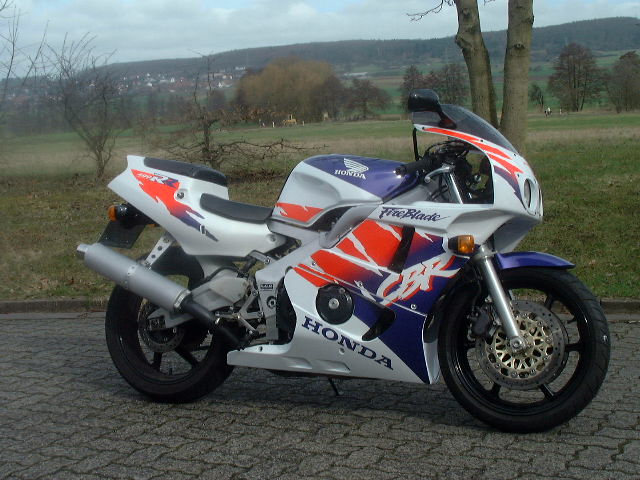
Honda CBR400
The Honda CBR400 series represents a landmark in middleweight sport motorcycle engineering. Designed to bridge the gap between entry-level machines and full-size liter bikes, it combines a high-revving inline-four engine with a nimble chassis. Riders benefit from race-derived technology in a package light enough for city streets and agile enough for winding backroads. The CBR400’s balance of power, handling, and ergonomics has earned it cult status among enthusiasts.
Historical Evolution
Genesis of the CBR400
In the mid-1980s, Honda recognized a growing demand for performance-oriented motorcycles that remained accessible to a broad audience. By transplanting its advanced four-cylinder architecture into a sub-400 cc displacement, Honda offered the thrill of a racer with the comfort and reliability of a street bike. Early CBR400 models featured full fairings, underseat exhaust routing, and an emphasis on aerodynamic efficiency.
The Birth of the CBR400RR
Launched in 1986, the CBR400RR “Hurricane” epitomized quarter-litre performance. Its chassis geometry, suspension components, and braking hardware were directly influenced by Honda’s Grand Prix efforts. Homologation requirements for production-based racing spurred engineering refinements that delivered sharper handling and crisper throttle response than any previous 400 cc machine.
Later Iterations
Throughout its production run, the CBR400 platform saw incremental upgrades. Suspension damping rates were fine-tuned, braking systems adopted braided lines, and engine internals received lighter pistons and revised cam profiles. Limited-edition color schemes and graphics celebrated racing victories, cementing the CBR400’s reputation as a capable track day companion.
Powertrain
Engine Architecture
The heart of the CBR400 is a 399 cc liquid-cooled inline-four featuring dual overhead camshafts and four valves per cylinder. Its 50 mm bore and 40.5 mm stroke deliver a peaky powerband that rewards high-rpm operation. Gear-driven camshafts ensure precise valve timing, while rubber engine mounts tame vibration without compromising feedback.
Performance Figures
| Specification | Detail |
|---|---|
| Displacement | 399 cc |
| Maximum Power | 41 PS (30 kW) @ 12,500 rpm |
| Maximum Torque | 3.7 kgf·m (36.3 N·m) @ 10,500 rpm |
| Compression Ratio | 11.0 : 1 |
| Carburation | Four 28 mm CV Keihin carburetors |
| Ignition | CDI |
| Redline | 14,000 rpm |
This engine unleashes peak output near its upper rev limit, producing a linear thrust that feels both playful at low rpm and exhilarating as the tach climbs toward redline.
Transmission and Final Drive
A six-speed transmission with close-ratio gearing facilitates seamless acceleration. The compact gearbox casing contributes to the bike’s narrow profile, enhancing rider control. Final drive is handled by a 520-series chain, protected by a minimalist guard for ease of maintenance.
Chassis and Handling
Frame Design
A steel twin-spar frame underpins the CBR400, offering a blend of rigidity and controlled flex. Its geometry balances rapid turn-in with high-speed stability, giving riders confidence whether carving canyons or navigating urban traffic.
Front Suspension
A pair of 37 mm telescopic forks provides 120 mm of travel. Preload adjustment on each leg lets riders fine-tune ride height and initial compression, tailoring the setup to solo riding or two-up journeys.
Rear Suspension
Honda’s Pro-Link single-shock arrangement offers 115 mm of travel and seven levels of preload adjustment. Its rising-rate linkage soaks up sharp bumps while resisting bottom-out under hard acceleration or braking.
Brakes and Safety
Braking System
- Front: Dual 255 mm discs with two-piston calipers deliver strong, fade-resistant performance.
- Rear: Single 220 mm disc with a single-piston caliper provides balanced stopping power.
Braided steel brake lines on later models improve lever feel and consistency during spirited riding.
Rider Aids
While classic CBR400 models lack modern electronic aids, their predictable chassis feedback and linear engine response encourage smooth throttle control. Optional aftermarket upgrades include braided lines, high-performance pads, and upgraded master cylinders for enhanced braking performance.
Dimensions and Capacities
| Specification | Metric | Imperial |
|---|---|---|
| Wheelbase | 1,365 mm | 53.7 in |
| Length | 1,930 mm | 76.0 in |
| Width | 660 mm | 26.0 in |
| Height | 1,045 mm | 41.1 in |
| Seat Height | 780 mm | 30.7 in |
| Ground Clearance | 150 mm | 5.9 in |
| Fuel Capacity | 17 L | 4.5 gal US |
| Dry Weight | 168 kg | 370 lb |
| Wet Weight | 185 kg | 408 lb |
These compact dimensions and a low center of gravity make the CBR400 exceptionally maneuverable in tight environments.
Electrical System
Ignition and Charging
A capacitive discharge ignition (CDI) unit ensures reliable spark delivery at all engine speeds. Charging duties fall to a 180 W alternator, feeding a 12 V, 8 Ah battery. Accessible fuse blocks and a simple wiring loom simplify diagnostics and repairs.
Lighting and Instruments
The CBR400’s fairing-mounted halogen headlight and integrated taillight deliver adequate illumination for road use. A cockpit cluster combines an analog tachometer, speedometer, and temperature gauge, supplemented by indicator lights for neutral, high beam, and turn signals.
Performance Characteristics
Power Delivery
The CBR400’s four-cylinder layout produces a characteristically smooth yet urgent powerband. Throttle transitions remain predictable thanks to the CV carburetors, while the engine’s ability to rev freely rewards keeping the tachometer needle dancing near the redline.
Handling Dynamics
The marriage of a stiff chassis and balanced suspension yields razor-sharp turn-in. Mid-corner stability and linear feedback allow riders to trust the bike’s limits. Whether attacking sweeps or threading through urban canyons, the CBR400 feels both planted and responsive.
Maintenance and Reliability
Scheduled Servicing
- Engine oil and filter: every 5,000 km
- Valve clearance check: every 10,000 km
- Carburetor synchronization: annually or after long storage
- Brake fluid flush: every two years
Common Wear Items
Rubber engine mounts, starter motor brushes, and carburetor float bowl gaskets tend to show age first. Routine inspections and gentle winter storage practices prevent hard-starting and uneven idling issues.
Collector Appeal and Modern Relevance
Decades after its introduction, the CBR400 commands respect for its pure sporting intent and mechanical simplicity. Well-preserved examples in original livery fetch premiums on the used market, while restomod projects combine classic looks with modern suspension and braking upgrades. For riders seeking vintage character without compromise, the CBR400 remains a compelling choice.
Conclusion
The Honda CBR400 stands as a testament to the art of engineering a compact sport motorcycle. Its blend of a high-revving inline-four, precise chassis, and approachable ergonomics created a riding experience that endures in enthusiasts’ hearts. Whether admired on display or enjoyed on winding backroads, the CBR400 continues to define the essence of quarter-litre excitement.
