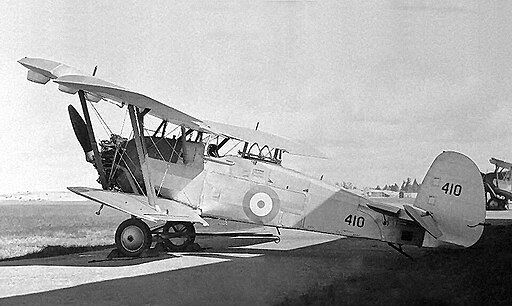
Armstrong Whitworth Atlas
The Armstrong Whitworth Atlas emerged in the mid-1920s as the world’s first purpose-designed army cooperation aircraft. Developed privately by Armstrong Whitworth and led by chief designer John Lloyd, the Atlas combined reconnaissance, liaison, and light bombing roles into a single biplane platform. Entering Royal Air Force service in 1927, it set the standard for interwar battlefield aviation across Europe and into overseas postings.
Development History
Design Origins
In response to Air Ministry specifications for a new army cooperation type, Armstrong Whitworth’s design team set out to replace aging DH.9A and Bristol Fighters. The project launched as a private venture in 1924, with emphasis on stability at low speed, good visibility for pilot and observer, and sturdy construction to withstand rough field operations.
Prototype Trials and Modifications
The prototype first flew on 10 May 1925, demonstrating strong cruise performance but dangerous sideslipping tendencies during landing approaches. To cure this, designers introduced swept-back metal wings, only to discover stall characteristics had worsened. Final refinements added automatic leading-edge slats and increased wing sweep, restoring safe handling without sacrificing maneuverability.
Airframe and Structure
Fuselage
The Atlas featured a welded steel-tube fuselage covered in fabric. Its rectangular cross-section balanced light weight with ruggedness, while a fully framed cockpit canopy offered clear sightlines for both pilot and rear-seat observer.
Wings and Control Surfaces
Single-bay biplane wings incorporated unequal span and sweepback on both upper and lower panels. Automatic slats deployed at low airspeeds to delay stall and improve aileron effectiveness. Tailplane and rudder surfaces retained balanced, horn-trimmed profiles for smooth control.
Landing Gear
Fixed landing gear used streamlined struts and robust, low-pressure tires suited to grass airfields. A sprung tailskid completed the undercarriage, simplifying maintenance and reducing weight.
Powerplant and Performance
Engine
Power came from a single Armstrong Siddeley Jaguar IVC fourteen-cylinder air-cooled radial engine, producing 336 kW. The powerplant sat uncowled in the nose for straightforward servicing and reliable cooling.
Propeller
A two-blade, fixed-pitch metal propeller translated engine output into thrust. Its design optimized climb rate and cruise efficiency within the Atlas’s performance envelope.
Flight Performance
Top speed reached 229 km/h, with comfortable cruise around 200 km/h. Service ceiling approached 5 120 m, and the machine could climb to 1 500 m in approximately 5 minutes 30 seconds. Operational range topped out near 644 km, allowing extended liaison and reconnaissance missions.
Armament and Payload
Light offensive capability consisted of a synchronized 7.7 mm Vickers machine gun firing forward through the propeller arc. Defensive coverage came from a 7.7 mm Lewis gun mounted on a circular ring in the observer’s cockpit. Underwing racks accommodated up to four 51 kg bombs or equivalent stores totaling 210 kg for strafing and light-bombing tasks.
Operational Use
Royal Air Force Service
Initial RAF service began in 1927 with No. 13 and No. 26 Squadrons. After handling refinements, the Atlas proved reliable for artillery spotting, message pickup, and tactical bombing support. By 1930, No. 208 Squadron deployed Atlases to Heliopolis, Egypt, marking the type’s first overseas operation.
Royal Canadian Air Force Service
Following RAF retirement in 1935, surplus Atlases found a second life with the Royal Canadian Air Force. Employed primarily as advanced trainers and communications platforms, they remained in service until 1942, bridging the gap to more modern types.
Variants
Atlas Mk I
The initial production run addressed prototype lessons through reinforced wing structure and refined control linkages. Approximately 300 Mk I examples rolled out of Armstrong Whitworth’s Coventry works from 1927 onward.
Atlas Mk II
Incorporating heavier-duty automatic slats and further wing sweep adjustments, Mk II machines offered improved low-speed safety. Around 175 dual-control trainer versions emerged, aiding pilot instruction before frontline conversion.
Technical Specifications
| Parameter | Specification |
|---|---|
| Role | Army cooperation aircraft |
| Manufacturer | Armstrong Whitworth Aircraft |
| Designer | John Lloyd and design team |
| First flight | 10 May 1925 |
| Introduction | 1927 |
| Retirement | 1935 (RAF); 1942 (RCAF) |
| Number built | 478 |
| Crew | 2 |
| Length | 8.69 m |
| Wingspan | 12.06 m |
| Height | 3.20 m |
| Wing area | 36.3 m² |
| Empty weight | 1,160 kg |
| Maximum takeoff weight | 1,827 kg |
| Powerplant | 1×Armstrong Siddeley Jaguar IVC radial engine; 336 kW |
| Propeller | Two-blade fixed-pitch metal |
| Maximum speed | 229 km/h |
| Cruise speed | 200 km/h |
| Range | 644 km |
| Service ceiling | 5,120 m |
| Rate of climb | 1,500 m in 5 min 30 s |
| Endurance | Approximately 3 h 25 min |
| Armament | 1×7.7 mm Vickers synchronised; 1×7.7 mm Lewis dorsal |
| Bomb load | 4×51 kg under-wing racks; up to 210 kg total |
Legacy and Impact
By uniting reconnaissance, communication, and light-bombing roles, the Armstrong Whitworth Atlas shaped doctrine for close army support in the interwar era. Its pioneering use of automatic slats influenced later biplane and early monoplane designs worldwide. Today, the Atlas stands as a milestone in specialized military aviation between the World Wars.
