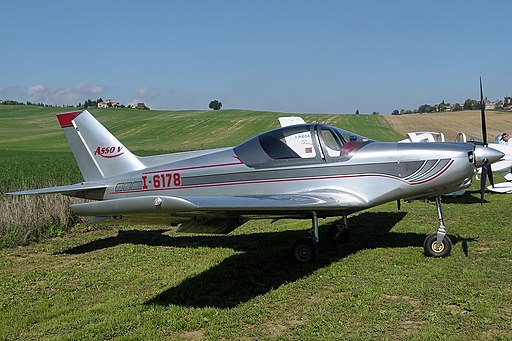
Vidor Champion V
The Vidor Champion V is an Italian-designed, two-seat light aircraft offered as a homebuilt project. Conceived in the mid-1990s by Giuseppe Vidor, it blends classic wood-and-fabric construction with modern aerodynamic refinements. Engineered for sport flying, pilot training, and recreational cross-country missions, the Champion V delivers responsive handling, minimal operating costs, and the satisfaction of amateur assembly.
Design and Development
Origins and Designer Profile
Giuseppe Vidor conceived the Champion V to fill a niche for a versatile, easy-to-build light aircraft. Drawing on decades of European amateur-built tradition, he released detailed construction plans in 1995. The design rapidly gained a following among builders seeking a performance-oriented monoplane with the flexibility to accommodate different engines and landing gear arrangements.
Airframe and Materials
The Champion V’s fuselage consists of a welded steel-tube framework sheathed in doped fabric or optional composite panels. This hybrid approach balances structural integrity with weight savings. Wooden wing spars and ribs provide a lightweight, easily sourced internal structure. Builders often choose Sitka spruce or Finnish pine for spars, pairing durability with proven load-bearing capability.
Wing and Control Surfaces
A cantilever low-wing layout provides unobstructed visibility and clean aerodynamics. The 8.32 m span wing features a 11 m² surface area with tapered planform to optimize lift distribution. Flaps are installed to lower stall speeds during landing, while balanced ailerons ensure crisp roll response. Rapid-release fittings allow the wings to fold or detach in under 20 minutes for road transport or storage.
Landing Gear and Configurations
The Champion V accommodates either fixed or retractable tricycle landing gear. Fixed-gear versions utilize streamlined fairings to reduce drag, while retractable legs offer a performance boost at the cost of increased build complexity. Float and ski kits exist for seasonal operations, broadening the aircraft’s utility in regions with water or snowfields.
Powerplant and Propulsion
Engine Options
The original Champion V specification recommends a 75 hp air-cooled Volkswagen conversion, valued for simplicity and economy. Plans support an acceptable power range from 75 hp up to 100 hp. Many builders upgrade to Rotax 912 ULS engines—delivering 100 hp—with electronic fuel injection for smoother power delivery and improved climb performance.
Propeller and Performance Tuning
A two-bladed wooden or composite propeller complements both VW and Rotax engines. Adjustable-pitch Hartzell-style props allow fine-tuning of takeoff thrust versus cruise efficiency. Typical climb rates range from 3.5 m/s with a VW engine up to 4.5 m/s on Rotax power, depending on prop selection and aircraft weight.
Cockpit and Avionics
Ergonomics and Instrumentation
The side-by-side cockpit spans 110 cm in width, providing ample shoulder room for two adults. A bubble canopy affords panoramic views for visual navigation and sightseeing. Basic analog flight instruments integrate seamlessly with optional EFIS modules and glass-cockpit upgrades. Builders frequently install a GPS-enabled multifunction display, intercom, and ADS-B transponder for enhanced situational awareness.
Construction and Homebuilding Process
Plans and Builder Support
Vidor supplies a comprehensive plans package detailing every structural part, jig, and assembly sequence. Online builder communities share tips on material sourcing, woodworking jigs, and welding techniques. Vidor Aircraft offers occasional workshops for hands-on instruction in wing jig assembly and fabric covering.
Estimated Build Time and Tools
Builders report an average construction time of 1,500 hours, though completion can vary between 1,200 and 2,000 hours based on experience and workshop resources. Essential tools include a TIG welder, band saw or table saw for wood components, pneumatic rivet guns, and fabric-covering irons.
Assembly Steps and Major Milestones
- Fabricate and align the steel-tube fuselage jig
- Construct wooden wing spars, ribs, and complete wing assembly
- Install control linkages, flaps, and ailerons
- Fit landing gear—fixed or retractable—and test retraction mechanics
- Cover airframe with doped fabric or composite panels
- Install engine mount, firewall forward components, and wiring harness
- Conduct weight and balance checks before maiden flight
Flight Characteristics
Handling and Maneuverability
Pilots praise the Champion V for its precise roll control and crisp elevator response. The lightly loaded wing delivers benign stall behavior, with a gentle nose drop and straightforward recovery. In aerobatic practice, it performs smooth loops and rolls within its design limits.
Takeoff and Landing Performance
With flaps down, takeoff distances under 120 m are achievable on grass strips when powered by a 100 hp Rotax. Landing speeds drop to 60 km/h with full flap extension, enabling operations from short fields and small grass aerodromes.
Cruise and Range
Cruise speeds vary from 170 km/h on 75 hp engines to 200 km/h on 100 hp setups, with fuel burns between 15 L/h and 20 L/h. A standard 49 L fuel tank yields a range of approximately 700 km with reserves, making the Champion V well suited to regional cross-country flights.
Operational History and Community
Prototype and Initial Flights
The first Champion V prototype took flight on 10 June 1995. Early test pilots highlighted its straightforward control harmony and robust construction. Vidor refined the plans over subsequent years to incorporate builder feedback on cockpit ergonomics and canopy sealing.
Spread Among Aero Clubs
By the late 1990s, more than a dozen kits had been sold across Europe and North America. Dedicated builder groups formed in Italy, France, and the United States, organizing annual fly-ins where builders compare modifications and performance data.
Modern Developments and Upgrades
Into the 2020s, some Champion Vs have adopted autopilot systems, ballistic parachute recovery kits, and composite fairings to reduce drag. A handful of long-range fuel bladder installations extend ferry range beyond 1,000 km for special missions.
Technical Parameters
| Parameter | Specification |
|---|---|
| Crew | 2 |
| Length | 6.10 m (20.0 ft) |
| Wingspan | 8.32 m (27.3 ft) |
| Wing Area | 11 m² (120 ft²) |
| Empty Weight | 272 kg (600 lb) |
| Gross Weight | 480 kg (1 058 lb) |
| Powerplant | 1 × VW 1.6 L air-cooled engine, 75 hp; optional Rotax 912 ULS, 100 hp |
| Fuel Capacity | 49 L (13 US gal) |
| Maximum Speed | 230 km/h (125 kt; 140 mph) |
| Cruise Speed | 200 km/h (108 kt; 125 mph) |
| Stall Speed | 64 km/h (35 kt; 40 mph) with flaps |
| Range | 720 km (390 nmi; 450 mi) |
| Rate of Climb | 4.1 m/s (800 ft/min) on VW; 4.5 m/s (885 ft/min) on Rotax |
| Wing Loading | 43 kg/m² (8.8 lb/ft²) |
Legacy and Future Prospects
Decades after its debut, the Vidor Champion V remains a testament to the enduring appeal of wood-and-fabric homebuilts. Its adaptability to modern engines and avionics has kept it relevant for sport pilots and amateur builders alike. As composite fairings, ballistic-parachute systems, and digital panels become more accessible, the Champion V platform continues to evolve—ensuring its place in the annals of light aviation.
