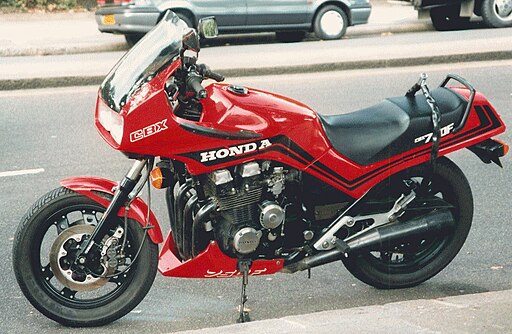
The Honda CBX750 emerged in the mid-1980s as a sport-touring middleweight that blended performance, reliability, and everyday usability. Its smooth inline-four engine, agile chassis, and balanced ergonomics made it a favorite among riders seeking spirited rides on winding roads as well as comfortable highway cruises. This article dissects the CBX750’s technical architecture, performance metrics, maintenance considerations, and legacy, delivering detailed parameters and actionable insights for enthusiasts and potential owners.
Historical Context and Development
Honda introduced the CBX750 globally between 1983 and 1988, slotting it between the smaller CB650 and the flagship CBX1000. The goal was to offer a high-revving inline-four with modern styling and industry-leading reliability. Development priorities included:
- Smooth power delivery at high RPM
- Lightweight frame to enhance handling
- Improved cooling to handle sustained touring speeds
- Simplified maintenance via accessible components
By focusing on efficiency and practicality, Honda crafted a bike that required fewer adjustments than its contemporaries while still delivering lively performance.
Engine Design and Technical Architecture
Engine Configuration
- Type: Liquid-cooled, four-stroke, inline-four
- Displacement: 747 cc
- Bore × Stroke: 67.0 mm × 53.6 mm
- Compression Ratio: 9.3 : 1
A balanced crankshaft and precise counter-balancing shafts eliminate most secondary vibrations, allowing smooth operation up to 10,000 rpm.
Valve Train and Combustion
- Valvetrain: Dual overhead camshafts (DOHC)
- Valves: 4 per cylinder (16 total)
- Valve Diameter: Intake 29 mm; Exhaust 24 mm
- Timing Drive: Cogged rubber belts
Keihin CV carburetors (32 mm) meter fuel, ensuring crisp throttle response. Progressive intake tract design smooths airflow at low revs and maximizes volumetric efficiency near the redline.
Cooling and Lubrication
- Cooling System: 3-row aluminum radiator with thermostatic fan
- Coolant Capacity: 2.2 L
- Oil System: Wet sump, 3.0 L capacity
- Oil Filter: Spin-on cartridge, located under the right crankcase cover
An integrated oil cooler beneath the engine maintains stable temperatures during extended high-speed runs.
Transmission and Final Drive
- Gearbox: 6-speed constant mesh
- Shift Drum: Roller-rocker actuated
- Clutch: Wet multi-plate, cable-actuated
- Final Drive: O-ring chain; sprockets 17 T front, 45 T rear
Close-ratio gearing keeps the engine in its peak power band, while the tall sixth gear enables relaxed cruising at highway speeds.
Chassis, Suspension, and Braking Systems
Frame and Geometry
- Frame Type: Steel double-cradle
- Wheelbase: 1,445 mm
- Rake/Trail: 27.5° / 112 mm
- Seat Height: 790 mm
- Ground Clearance: 145 mm
- Dry Weight: 218 kg
The twin-cradle design optimizes torsional rigidity, delivering stable feedback through the front end without excessive weight.
Front Suspension
- Forks: 41 mm telescopic, 130 mm travel
- Damping: Non-adjustable, oil-damped
Rear Suspension
- Shock Absorbers: Dual shocks with preload adjustment
- Travel: 120 mm
Brakes and Wheels
- Front Brakes: Dual 296 mm discs, two-piston calipers
- Rear Brake: Single 296 mm disc, single-piston caliper
- Front Wheel: 17 × 3.50 in, 110/80 × 17 tire
- Rear Wheel: 17 × 4.25 in, 130/80 × 17 tire
Braking performance is strong and predictable, with ample leverage and a firm lever feel under heavy use.
Electrical System and Instrumentation
- Battery: 12 V / 11 Ah sealed lead-acid
- Alternator Output: 256 W at 5,000 rpm
- Ignition: Transistorized Magneto system (TCI)
- Lighting: 35 W headlight; 21/5 W dual-filament in fairing
- Instrument Cluster: Analog tachometer, speedometer, fuel gauge, coolant-temperature gauge, digital odometer
Circuit protection includes fuses for each major subsystem and a grounding busbar to simplify wiring diagnostics.
Performance Metrics and Riding Characteristics
- Peak Power: 74 hp @ 9,500 rpm
- Peak Torque: 51 lb-ft (69 Nm) @ 7,000 rpm
- Top Speed: 215 km/h
- 0–100 km/h: 5.2 s
- Fuel Consumption: 5.5 L/100 km at steady 90 km/h
- Fuel Capacity: 18 L, including 3 L reserve
On-road the CBX750 feels eager above 6,000 rpm, yet remains tractable in town thanks to responsive carburetion and a broad torque curve. Its chassis strikes a balance between agility in twisties and highway stability.
Maintenance, Common Issues, and Preventative Strategies
Regular upkeep is straightforward, but attention to detail preserves reliability:
- Valve Clearance: Inspect every 12,000 km; tappet shims are durable but require precision shims when out of spec.
- Carburetor Synchronization: Balance each throat every 8,000 km for smooth idling and equal fuel distribution.
- Cooling System: Replace coolant every two years; check hoses for swelling or cracks.
- Chain and Sprockets: Adjust tension every 1,000 km; lubricate with high-temperature chain lube.
- Brake Fluid: Flush hydraulic circuits annually to prevent corrosion inside calipers and master cylinders.
- Rubber Components: Inspect fork seals and shock shock-boot integrity to prevent oil contamination and fork stiction.
Proactive replacement of wear items—spark plugs, air filter, drive chain—extends service intervals and maintains peak performance.
Technical Specification Summary
| Parameter | Specification |
|---|---|
| Engine Type | Liquid-cooled inline-four |
| Displacement | 747 cc |
| Bore × Stroke | 67.0 mm × 53.6 mm |
| Compression Ratio | 9.3 : 1 |
| Valvetrain | DOHC, 4 valves per cylinder |
| Carburetion | 4 × Keihin CV, 32 mm |
| Transmission | 6-speed constant mesh |
| Final Drive | O-ring chain (17 T/45 T) |
| Frame | Steel double-cradle |
| Front Suspension | 41 mm telescopic (130 mm travel) |
| Rear Suspension | Dual shocks, preload adj. (120 mm travel) |
| Brakes Front/Rear | Dual 296 mm discs / 296 mm disc |
| Wheelbase | 1,445 mm |
| Dry Weight | 218 kg |
| Fuel Capacity | 18 L (3 L reserve) |
| Peak Power | 74 hp @ 9,500 rpm |
| Peak Torque | 69 Nm @ 7,000 rpm |
| Top Speed | 215 km/h |
Legacy and Aftermarket Support
Decades after its debut, the CBX750 commands a loyal following. Key factors sustaining its appeal:
- Availability of OEM and performance parts, including repro valve covers, rebuild kits, and upgraded carburetor floats.
- A rich community of enthusiasts sharing restoration guides, dyno maps, and electronic ignition upgrades.
- Compatibility with modern accessories: LED headlight conversions, adjustable rear shock replacements, and aftermarket exhaust systems that improve midrange torque.
Conclusion
The Honda CBX750 stands as a testament to balanced engineering—combining a high-revving, smooth inline-four with a chassis that inspires confidence on backroads and comfort on long tours. Its straightforward maintenance, robust electrical system, and wide aftermarket support make it an enduring choice for riders craving classic Honda reliability with spirited performance.
