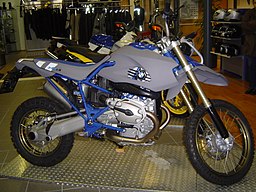
The BMW HP2 Enduro is a high-performance enduro motorcycle produced by BMW Motorrad between 2005 and 2008, designed to blend serious off-road capability with the engineering sophistication of BMW’s larger touring and adventure bikes. Built as part of the HP2 family, which stands for High Performance, this model drew directly on the proven air/oil-cooled boxer twin engine and electronics from the R1200GS while shedding weight and reconfiguring the chassis specifically for rugged trail and cross-country use. With a relatively limited production run and just under 3 000 units made, the HP2 Enduro has become a standout in BMW’s history as a focused, lightweight, and technically ambitious departure from more touring-oriented machines.
Engine and Powertrain
Under its minimalist bodywork, the HP2 Enduro is powered by a 1 170 cc air/oil-cooled flat-twin boxer engine that features dual overhead camshafts (DOHC) and four valves per cylinder. The engine’s bore and stroke measure 101 mm x 73 mm, and the compression ratio is about 11.0 : 1, favoring a broad torque curve and strong midrange performance suited to both rugged terrain and rapid acceleration on open ground. Fuel delivery is managed by an electronic fuel injection system (BMS-K) with digital engine management and dual ignition, ensuring precise metering and responsive throttle control under varying conditions. Peak power output is approximately 105 hp at 7 000 rpm, with maximum torque around 115 Nm at 5 500 rpm, figures that place the HP2 Enduro well above typical dual-sport bikes of its era in terms of usable performance. A 6-speed gearbox with helical gears and a single-plate dry clutch transmits power to the rear shaft drive via a Paralever final drive, maintaining clean and predictable power delivery while minimizing maintenance typical of chain drives.
Chassis, Suspension, and Braking
The HP2 Enduro’s chassis departs from traditional BMW Telelever layouts in favor of a tubular steel spaceframe that prioritizes light weight and agility, especially in off-road environments. Up front, an upside-down telescopic fork with 45 mm stanchions provides generous 270 mm of wheel travel, allowing the front end to absorb rough surfaces and maintain steering precision. The rear suspension consists of a forged aluminum single-sided swingarm with BMW Motorrad’s Paralever system, offering 250 mm of travel that balances traction and compliance on uneven trails. Rake and trail geometry are tuned for stability, with typical values near a 60.5° steering angle and 127 mm of trail, giving a planted feel at speed while remaining responsive at lower speeds. Braking is handled by a 305 mm front disc and a 265 mm rear disc, each with floating calipers that ensure strong and controllable stopping power even under adverse conditions. Spoked wheels with a 21-inch front and 17-inch rear fitted with dual-sport tyres underscore the bike’s focus on real off-road capability rather than street performance.
Dimensions, Weight, and Ergonomics
Physically, the HP2 Enduro sits tall and lean to suit its off-road mission. The seat height is around 920 mm, which combined with long-travel suspension, provides abundant ground clearance for obstacles and technical terrain. The bike’s wheelbase of approximately 1 610 mm contributes to stability at speed and angles confidence when navigating uneven surfaces. Overall dimensions stretch to around 2 350 mm in length and 880 mm in width, while the dry weight is about 175 kg (roughly 386 lbs), and curb weight with fluids is near 196–197 kg, a competitive figure for a large-capacity dual-sport of this type. Fuel capacity is approximately 13 litres, offering a balance between range and lightweight agility, and the compact proportions allow riders to shift their weight easily over rough terrain. Ergonomics favor a forward-leaning yet comfortable posture, with wide handlebars and a narrow, firm seat that assist control during extended off-road riding.
Performance and Riding Character
The HP2 Enduro delivers a performance envelope that is unusual for large-capacity enduro motorcycles, capable of exceeding 200 km/h on open stretches while also excelling in slow-speed traction and feedback on dirt. Fuel consumption is efficient for its class, with real-world figures often around 4.1 litres per 100 km at moderate cruising speeds, a testament to the boxer engine’s balance of power and economy. The long-travel suspension and articulating chassis geometry make the bike confident on gnarly trails, while its generous torque and broad power delivery ensure that even steep climbs and loose terrain can be tackled with authority. Braking performance and chassis balance contribute to a composed feel at all speeds, though the absence of modern electronic rider aids such as traction control or ABS (in its original specification) places a premium on rider skill, especially under low-traction conditions.(Moto Data)
Technical Systems and Ancillary Features
Though its core focus is on mechanical performance, the HP2 Enduro is fitted with a competent electrical and ancillary system that supports everyday use. The bike’s 12 V electrical system powers efficient lighting and instruments, while the ignition and engine management systems are calibrated for consistent performance across a wide range of temperature and altitude conditions. The shaft drive and Paralever system reduce maintenance chores, a significant advantage when compared to chain-driven rivals that require frequent attention after off-road sessions. Additional refinements like adjustable suspension damping, high-mounted exhaust routing, and cross-spoke wheels emphasize durability and resistance to impact and vibration, ensuring resilience even when subjected to rigorous use.
Legacy and Typical Use
In retrospect, the BMW HP2 Enduro stands as an ambitious blend of big-displacement boxer engine character and dedicated off-road dynamics that was ahead of its time. It offered a unique alternative to more conventional single-cylinder enduro bikes and large adventure tourers by delivering a machine capable of both high-speed touring and confident trail exploration. Its relatively short production run and niche focus have made it a sought-after model among enthusiasts who value engineering distinctiveness and dual-purpose capability. In practical use, the HP2 Enduro performs best in scenarios where a rider seeks the challenge and reward of varied terrain, combining technical trail riding with open-road touring without sacrificing the performance or composure expected from a premium motorcycle.
