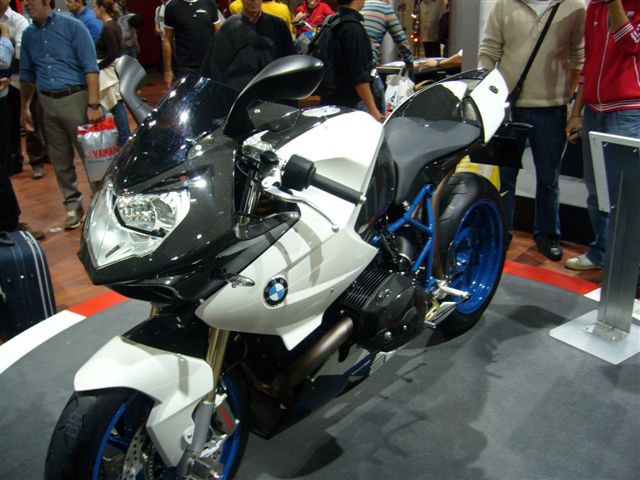
The BMW HP2 Sport is not a “special edition” in the casual sense. It’s a rare example of a factory-built, near-homologation-level machine designed around one clear objective: extract the maximum possible performance from BMW’s air/oil-cooled boxer platform while proving it could still compete in a world dominated by high-revving inline-fours and V-twins. It sits in a very specific historical window—late in the evolution of the classic boxer architecture, but engineered with such intensity that it feels like a prototype made legal for the street. What makes the HP2 Sport so fascinating is that it is not just fast for a boxer; it is a deliberate demonstration of how far a horizontally-opposed twin can be pushed using advanced materials, race-derived geometry, and a deeply performance-first design philosophy.
Engine Architecture: Air/Oil-Cooled, But Far From Old-Fashioned
At the heart of the HP2 Sport is a 1,170 cc flat-twin engine (boxer), a configuration BMW has refined for decades. On paper, an air/oil-cooled twin looks like a limitation compared to liquid-cooled superbike engines, yet the HP2 Sport’s powerplant is packed with high-end engineering solutions that make it anything but traditional. The motor uses double overhead camshafts (DOHC) with four valves per cylinder, a major technical leap for the boxer line at the time. This DOHC arrangement is paired with finger followers for precise valve control, allowing higher engine speeds and more aggressive cam profiles than earlier pushrod or single-cam boxer engines.
The HP2 Sport’s combustion and breathing are optimized around high-flow cylinder heads, a high compression ratio, and intake/exhaust tuning intended to keep the engine pulling hard through the midrange while still extending its usable rev ceiling. The result is an engine that maintains the signature boxer torque delivery but feels sharper, more eager, and more race-oriented than nearly any boxer before it. It’s also engineered to survive high-load track use without the thermal stability of liquid cooling, relying instead on carefully managed oil circulation, heat dissipation, and tight internal tolerances.
Power, Torque, and RPM Behavior: How It Delivers Performance
The HP2 Sport produces approximately 128 hp (95 kW) at around 8,750 rpm and roughly 115 Nm of torque at about 6,000 rpm, which is a remarkable output for an air/oil-cooled boxer of its era. But the real story is not the peak number—it’s the shape of the curve. The torque arrives early and stays strong, giving the bike an immediate, muscular drive out of corners. Unlike many high-revving superbikes that demand constant rpm management, the HP2 Sport can be ridden with fewer gear changes while still accelerating with authority.
What makes it special is how BMW tuned the engine to feel “race-like” without abandoning the boxer identity. It revs more freely than earlier boxer twins and holds power longer into the upper range. Yet it never becomes peaky or fragile in character. That balance is part of the HP2 Sport’s engineering achievement: it feels like a performance engine, not merely a strong touring twin.
Fuel Injection and Engine Management: Precision Over Drama
The HP2 Sport uses electronic fuel injection with BMW’s advanced engine management system for the time, designed to deliver accurate fueling across varying loads and temperatures. This is crucial on an air/oil-cooled engine, where temperature swings can be wider than on a liquid-cooled design. The injection mapping is built for throttle response that is direct but not abrupt, and it supports track riding without the hesitation or unevenness that older systems could show.
The system also integrates a performance-focused approach to ignition timing and mixture control, ensuring that the engine can maintain stability at high rpm and high load. While modern ride-by-wire systems offer multiple power modes and traction control layers, the HP2 Sport comes from a purer era—where the “electronic sophistication” is mostly about making the engine as effective and reliable as possible, rather than filtering the rider’s inputs.
Exhaust System: Lightweight, High-Flow, and Race-Intended
A major component of the HP2 Sport’s performance personality comes from its exhaust system. It is engineered to reduce weight while maximizing flow, and it plays a significant role in the bike’s midrange strength and top-end breathing. The system is tuned for efficient scavenging and minimal restriction, contributing to the engine’s ability to hold power at higher rpm than most boxers.
The exhaust also shapes the sound in a way that is distinct from inline-fours or V-twins. The boxer’s firing rhythm produces a mechanical, hard-edged tone that feels more like a racing twin than a relaxed road engine. It’s not about volume; it’s about the crispness of the pulses and the way the engine feels under load.
Transmission and Final Drive: Shaft-Driven, But Engineered for Sport
One of the HP2 Sport’s most unusual achievements is that it delivers serious track capability while using a shaft final drive. Shaft drive is typically associated with touring bikes because of its cleanliness and low maintenance, but it often comes with weight penalties and driveline reactions that can upset handling. BMW addressed this with its Paralever rear suspension design, which reduces shaft jacking effects and helps the rear end remain stable under acceleration and deceleration.
The gearbox is a close, sport-oriented six-speed designed to keep the engine in its strongest range. Shifts are solid and mechanical, and the gearing is selected to emphasize corner-exit drive rather than top-speed theatrics. In practice, the HP2 Sport feels like a bike that wants to be ridden with momentum and intent, rewarding riders who use torque intelligently rather than chasing extreme rpm all the time.
Chassis Design: A Sportbike Built Around a Boxer Layout
Designing a true sport chassis around a boxer engine is inherently complex because the cylinders protrude sideways, affecting lean clearance, packaging, and weight distribution. The HP2 Sport’s chassis is built to turn that challenge into a strength. The engine sits low, contributing to a low center of gravity, which improves stability and reduces the effort required to initiate turns.
The frame design is a lightweight, rigid structure intended to provide accurate steering feedback and maintain composure at high speed. The bike’s geometry is tuned for track use, with a front-end feel that is more precise than most riders expect from a boxer-based platform. BMW’s goal was not to make it behave like a Japanese inline-four; it was to make a boxer sportbike that could be ridden aggressively without fighting its layout.
Suspension: Telelever and Paralever as a Performance System
The HP2 Sport uses BMW’s signature Telelever front suspension system rather than conventional telescopic forks. Telelever separates braking forces from suspension movement more effectively than standard forks, reducing front-end dive under heavy braking. On the track, this can provide a very stable platform, allowing the rider to brake deeper into corners without the front geometry collapsing as dramatically.
At the rear, the Paralever system works with the shaft drive to maintain consistent suspension behavior under power. Together, Telelever and Paralever create a chassis that feels unusually calm under extreme inputs. This is one of the HP2 Sport’s defining traits: it doesn’t pitch and heave like many sportbikes, and it stays composed even when ridden hard. That composure can initially feel different to riders used to fork dive as feedback, but once understood, it becomes a major advantage in high-speed braking zones and fast transitions.
Braking System: Track-Level Stopping Power
The braking system on the HP2 Sport is designed for serious performance, with large front discs and high-quality calipers chosen to withstand repeated heavy braking. BMW’s braking philosophy at the time focused on strong, consistent stopping power and heat management, ensuring the bike could survive track sessions without fade.
The brake feel is firm and progressive rather than overly sharp. This matches the bike’s overall character: it is not a nervous, razor-edged machine, but a precise tool that rewards controlled aggression. The chassis stability under braking also allows the rider to use the brakes more confidently, because the front end remains settled even under very hard deceleration.
Wheels and Tires: Lightweight Components for Real Handling Gains
The HP2 Sport uses lightweight wheels—often featuring advanced materials—because BMW understood that reducing unsprung mass is one of the most effective ways to improve handling. Lighter wheels reduce rotational inertia, allowing faster direction changes, quicker acceleration response, and more sensitive suspension behavior.
This matters especially on a boxer sportbike, where the engine layout and shaft drive already impose certain packaging constraints. By saving weight in critical areas like wheels, BMW sharpened the bike’s steering response and made it feel more agile than its physical presence suggests. With modern sport tires, the HP2 Sport’s chassis can still deliver impressive grip and stability, demonstrating that the underlying engineering was far ahead of its time.
Bodywork and Aerodynamics: Carbon Fiber with a Functional Purpose
A standout feature of the HP2 Sport is its extensive use of carbon fiber bodywork. This is not cosmetic carbon; it is structural and weight-saving carbon applied where it makes measurable performance differences. Carbon fiber reduces overall mass while maintaining stiffness, helping the bike respond more quickly to steering inputs and improving acceleration and braking performance.
Aerodynamically, the fairing is shaped for stability and rider protection at speed, with a profile that supports high-speed track use. It’s designed to reduce turbulence around the rider and keep the bike planted in fast sections. While it doesn’t use modern winglets or active aero, the HP2 Sport’s aerodynamic package is purposeful and clean, reflecting a time when performance came from careful shaping rather than add-on devices.
Weight and Mass Centralization: A Key Part of the HP2 Sport Formula
The HP2 Sport’s dry weight is around 178 kg, which is exceptionally light for a shaft-driven boxer sportbike. Achieving this required a deep commitment to weight reduction across the entire machine, from carbon bodywork to lightweight wheels and carefully selected components.
Equally important is how that weight is distributed. The boxer engine’s low placement helps mass centralization, and the chassis design ensures the bike feels balanced when leaned over. The result is a motorcycle that does not behave like a heavy, torque-rich twin—it behaves like a carefully engineered sport machine with an unusually planted, confident feel.
Riding Position and Ergonomics: A True Sportbike, Not a Compromise
Unlike many performance-themed road bikes that soften ergonomics for everyday comfort, the HP2 Sport is unapologetically focused. The clip-on handlebars, rearset footpegs, and seat height create a committed riding position designed for track control. The rider is placed forward and low, improving front-end feel and reducing aerodynamic drag.
At the same time, the bike’s chassis stability and torque delivery make it less exhausting than some extreme supersports. It does not require constant high rpm to be fast, and it does not punish the rider with nervous handling. In long sessions, the HP2 Sport can feel more manageable than a peaky 1000cc inline-four, even though the riding position is undeniably aggressive.
Technical Specifications: Key Numbers and Hardware
The HP2 Sport’s technical package is defined by its high-end components and performance-first engineering. Its core specifications include:
- Engine type: Air/oil-cooled flat-twin (boxer), DOHC, 4 valves per cylinder
- Displacement: 1,170 cc
- Power output: ~128 hp (95 kW) @ ~8,750 rpm
- Torque: ~115 Nm @ ~6,000 rpm
- Fuel system: Electronic fuel injection
- Transmission: 6-speed manual
- Final drive: Shaft drive with Paralever
- Front suspension: Telelever
- Rear suspension: Paralever single-sided swingarm
- Dry weight: ~178 kg
- Bodywork: Extensive carbon fiber components
- Brakes: High-performance dual front discs, sport-grade calipers
These specifications matter not just as numbers but as evidence of BMW’s intent: to build a boxer sportbike that is technically credible, track-capable, and engineered without compromise.
Track Behavior: Why It Feels Different from Other Sportbikes
On the track, the HP2 Sport delivers a very distinctive experience. It does not surge with top-end like a liter-class inline-four, and it does not snap with the aggressive engine braking of some V-twins. Instead, it offers a broad, muscular drive and a chassis that stays remarkably composed under braking and acceleration. Riders often describe it as stable to the point of feeling “unshakable,” which is exactly what BMW was aiming for.
The Telelever front end changes how braking feels. The bike stays level, allowing the rider to keep steering accuracy while braking deeper into corners. The Paralever rear keeps the shaft drive from disturbing the chassis when power is applied. Together, these systems make the HP2 Sport feel like a machine that prefers smooth, high-commitment riding rather than frantic, high-rpm aggression.
Engineering Significance: The Endgame of the Classic Boxer Era
The HP2 Sport is significant because it represents the peak of BMW’s air/oil-cooled boxer performance development before the industry shifted more decisively toward liquid cooling, electronics-heavy rider aids, and increasingly complex emission requirements. It is, in many ways, a statement bike—a proof that BMW could build a machine with exotic materials, racing intent, and real performance credibility while staying loyal to its most iconic engine layout.
It also reflects a particular BMW philosophy: instead of copying the dominant sportbike formula, BMW refined its own technical identity and made it competitive on its own terms. That is why the HP2 Sport still holds a special place among enthusiasts. It is not just rare; it is conceptually rare—an engineering idea executed at full intensity.
Ownership and Maintenance Considerations: High-End, But Not Fragile
Despite its exotic construction and track focus, the HP2 Sport is not a fragile motorcycle if maintained properly. The boxer engine architecture is known for durability, and BMW engineered the HP2 Sport to withstand hard use. However, it is still a premium machine with specialized parts, and maintenance costs can be higher than more common models. Carbon fiber panels, unique engine components, and low-production hardware mean replacements can be expensive and availability can be limited.
Routine maintenance is straightforward for experienced BMW technicians, but the DOHC valvetrain and performance tuning require careful attention. The bike rewards owners who treat it like what it is: a factory-built performance machine, not a casual weekend cruiser.
The BMW HP2 Sport Legacy: A Machine That Refuses to Be Ordinary
The BMW HP2 Sport is one of those motorcycles that becomes more impressive the deeper you look. It is not just a boxer in sportbike clothing—it is a deliberate engineering project that pushed a mature platform into territory it was never expected to reach. Its carbon fiber bodywork, DOHC cylinder heads, lightweight construction, and sophisticated chassis systems combine into a motorcycle that feels unique even today.
In a world where modern superbikes chase power figures and electronic complexity, the HP2 Sport stands out for a different reason. It represents a time when performance could be achieved through mechanical excellence, clever geometry, and obsessive attention to weight and stability. It is not the fastest sportbike ever made, but it is one of the most technically distinctive—and one of the most honest.
