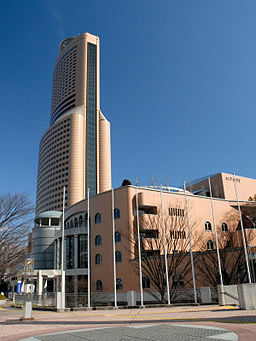
ACT Tower
ACT Tower: Shizuoka’s Architectural and Cultural Beacon
Standing tall over the coastal city of Hamamatsu in Japan’s Shizuoka Prefecture, the ACT Tower (アクトタワー, Akuto Tawā) is more than just a skyscraper—it is a symbol of the city’s cultural and musical heritage, a marvel of modern Japanese architecture, and the tallest building in the prefecture. With its distinctive silhouette inspired by a musical instrument and its multifunctional layout, the ACT Tower embodies a harmonious blend of form and function. Completed in 1994, it remains a landmark that elegantly bridges urban development with cultural expression.
Architectural Concept and Design Philosophy
The ACT Tower was envisioned as the centerpiece of the ACT City Hamamatsu complex—a large-scale urban development project that aimed to rejuvenate the city center while celebrating Hamamatsu’s identity as a hub of musical innovation. The city is home to major musical instrument manufacturers such as Yamaha and Kawai, and this identity is embedded deeply in the building’s design.
The tower’s architecture mimics the elegant curves of a harmonica or a musical organ pipe, depending on perspective. This inspiration is not only aesthetic but conceptual: just as music harmonizes tones, ACT Tower integrates diverse urban functions—office spaces, hotels, concert halls, educational facilities, and shopping areas—into a single vertical symphony.
The name “ACT” itself stands for “Art, Culture, and Technology,” reflecting the core pillars around which the complex was developed.
Technical Specifications and Structural Details
- Name: ACT Tower (Hamamatsu ACT Tower)
- Location: 111-2 Itaya-machi, Naka-ku, Hamamatsu-shi, Shizuoka-ken, Japan
- Architectural Height: 212.76 meters (698 feet)
- Roof Height: 212.76 meters
- Floor Count: 45 above ground + 3 basement levels
- Total Floor Area: Approximately 90,000 square meters
- Construction Type: Reinforced concrete with steel structure
- Primary Uses: Office space, hotel (Okura ACT City Hotel), shopping mall, music and event halls
- Elevators: 18 high-speed elevators
- Observation Deck Height: Approximately 185 meters
- Construction Completed: 1994
- Main Contractor: Kajima Corporation
- Developer: ACT City Development Committee (public-private partnership)
Engineering and Structural Innovation
While not located in a highly seismic zone compared to Tokyo, Hamamatsu is still subject to Japan’s national earthquake standards. The ACT Tower was designed with a combination of reinforced concrete and structural steel framing to optimize for both wind resistance and seismic resilience.
Key structural elements include:
- Central core construction: The building’s rigidity is ensured by a large central concrete core, which houses the elevator shafts and emergency staircases. This core provides lateral stability against wind and seismic forces.
- Perimeter frame system: The steel-frame perimeter supports the curtain wall and also distributes wind loads evenly across the structure.
- Foundation system: Due to soil conditions in the Hamamatsu basin, deep foundation piles were used to anchor the tower securely.
- Tuned Mass Dampers: The tower incorporates vibration control systems to counteract wind-induced sway, ensuring comfort and stability, particularly in the upper hotel floors.
Functional Zoning and Layout
ACT Tower is functionally divided into several vertical zones, each with a distinct purpose:
- Basement Levels (B3–B1):
Underground parking, mechanical rooms, and access to the nearby train station. - Podium Levels (1F–4F):
This section houses the shopping mall, restaurants, and music stores. It connects to the broader ACT City Hamamatsu complex, which includes a concert hall, convention center, and musical museum. - Mid-levels (5F–28F):
Primarily leased as commercial office space. These floors offer flexible layouts and amenities suitable for both corporate headquarters and small businesses. - Upper levels (29F–44F):
The Okura ACT City Hotel occupies these floors, offering luxurious accommodations with panoramic views of the Pacific Ocean and Mt. Fuji on clear days. It includes conference rooms, banquet halls, a fitness center, and fine-dining options. - Top floor (45F):
The observation deck, offering one of the best views in the Chūbu region. It is a popular tourist attraction and includes a café and small exhibition space.
Cultural Integration: The ACT City Complex
The ACT Tower is only one part of the broader ACT City Hamamatsu development. This urban complex integrates the skyscraper with cultural and civic facilities, including:
- ACT City Concert Hall: A world-class music hall with seating for over 2,300 people. It’s acoustically designed to host symphonic orchestras and opera performances.
- Musical Instrument Museum: Highlighting Hamamatsu’s status as a leading center of instrument manufacturing, this museum showcases rare instruments from around the world.
- Academic and Research Facilities: Including music academies and creative business incubators aimed at nurturing local talent and fostering innovation.
- Public Parks and Plazas: Green open spaces surrounding the tower provide areas for recreation and open-air concerts, contributing to the livability of the area.
Technological Systems and Sustainability
While designed in the early 1990s, the ACT Tower incorporates several innovative systems that have been updated over time to improve efficiency and reduce environmental impact.
- HVAC System: The building features centralized climate control with zoned energy management to optimize temperature regulation across different functional areas.
- Lighting: Modern LED systems and motion sensors have been retrofitted in common areas to reduce energy use.
- Elevator Technology: High-speed, low-vibration elevators are integrated with smart traffic control to reduce wait times and improve vertical circulation.
- Water Conservation: Greywater recycling is employed in hotel and public restroom areas, while low-flow fixtures are used throughout the building.
Tourism and Urban Impact
Since its opening, the ACT Tower has become a major draw for visitors to Hamamatsu, attracting not just business travelers and tourists, but also cultural enthusiasts and students. Its observation deck is one of the few places in central Japan where visitors can enjoy sweeping views from the sea to the Southern Alps.
Economically, the tower played a critical role in reinvigorating downtown Hamamatsu. It helped transition the area from a low-rise commercial zone into a vibrant, mixed-use district that now includes hotels, luxury apartments, arts institutions, and transit connections.
The tower is directly connected to Hamamatsu Station, a major stop on the Tōkaidō Shinkansen line, making it easily accessible from Tokyo, Osaka, and Nagoya.
Conclusion
The ACT Tower is much more than the tallest building in Shizuoka Prefecture. It is a visionary project that combines architecture, culture, technology, and civic pride into one iconic structure. With its form inspired by music and its function dedicated to community and creativity, the tower reflects Hamamatsu’s past and future. Whether admired from afar or explored from within, the ACT Tower remains a shining example of what urban development can achieve when guided by a clear cultural vision and architectural excellence.
