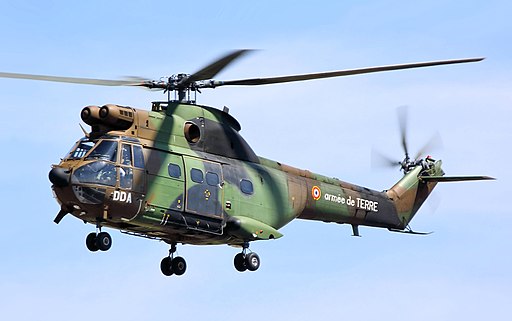
Aérospatiale SA 330 Puma
The Aérospatiale SA 330 Puma stands as a testament to innovative helicopter design and enduring versatility. Developed in the 1960s by the French aerospace manufacturer Aérospatiale, this medium transport and utility helicopter has served a multitude of roles around the globe. Its robust construction, reliability in harsh environments, and adaptability to various missions have cemented its place in both military and civilian aviation history.
Historical Development and Evolution
The genesis of the SA 330 Puma can be traced back to a period when nations around the world were seeking reliable rotary-wing aircraft for troop transport, search and rescue, and logistical support. In response to these growing demands, Aérospatiale embarked on a project that would result in a helicopter with a unique blend of power and flexibility. The Puma was officially introduced in the late 1960s, quickly gaining recognition for its performance and operational efficiency.
Early iterations of the Puma were primarily developed for military applications, and several European nations soon adopted it for their armed forces. Over time, the helicopter found its way into a variety of roles—ranging from medical evacuation to maritime operations and beyond. This adaptability not only broadened its operational profile but also spurred numerous upgrades and modifications over subsequent decades.
Design Philosophy and Engineering Excellence
At the heart of the SA 330 Puma’s enduring success lies its innovative design philosophy. Engineers focused on creating a platform that could be easily modified for different missions without compromising on performance. Its sleek yet rugged airframe was built to endure the rigors of both combat zones and extreme weather conditions, making it a favorite among operators worldwide.
The helicopter’s layout emphasizes functionality and efficiency. A spacious cabin allows for the transport of a significant number of troops or a substantial payload of cargo. The design also facilitates quick reconfiguration, whether the need is for carrying armaments, humanitarian supplies, or specialized equipment for search and rescue operations. Its high-mounted tail rotor and well-placed engines contribute to superior handling and maneuverability, even in challenging environments.
Technical Specifications and Performance Capabilities
The SA 330 Puma is powered by twin turboshaft engines, which provide the necessary thrust to carry heavy loads and perform intricate maneuvers. This twin-engine configuration not only enhances safety by providing a backup in case of engine failure but also contributes to the helicopter’s impressive lift capacity. The Puma’s performance parameters are marked by a balanced combination of speed, range, and operational altitude, making it suitable for both rapid deployment in military scenarios and steady, sustained missions in civilian roles.
One of the most significant technical achievements of the Puma is its ability to operate in diverse conditions—from high-altitude mountainous regions to the humid, challenging environments of tropical jungles. Its rotor system, carefully designed to maximize lift while minimizing vibrations, plays a crucial role in ensuring a smooth and stable flight. This stability is particularly important during delicate missions such as search and rescue or when landing on unprepared surfaces.
Operational Roles and Global Deployment
Throughout its service life, the SA 330 Puma has been utilized in a variety of operational contexts. In military service, it has seen action in troop transport, medical evacuation, and logistical support during conflicts and peacekeeping missions. Many armed forces have relied on its durability and adaptability to meet the ever-changing demands of modern warfare.
In the civilian arena, the Puma has proven invaluable in disaster relief, firefighting, and aerial surveillance. Its ability to operate under adverse conditions—coupled with its capacity to carry heavy loads—makes it an ideal choice for emergency services and humanitarian operations. This dual-use capability has allowed the helicopter to maintain a presence in both sectors, underscoring its versatility.
Modernization and Upgrades
Even decades after its introduction, the SA 330 Puma continues to evolve through modernization programs designed to extend its operational life and enhance its capabilities. Advances in avionics, navigation, and communication systems have been integrated into newer models, ensuring that the Puma remains competitive in a rapidly advancing technological landscape. These upgrades not only improve safety and efficiency but also allow operators to tailor the helicopter to specific mission requirements.
Upgraded variants now feature enhanced cockpit displays, modernized engines with improved fuel efficiency, and advanced safety features that meet stringent international standards. Such continuous innovation reflects the commitment of manufacturers and operators alike to preserving the Puma’s legacy while pushing the boundaries of what is possible in rotary-wing aviation.
Impact and Legacy in Aviation History
The influence of the Aérospatiale SA 330 Puma extends far beyond its technical specifications. It has become a symbol of reliability and adaptability, proving itself in countless operational theaters around the world. Its service record is marked by a blend of rugged endurance and technological innovation, making it a role model for subsequent generations of helicopters.
Over the years, the Puma has earned a reputation for its longevity and continued relevance in an industry characterized by rapid advancements. Its design principles have informed the development of newer models, and its operational success has inspired confidence among pilots, engineers, and military strategists alike.
Conclusion
The Aérospatiale SA 330 Puma remains one of the most iconic helicopters in aviation history. Its balanced blend of robust design, operational versatility, and continuous modernization ensures that it will continue to serve in various capacities for years to come. Whether deployed in a military combat zone, performing a daring rescue mission, or assisting in humanitarian relief, the Puma embodies the spirit of innovation and reliability that has defined its long service record. As aviation technology continues to advance, the legacy of the SA 330 Puma endures, a reminder of the enduring power of thoughtful design and engineering excellence.
.jpg)