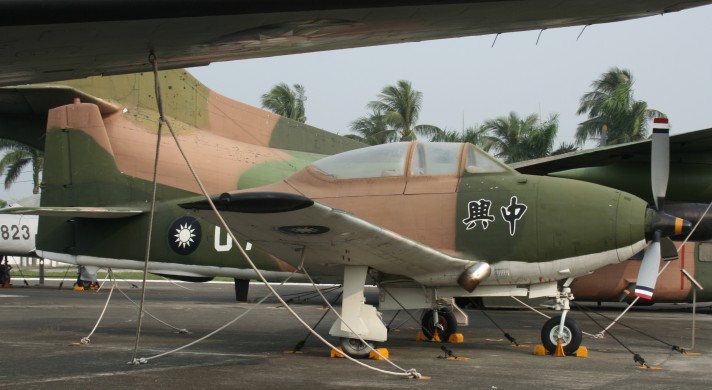
AIDC T-CH-1
The AIDC T-CH-1 represents a significant step in Taiwan’s journey toward self–reliant defense capabilities. Developed by the Aerospace Industrial Development Corporation (AIDC), the T-CH-1 was conceived as a state-of-the-art trainer aircraft that bridges the gap between basic flight instruction and advanced tactical training. Its role is pivotal in preparing pilots not only for the rigors of high-performance fighter jets but also for modern, technology-driven air combat environments. With a balanced mix of maneuverability, reliability, and modern avionics, the T-CH-1 is designed to instill confidence in students while streamlining the training transition to more complex platforms.
Historical Context
During the latter part of the 20th century, Taiwan faced mounting challenges in ensuring that its pilot training programs met upgraded standards in both safety and performance. The need arose for an aircraft that could accommodate evolving training doctrines while incorporating contemporary technologies such as digital control systems and sophisticated flight instrumentation. The AIDC T-CH-1 emerged from this urgent strategic need: an aircraft built not only to serve as a training platform but also as a demonstrator of Taiwan’s domestic engineering prowess.
Role in Taiwanese Aviation
The T-CH-1 is designed to be the workhorse of Taiwan’s training fleet. Its dual-seat configuration—allowing for an instructor and a student in the same cockpit—provides an interactive environment where theoretical learning meets hands-on flying experience. As pilots graduate from primary trainers and progress toward high-performance machines, the T-CH-1 is instrumental in imparting advanced flying techniques, tactical decision-making, and high–G maneuvering skills in a controlled, safe setting.
Development and Design Philosophy
Evolution of Taiwanese Trainer Aircraft
The development of the T-CH-1 is deeply rooted in Taiwan’s long-standing commitment to cultivating a robust aerospace industry. Building on decades of experience from previous training platforms, AIDC set forth to design an aircraft that addressed the shortcomings of its predecessors while integrating international best practices. The T-CH-1’s design reflects lessons learned in aerodynamics, systems integration, and pilot ergonomics derived from earlier trainers used by Taiwan’s air force.
Core Design Innovations
AIDC’s designers focused on several core principles when developing the T-CH-1:
- Optimized Aerodynamics: A refined, low–drag airframe and carefully contoured wing planform help the T-CH-1 deliver stable performance at both low and high speeds. This is vital for simulating real–world combat scenarios during training missions.
- Enhanced Structural Integrity: The airframe is constructed using modern composite materials and advanced alloys, ensuring durability and resilience during high–stress maneuvers. This factor is key to providing a forgiving yet responsive handling experience.
- Digital Flight Control System: The inclusion of a fly-by-wire system, paired with computer–assisted control algorithms, allows for precise handling across a variety of training regimes while reducing pilot workload. This technology also serves as a stepping stone toward transitioning pilots to modern tactical fighters.
- Modular Avionics Suite: The cockpit is fitted with a state-of-the-art digital instrumentation package that can be easily updated. Multifunction displays, integrated communication systems, and a simplified layout help both the instructor and student focus on core flight parameters without extraneous distractions.
These design goals helped the T-CH-1 become not only a trainer but also a platform that embodies the innovative spirit of Taiwan’s aerospace industry.
Technical Specifications
A closer look at the T-CH-1’s technical parameters reveals the comprehensive engineering effort invested in this trainer aircraft. The following sections detail its airframe, powerplant, performance, and avionics.
Airframe and Dimensions
The airframe of the T-CH-1 is designed for both agility and stability while offering ample space for a dual–seat configuration. The compact dimensions contribute to a balanced flight dynamic that is ideal for teaching precise control.
| Parameter | Specification | Comments |
|---|---|---|
| Crew | 2 (Instructor and Student) | Dual–seat configuration facilitates effective hands–on training. |
| Length | ~9.2 m (30.2 ft) | A compact fuselage minimizes drag and enhances maneuverability. |
| Wingspan | ~10.0 m (32.8 ft) | Designed to afford sufficient lift while ensuring agile response. |
| Height | ~3.2 m (10.5 ft) | A low–profile design contributes to reduced radar signature. |
| Wing Area | ~16 m² (172 ft²) | Provides stable lift at various airspeeds, crucial for training. |
| Empty Weight | ~1,200 kg (2,645 lbs) | Light enough to optimize fuel efficiency while maintaining strength. |
| Maximum Takeoff Weight | ~1,500 kg (3,307 lbs) | Allows for extra fuel and training instrumentation without compromising performance. |
Engine and Propulsion System
The T-CH-1 is powered by a single engine optimized for efficiency, responsiveness, and ease of maintenance—an essential requirement in any training aircraft.
| Parameter | Specification | Comments |
|---|---|---|
| Engine Type | Single low–bypass turbofan engine | Provides a modern propulsion solution with smooth power delivery. |
| Thrust | ~3,500 lbf (approximately 15.6 kN) | Sufficient for safe acceleration and maintaining high–speed training profiles. |
| Fuel Efficiency | Designed for economical consumption during extended training flights | Ensures lower operating costs and high sortie rates for training institutions. |
The dedicated engine configuration is balanced with the aerodynamic profile of the T-CH-1 to achieve optimal performance across the broad spectrum of training missions.
Performance and Handling Characteristics
The T-CH-1’s performance metrics are tailored to simulate the challenges pilots will face in more advanced aircraft. This includes not only agility and speed but also the critical safety margins required during training operations.
| Parameter | Specification | Comments |
|---|---|---|
| Maximum Speed | ~900 km/h (Mach 0.85) | Capable of reaching high subsonic speeds for realistic combat–simulation training. |
| Cruise Speed | ~750 km/h | Ensures extended flight durations without excessive fuel burn. |
| Stall Speed | ~150 km/h | A controlled stall behavior maximizes safety and teaching opportunities. |
| Rate of Climb | ~15 m/s | Rapid climb capacity benefits transition training, especially when practicing interception maneuvers. |
| Service Ceiling | ~12,000 m | Allows for training at higher altitudes to simulate diverse mission profiles. |
| Range | ~1,200 km | Extended range supports long-duration training sorties and mission simulation exercises. |
Avionics and Flight Instruments
One of the standout features of the T-CH-1 is its modern cockpit, equipped with a fully integrated avionics suite that serves both as a training tool and as a demonstration of the aircraft’s technological prowess.
- Digital Flight Control System: The fly-by-wire technology enhances handling precision, helping students master advanced maneuvers with a safety net built into the control system.
- Glass Cockpit Displays: Multifunction liquid-crystal displays (LCDs) provide real-time information about airspeed, altitude, attitude, and engine performance, thereby reducing pilot workload.
- Communication and Navigation: The cockpit features state-of-the-art radios, intercom systems, and simplified navigation aids (including GPS and VOR capabilities) to facilitate clear in-flight communication and route planning.
- Health and Status Monitoring: Onboard sensors continuously monitor engine parameters, fuel levels, and structural health, alerting the pilot and maintenance crew to any issues in real time.
By integrating these advanced systems, the T-CH-1 enables a training environment that mirrors the control complexity of front-line combat aircraft while remaining intuitive enough for pilots in training.
Operational Role and Training Impact
Training Capabilities
The AIDC T-CH-1 is specifically designed to provide a comprehensive training platform:
- Dual–Seat Configuration: The two–seat layout ensures that the instructor can closely monitor and assist the student in real time, making it ideal for transitional training.
- Realistic Flight Simulation: With performance metrics that approach those of light combat jets, the T-CH-1 simulates the excitement and challenges of high–performance flight while retaining forgiving handling characteristics.
- Safety–Oriented Design: Features such as low stall speed and robust structural integrity offer emergency safety margins that are critical when teaching new pilots.
These attributes make the T-CH-1 an indispensable asset in pilot training, reducing the gap between basic flight training and operational readiness for more complex aircraft.
Modernization and Upgrade Potential
As aviation technology advances, the modular design of the T-CH-1’s systems provides ample scope for future upgrades:
- Avionics: The digital cockpit is designed to be upgradable, allowing integration of new sensors, communication systems, and navigation technologies.
- Propulsion: The engine interface is compatible with future modifications to improve thrust efficiency or reduce fuel consumption.
- Structural Enhancements: Continued research into composite materials ensures that the airframe can be further lightened or reinforced as needed, extending the operational lifespan of the aircraft.
These upgrade paths guarantee that the T-CH-1 will continue to serve as a modern training aircraft well into the future.
Legacy and Future Influence
Impact on Subsequent Trainer Aircraft
The design philosophies and technical accomplishments embodied in the T-CH-1 serve as a benchmark for future trainer development in Taiwan and beyond. By integrating innovative digital systems with proven aerodynamics and reliable propulsion, the T-CH-1 has set new standards for what a modern trainer can achieve. Its success in bridging theoretical training with real–world flight dynamics has provided a template for next–generation trainer aircraft that emphasize both performance and safety.
Future Potential
Looking forward, the T-CH-1 is positioned not only as a training platform but, with its adaptable architecture, also as a potential candidate for light forward–air control or advanced simulation missions. Its ability to incorporate new technologies rapidly will ensure its relevance in an era where rapid changes in aerospace technology demand flexible and upgradeable platforms.
Conclusion
The AIDC T-CH-1 stands as a testament to Taiwan’s commitment to developing cutting–edge, indigenous aerospace solutions. With its balanced combination of advanced aerodynamics, robust propulsion, and an integrated digital cockpit, the T-CH-1 has redefined the role of training aircraft in modern pilot education. Its technical parameters—from the streamlined airframe and efficient engine to its sophisticated avionics—illustrate a carefully engineered platform that meets the demanding requirements of next–generation training.
As the T-CH-1 continues to evolve through planned upgrades and technological enhancements, its legacy as a cornerstone in Taiwan’s aviation training infrastructure is assured. The lessons learned from this aircraft will undoubtedly influence future platforms, ensuring that Taiwan remains at the forefront of aerospace innovation and pilot training excellence.
