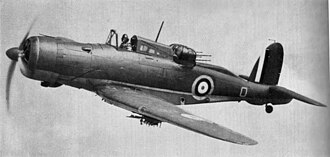
The history of military aviation is filled with aircraft that became legends because of spectacular victories, revolutionary technologies, or remarkable longevity. Yet just as fascinating are the aircraft that represented bold experiments—machines created to test new tactical ideas that ultimately proved less successful than expected. Among these unusual aircraft stands the Blackburn Roc, one of the most distinctive naval fighters ever built for the Royal Navy’s Fleet Air Arm.
Developed in the late 1930s, the Blackburn Roc was conceived during a period when military planners around the world were searching for innovative solutions to the rapidly evolving challenges of aerial warfare. Traditional fighter aircraft relied on forward-firing machine guns operated by the pilot, but some strategists believed that a powered gun turret could provide greater tactical flexibility. Instead of carefully aligning the entire aircraft with a target, a turret fighter could theoretically attack enemy aircraft from multiple angles while maintaining its own flight path. This concept promised advantages when defending fleets against bombers and reconnaissance aircraft, particularly during prolonged engagements over open water.
The Roc embodied this ambitious philosophy. Sharing many structural components with the Blackburn Skua dive bomber, it featured an all-metal monoplane design, retractable landing gear, enclosed cockpits, and modern construction techniques. Its most striking feature, however, was a hydraulically powered dorsal turret armed with four machine guns, replacing the conventional forward-firing armament found on most fighters of the era.
Although the aircraft’s operational career was relatively short and its combat record limited, the Blackburn Roc remains historically significant because it illustrates how military innovation often progresses through experimentation. Every successful technology is accompanied by ideas that seem promising in theory but reveal unforeseen limitations in practical service. The Roc was one of those aircraft—a courageous attempt to rethink fighter tactics at a time when aviation technology was advancing at an extraordinary pace.
Today, aviation historians continue to study the Blackburn Roc not as a failure, but as a valuable lesson in aircraft design, naval doctrine, and the complex relationship between technological innovation and operational reality.
The Strategic Environment of the Late 1930s
During the second half of the 1930s, the world’s major military powers anticipated another large-scale conflict. Aircraft performance was improving dramatically as more powerful engines, streamlined airframes, retractable landing gear, and stressed-skin metal construction became standard features of modern combat aircraft.
At the same time, military planners struggled to predict the nature of future air battles. Strategic bombing theories suggested that large formations of bombers might overwhelm conventional fighter defenses. Naval strategists faced additional concerns because aircraft carriers and warships operating far from land required dedicated fighter protection against long-range enemy reconnaissance aircraft and bombers.
Britain’s Air Ministry therefore encouraged manufacturers to investigate unconventional fighter concepts. One of the most intriguing ideas was the powered gun turret.
The logic appeared sound. A rotating turret could engage targets regardless of the aircraft’s heading, allowing pilots to maneuver defensively while the gunner maintained continuous fire. Against relatively slow bombers, this flexibility seemed highly attractive.
The Blackburn Roc emerged directly from this strategic thinking.
Origins of the Blackburn Roc
Rather than designing an entirely new aircraft, Blackburn Aircraft based the Roc on the successful Blackburn Skua. This decision reduced development costs, accelerated production, and allowed the Fleet Air Arm to introduce the new aircraft quickly.
The Skua already possessed several desirable characteristics. It featured an all-metal structure, modern monoplane layout, retractable landing gear, and robust construction suitable for carrier operations. Engineers therefore modified the existing design to accommodate the Boulton Paul Type A powered turret.
Installing the turret required substantial structural changes. The rear cockpit was replaced by the rotating gun position, while internal systems were rearranged to accommodate hydraulic equipment, ammunition storage, and crew access.
Although sharing much of its appearance with the Skua, the Roc became a fundamentally different aircraft in both purpose and operational philosophy.
Design Philosophy
The Blackburn Roc represented one of the purest expressions of the turret fighter concept.
Conventional fighters relied entirely upon pilot skill to align weapons with targets.
The Roc separated these responsibilities.
The pilot focused exclusively on flying the aircraft, while the gunner concentrated on target acquisition and weapons operation.
This division of labor was expected to improve combat efficiency, especially during complex engagements involving multiple enemy aircraft.
In theory, the turret also allowed attacks from directions impossible for fixed guns.
Enemy bombers approaching from the side or rear could potentially be engaged without the pilot performing aggressive maneuvering.
For naval operations over open water, where bomber interception often involved extended pursuit rather than high-speed dogfights, the concept appeared especially promising.
Unfortunately, practical experience would reveal significant limitations.
Airframe Construction
Like the Blackburn Skua, the Roc employed an all-metal stressed-skin structure.
This represented a considerable technological advance over earlier fabric-covered naval aircraft.
The fuselage consisted of lightweight aluminum alloy sections designed to provide both structural strength and corrosion resistance in maritime environments.
The low-mounted cantilever wing eliminated the drag associated with biplane struts and bracing wires while improving aerodynamic efficiency.
Retractable landing gear further reduced drag during flight, although the additional weight of the turret offset many of these aerodynamic improvements.
Carrier operations imposed demanding structural requirements.
Aircraft routinely experienced heavy arrested landings and rapid catapult launches.
Consequently, Blackburn reinforced critical structural components to withstand repeated operational stresses.
The Boulton Paul Turret
The defining feature of the Blackburn Roc was undoubtedly its powered gun turret.
Manufactured by Boulton Paul, the hydraulically operated turret mounted four Browning .303-inch machine guns.
The turret rotated through a wide arc while also providing substantial elevation and depression angles.
This allowed the gunner to engage aerial targets approaching from numerous directions.
The gunner sat within the enclosed turret itself, operating hand controls that directed both turret movement and gun aiming.
Compared with manually operated flexible gun mounts, the powered turret offered faster target tracking and greater firing stability.
Theoretically, this system transformed the aircraft into a mobile anti-aircraft platform capable of defending itself regardless of flight direction.
However, the turret also introduced considerable weight and aerodynamic drag.
These penalties significantly affected overall aircraft performance.
Powerplant
The Blackburn Roc was powered by the Bristol Perseus XII radial engine.
Producing approximately 890 horsepower, this air-cooled engine had already demonstrated good reliability in the Blackburn Skua.
Radial engines were particularly well suited to naval aviation because they tolerated combat damage better than many liquid-cooled engines and required less maintenance aboard ships.
The engine drove a three-bladed variable-pitch propeller that optimized efficiency across different phases of flight.
Although dependable, the available engine power proved insufficient once combined with the Roc’s heavier airframe.
The aircraft’s weight increased substantially due to the turret, hydraulic systems, additional ammunition, and structural reinforcement.
Consequently, maximum speed and climb performance declined noticeably compared with the Skua.
Crew Arrangement
The Roc carried two crew members.
The pilot occupied the forward cockpit beneath an enclosed canopy.
His responsibilities included navigation, carrier operations, and aircraft handling.
Behind him sat the gunner inside the rotating turret.
Unlike conventional rear gunners, the Roc’s gunner remained fully enclosed within armored glazing while operating powered controls.
Communication between pilot and gunner was essential.
Successful interception required coordinated maneuvering so that enemy aircraft remained within the turret’s firing envelope.
Although conceptually elegant, maintaining this coordination during rapidly changing aerial combat often proved difficult.
Flight Characteristics
Pilots generally described the Blackburn Roc as stable and predictable.
Carrier takeoffs and landings remained manageable thanks to Blackburn’s experience designing naval aircraft.
The aircraft handled well at relatively low speeds and exhibited forgiving stall characteristics.
However, the additional weight imposed by the turret significantly reduced overall performance.
Acceleration became sluggish.
Rate of climb decreased.
Maximum speed fell below that of many contemporary fighters.
Most importantly, maneuverability suffered.
These shortcomings became increasingly serious as enemy fighter aircraft grew faster and more agile.
Armament
Unlike conventional fighters equipped with forward-firing guns synchronized through the propeller arc or mounted within the wings, the Blackburn Roc depended almost entirely upon its powered turret.
The turret housed four Browning .303-inch machine guns supplied by large ammunition boxes within the fuselage.
The aircraft could also carry small bombs beneath the wings for light attack missions against surface targets.
While respectable on paper, the lack of forward-firing weapons limited tactical flexibility.
The pilot could not simply point the aircraft toward an enemy and fire.
Instead, success depended upon positioning the aircraft so that the turret gunner possessed a suitable firing angle.
This requirement complicated combat engagements considerably.
Operational Service
The Blackburn Roc entered Fleet Air Arm service shortly before the outbreak of the Second World War.
Several naval squadrons received the aircraft alongside Blackburn Skuas.
Initially, planners expected the Roc to defend naval task forces against enemy bombers.
Its turret armament seemed particularly well suited to intercepting relatively slow reconnaissance aircraft or maritime patrol bombers.
However, operational experience quickly demonstrated that air combat was evolving more rapidly than anticipated.
Enemy fighters possessed higher speeds, superior climb performance, and much greater maneuverability.
The Roc struggled to engage these opponents effectively.
Combat Experience
The Blackburn Roc participated in several early wartime operations, including patrol missions during the Norwegian Campaign.
Although opportunities for successful aerial combat remained limited, the aircraft occasionally achieved victories against slower enemy aircraft under favorable circumstances.
Nevertheless, these successes were exceptions rather than the rule.
The rapidly changing tactical environment increasingly favored fast single-seat fighters equipped with concentrated forward-firing armament.
Dogfighting required rapid acceleration, tight maneuvering, and aggressive pursuit.
The Roc’s heavier structure and turret configuration simply could not compete.
As a result, the aircraft saw relatively little front-line combat compared with more capable Fleet Air Arm fighters.
Carrier Operations
Despite its combat limitations, the Blackburn Roc retained several qualities valuable for naval service.
Its sturdy undercarriage tolerated repeated carrier landings.
Low-speed handling remained excellent.
The airframe proved durable under demanding maritime conditions.
Naval pilots appreciated Blackburn’s attention to operational reliability.
However, aircraft carriers possess limited hangar space.
Every aircraft aboard must justify its presence through operational effectiveness.
As more capable naval fighters entered service, the Roc gradually lost its frontline role.
Secondary Duties
Rather than retiring immediately, many Blackburn Rocs found useful employment in secondary roles.
The aircraft served extensively as advanced trainers, allowing crews to familiarize themselves with carrier procedures and turret operation.
Others performed target towing duties for anti-aircraft gunnery practice.
Coastal patrols represented another important assignment.
Operating over British coastal waters, Rocs conducted surveillance missions, convoy escort, and maritime reconnaissance.
These roles demanded endurance and reliability more than outright combat performance.
In such tasks, the Roc proved entirely satisfactory.
Strengths of the Blackburn Roc
Although frequently criticized in retrospect, the Blackburn Roc possessed genuine strengths.
Its all-metal construction represented modern engineering.
Carrier suitability remained excellent.
Crew protection exceeded that of many contemporary aircraft.
The powered turret offered outstanding defensive fire coverage.
Maintenance requirements remained relatively straightforward thanks to the dependable Bristol Perseus engine.
The aircraft also demonstrated Blackburn’s ability to adapt existing designs efficiently, reducing development time during a period of growing international tension.
Weaknesses That Limited Its Success
The Roc’s principal weakness resulted from attempting to apply an innovative tactical concept within an environment changing faster than expected.
The turret’s weight reduced speed, climb rate, and maneuverability.
Absence of forward-firing armament restricted offensive capability.
Coordinating pilot and gunner actions proved challenging during dynamic aerial engagements.
Enemy fighters quickly exploited these disadvantages.
By 1940 aircraft performance had advanced sufficiently that dedicated turret fighters no longer represented competitive frontline designs.
The concept itself gradually disappeared from fighter development.
Comparison with the Boulton Paul Defiant
The Blackburn Roc is often compared with the Boulton Paul Defiant because both were turret fighters developed around similar tactical concepts.
The Defiant enjoyed somewhat greater success during the early months of the war, particularly against German bombers unfamiliar with its rear-firing armament.
However, once Luftwaffe fighter pilots recognized its limitations, the Defiant experienced heavy losses.
The Roc encountered many of the same problems but on a smaller operational scale.
Together, these aircraft demonstrated both the strengths and weaknesses of the turret fighter philosophy.
Their experiences influenced fighter development for the remainder of the war.
Technological Lessons
Although the turret fighter concept ultimately proved unsuccessful, valuable engineering lessons emerged from the Blackburn Roc program.
Designers gained greater understanding of weight distribution, aerodynamic penalties, hydraulic systems, crew coordination, and combat ergonomics.
These insights influenced later aircraft development even though powered fighter turrets disappeared from operational service.
The Roc therefore contributed indirectly to aviation progress.
Innovation rarely proceeds through uninterrupted success.
Sometimes unsuccessful experiments reveal equally important knowledge.
Historical Legacy
The Blackburn Roc occupies an unusual place in aviation history.
It was neither a great combat success nor a technological failure.
Instead, it represented an honest attempt to solve genuine tactical problems using the best engineering knowledge available during the late 1930s.
Its designers could not foresee the extraordinary pace at which fighter performance would improve during the Second World War.
Within only a few years, engine power nearly doubled, aerodynamic efficiency increased dramatically, and air combat doctrine evolved toward high-speed maneuver warfare.
Against this backdrop, the Roc inevitably became obsolete.
Yet it remains an important historical artifact illustrating the willingness of engineers and military planners to challenge established assumptions.
Its story reminds us that innovation often requires exploring ideas whose ultimate value becomes apparent only through practical experience.
Conclusion
The Blackburn Roc stands as one of the most distinctive aircraft ever operated by the Royal Navy’s Fleet Air Arm. Conceived as a carrier-based turret fighter at a time when military aviation was undergoing rapid transformation, it embodied an innovative tactical concept that sought to separate flying and gunnery responsibilities between two crew members. Built upon the successful Blackburn Skua airframe, the Roc introduced a powered four-gun turret that promised exceptional defensive firepower and flexible engagement angles.
In practice, however, the realities of modern aerial combat quickly exposed the concept’s limitations. The additional weight and aerodynamic drag imposed by the turret reduced speed, climb performance, and maneuverability, leaving the aircraft unable to compete with contemporary single-seat fighters. Although its front-line service was brief, the Roc remained valuable in secondary roles such as training, convoy patrol, and target towing, where its rugged construction and dependable handling could still be put to good use.
Today, the Blackburn Roc is remembered not as a failure but as an important chapter in the evolution of military aviation. It demonstrated the willingness of British engineers and naval planners to explore unconventional solutions during a period of unprecedented technological change. While the turret fighter concept ultimately disappeared from front-line service, the lessons learned from the Roc influenced future aircraft design and contributed to a deeper understanding of the balance between innovation, performance, and operational effectiveness. Its legacy endures as a reminder that aviation history is shaped not only by its greatest successes but also by the bold experiments that expanded the boundaries of engineering knowledge.
Technical Parameters of the Blackburn Roc
| Parameter | Specification |
|---|---|
| Aircraft name | Blackburn Roc |
| Manufacturer | Blackburn Aircraft |
| Country of origin | United Kingdom |
| Aircraft type | Carrier-based turret fighter |
| First flight | 1938 |
| Entered service | 1939 |
| Primary operator | Royal Navy Fleet Air Arm |
| Crew | 2 (pilot and turret gunner) |
| Airframe construction | All-metal stressed-skin monoplane |
| Wing configuration | Low-wing cantilever monoplane |
| Engine | Bristol Perseus XII air-cooled radial engine |
| Engine power | Approximately 890 hp (664 kW) |
| Propeller | Three-bladed variable-pitch propeller |
| Length | 10.85 m (35 ft 7 in) |
| Wingspan | 14.02 m (46 ft 0 in) |
| Height | 3.66 m (12 ft 0 in) |
| Wing area | Approximately 29.7 m² |
| Empty weight | Approximately 2,720 kg |
| Maximum takeoff weight | Approximately 3,790 kg |
| Maximum speed | Approximately 359 km/h (223 mph) |
| Cruising speed | Approximately 280 km/h (174 mph) |
| Operational range | Approximately 1,220 km (758 miles) |
| Service ceiling | Approximately 5,800 m (19,000 ft) |
| Rate of climb | Approximately 6.5 m/s |
| Main armament | Four .303 in Browning machine guns in a powered Boulton Paul turret |
| Secondary armament | Up to eight 20 lb bombs for light attack missions |
| Landing gear | Retractable tailwheel landing gear |
| Primary roles | Fleet defense, convoy escort, coastal patrol, training |
| Based on | Blackburn Skua airframe |
| Historical significance | One of the Royal Navy’s only operational turret fighters and an important experiment in naval fighter doctrine during the early Second World War |
