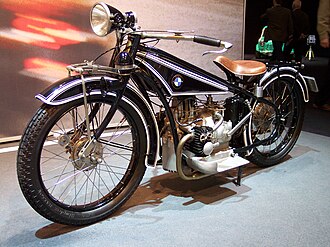
The story of the BMW R32 is not just about a motorcycle—it is about the transformation of an entire company, the emergence of a technological philosophy, and the foundation of one of the most recognizable engineering identities in the world. When BMW transitioned from aircraft engine manufacturing to motorcycles in the early 1920s, it faced not only economic uncertainty but also a need to redefine its technical direction. The R32 became the answer—an elegant, technically innovative, and historically decisive machine.
Below is a comprehensive, blog-style technical deep dive into the BMW R32, structured for enthusiasts, engineers, and historians alike.
Origins: From Aircraft Engines to Two Wheels
The origins of the BMW R32 are deeply tied to the aftermath of the Treaty of Versailles, which prohibited Germany from producing military aircraft. BMW, originally an aircraft engine manufacturer, was forced into diversification. This shift was not immediate nor simple. Initially, the company experimented with industrial engines and collaborations with motorcycle manufacturers.
One of the earliest stepping stones was the development of the flat-twin engine for external companies. However, it quickly became clear that BMW needed a complete, in-house solution. This realization led to the involvement of Max Friz, a visionary engineer who would ultimately define BMW’s motorcycle DNA.
Friz recognized fundamental issues with contemporary motorcycle designs, particularly cooling inefficiencies and structural limitations. His solution was radical yet logical: redesign the motorcycle from the ground up with engineering integrity as the primary goal. The result was the R32, unveiled in 1923 at a major motor show, marking BMW’s official entry into motorcycle manufacturing.
Engineering Philosophy Behind the R32
From the outset, the R32 was not merely a product—it was a statement of engineering philosophy. Unlike many competitors of the era, BMW prioritized durability, serviceability, and mechanical coherence over quick production gains.
The design integrated the engine and gearbox into a single unit, a forward-thinking approach that improved rigidity and reduced mechanical complexity. At a time when many motorcycles used chain or belt drives, BMW implemented a shaft drive system, significantly improving reliability and reducing maintenance.
Another defining feature was the longitudinal crankshaft orientation. This allowed the power to be transmitted directly to the shaft drive without inefficient directional changes. This design choice would become a hallmark of BMW motorcycles for decades.
The Boxer Engine: A Timeless Innovation
At the heart of the BMW R32 lies its most iconic feature—the flat-twin boxer engine. This configuration, where two cylinders extend horizontally in opposite directions, provided several critical advantages.
First, it ensured optimal air cooling. Earlier designs suffered from overheating, especially in rear cylinders. By placing both cylinders directly in the airflow, the R32 achieved consistent thermal regulation.
Second, the boxer layout offered excellent balance. The opposing pistons canceled out vibrations, resulting in smoother operation compared to single-cylinder or inline engines.
The R32’s engine had a displacement of approximately 494 cc and produced around 8.5 horsepower at 3,200 rpm, enabling a top speed of roughly 95 km/h.
Although these figures may seem modest by modern standards, they were highly competitive in the early 1920s. More importantly, the engine’s reliability and efficiency set new benchmarks in the industry.
Lubrication System: Ahead of Its Time
One of the most technically significant features of the R32 was its lubrication system. While most motorcycles of the era used a total-loss oiling system—where oil was consumed and not reused—the R32 employed a recirculating wet sump system.
This innovation drastically reduced oil consumption and improved engine longevity. It also demonstrated BMW’s commitment to engineering sustainability long before it became a global concern.
BMW continued using variations of this lubrication system for decades, underscoring its effectiveness and forward-thinking design. (Wikipedie)
Shaft Drive System: Redefining Power Transmission
The shaft drive system introduced in the R32 was revolutionary. Unlike chains, which required frequent maintenance and were prone to wear, the shaft drive was enclosed and protected from environmental factors.
This system transferred power from the gearbox to the rear wheel through a driveshaft and bevel gears. The result was smoother power delivery, reduced maintenance, and increased durability.
This innovation became a defining characteristic of BMW motorcycles and remained standard in many models well into the late 20th century.
Frame and Chassis Design
The R32 featured a tubular steel frame with twin down tubes extending beneath the engine. This structure provided exceptional rigidity and stability, which were crucial for handling and durability.
The front suspension used a trailing-link fork with a leaf spring—an advanced design for its time. However, the rear suspension was rigid, meaning that rider comfort relied heavily on the sprung seat.
While primitive by modern standards, this setup reflected the engineering priorities of the era: robustness and simplicity over comfort.
Braking System: A Reflection of Early Engineering
The braking system of the early R32 models was minimalistic, to say the least. Initially, the motorcycle had no front brake and relied solely on a rear braking mechanism involving a block acting on the wheel.
Later iterations introduced a front drum brake, improving stopping performance. This evolution highlights the rapid pace of development during the early years of motorcycle engineering.
Performance Characteristics
Despite its modest specifications, the R32 delivered impressive real-world performance. Its lightweight construction (approximately 122 kg) and efficient powertrain allowed it to achieve respectable speeds and fuel economy.
Fuel consumption was around 3 liters per 100 km, making it highly efficient even by modern standards.
The motorcycle’s handling was stable, thanks to its low center of gravity and balanced engine layout. These characteristics made it suitable for both everyday use and competitive racing.
Production and Market Impact
Between 1923 and 1926, BMW produced approximately 3,090 units of the R32.
Although production numbers were relatively low, the impact of the R32 was profound. It established BMW as a serious player in the motorcycle industry and laid the foundation for future success.
The motorcycle was also considered a premium product, reflecting BMW’s commitment to quality and engineering excellence. Its success helped stabilize the company during a critical period of economic transition.
Motorsport Success and Early Recognition
The R32 quickly proved its capabilities in motorsport. Riders achieved success in various competitions, demonstrating the motorcycle’s reliability and performance.
These early victories played a crucial role in building BMW’s reputation as a manufacturer of high-performance machines. Racing success became an integral part of the brand’s identity, a tradition that continues to this day.
Design Legacy and Influence
Perhaps the most enduring aspect of the R32 is its influence on future BMW motorcycles. The combination of a boxer engine and shaft drive became a defining feature of the brand.
This layout was used consistently for decades, evolving with technological advancements but retaining its core principles.
Even modern BMW motorcycles can trace their lineage back to the design decisions made in the R32. This continuity is rare in the automotive world and speaks to the strength of the original concept.
Collectibility and Historical Value
Today, the BMW R32 is considered a highly valuable collector’s item. Its historical significance, combined with its rarity, makes it one of the most sought-after vintage motorcycles.
Well-preserved examples can fetch significant prices at auctions, reflecting their importance in the history of motorcycling.
Collectors and enthusiasts view the R32 not just as a machine, but as a symbol of innovation and resilience.
Technical Parameters Table
Below is a consolidated table of the BMW R32’s technical specifications:
| Parameter | Specification |
|---|---|
| Model | BMW R32 |
| Production Years | 1923–1926 |
| Engine Type | Air-cooled flat-twin (boxer) |
| Engine Code | M2B33 |
| Displacement | 494 cc |
| Power Output | 8.5 hp @ 3200 rpm |
| Top Speed | ~95 km/h |
| Transmission | 3-speed manual |
| Final Drive | Shaft drive |
| Lubrication | Recirculating wet sump |
| Frame | Tubular steel |
| Front Suspension | Trailing-link fork with leaf spring |
| Rear Suspension | Rigid (no suspension) |
| Front Brake | None (early), later drum |
| Rear Brake | Block brake |
| Wheelbase | ~1380 mm |
| Length | ~2100 mm |
| Width | ~800 mm |
| Weight | ~122 kg |
| Fuel Capacity | 14 liters |
| Fuel Consumption | ~3 L/100 km |
Conclusion: Why the BMW R32 Still Matters
The BMW R32 is far more than just the first motorcycle produced by BMW. It is a blueprint—a machine that defined engineering principles still relevant today.
Its innovations in engine layout, lubrication, and drivetrain were not just incremental improvements but fundamental shifts in motorcycle design. The R32 demonstrated that thoughtful engineering could create a product that was not only functional but enduring.
In many ways, every modern BMW motorcycle carries a piece of the R32 within it. Its legacy is not confined to museums or collector garages—it lives on in every boxer engine that rolls off BMW’s production lines.
