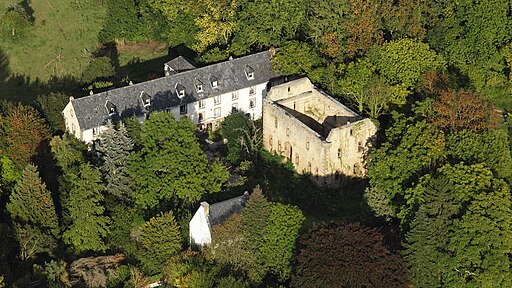
Burg Gödersheim
Perched on a wooded spur above the valley of the Vennerbach stream, Burg Gödersheim offers an evocative glimpse into medieval life in the western Eifel. Although now a romantic ruin, its weathered stone walls and moss-clad foundations trace the story of shifting borders, local dynasties and centuries of conflict. Today, a network of forest trails, interpretive signs and seasonal events invites hikers, history enthusiasts and families to step into a landscape where nature and human ambition intertwine.
Geography and Landscape
Setting in the Eifel Highlands
Burg Gödersheim crowns a hilltop at roughly 420 metres above sea level, overlooking mixed beech-oak forests and pastureland. From its vantage point, visitors can glimpse the distant peaks of the Vulkaneifel and, on clear days, even the craggy silhouette of the Hohe Acht volcanic cone. The castle’s elevated position once guarded a strategic route linking the Roman town of Trier to the Rhineland plain.
Forest Trails and Natural Surroundings
A dense canopy of deciduous trees surrounds the ruin, creating a canopy of emerald green in summer and fiery red in autumn. Signed hiking paths wind along ridgelines and lead down the valley to the Vennerbach, where crystal-clear pools reflect limestone outcrops. Birdwatchers may spot woodpeckers drumming on oak trunks or catch a glimpse of red deer grazing at dawn.
Historical Evolution
Foundation in the High Middle Ages
Burg Gödersheim likely originated in the early 12th century, founded by a cadet branch of the local Counts to secure toll rights on a nearby ford. The first stone curtain walls and a sturdy bergfried (keep) replaced an earlier wooden motte-and-bailey. Its hilltop stronghold served both as a defensive bulwark and a symbol of feudal authority in a region prized for its mineral springs and timber.
Feudal Conflicts and Ownership Changes
Throughout the 13th and 14th centuries, Gödersheim passed between rival noble families amid dynastic marriages and territorial disputes. At times, it fell under the sway of the Archbishopric of Cologne; later it briefly served as an administrative seat for the Duchy of Jülich. Each new lord modified the castle’s defences, adding arrow slits, expanded living quarters and a vaulted chapel.
Decline and Ruin
By the early 17th century, advances in artillery rendered many hilltop castles obsolete. After suffering damage during the Thirty Years’ War, Gödersheim was abandoned in favour of more comfortable manor houses in the valley. Local residents scavenged its stones for barns and homes. Over the next two centuries, ivy and moss reclaimed the crumbling walls, leaving only foundations and fragmentary towers.
Romantic Rediscovery in the 19th Century
The Romantic movement ignited fresh interest in medieval ruins. Local landowners stabilised the remaining masonry in the 1840s, clearing vegetation and installing simple wooden walkways. Travelogues from the era praise Gödersheim’s poetic setting and suggest that artists sketched its turrets against misty mornings.
Architectural Features
The Bergfried and Main Curtain Wall
The central keep rises as a largely intact square tower, its lower courses built from hand-hewn basalt blocks. Inside, narrow spiral stairs wind up to an open roof terrace, offering a commanding panorama. The surrounding curtain wall, punctuated by embrasures and loopholes, once enclosed a courtyard where stables, workshops and granaries stood.
Gatehouse and Barbican
Access to the inner ward was controlled by a stone gatehouse reinforced with iron portcullis rails. A small barbican—an outer defensive work—survives as a low ring wall and foundation trench. Visitors can trace the path of the original drawbridge, now replaced by a simple footbridge that spans the remnant moat.
Chapel Ruins and Residential Quarters
Adjacent to the keep’s east side, the chapel’s choir remains reveal pointed Gothic arches and the base of a rib-vaulted ceiling. Traces of medieval plaster hint at once-vibrant frescoes. Nearby, the foundations of a two-storey residential wing suggest private chambers with fireplaces and shuttered windows overlooking the valley.
Exploring Burg Gödersheim Today
Hiking Routes and Viewpoints
Three marked trails converge on the castle ruins, ranging from a gentle two-kilometre loop to a challenging six-kilometre ridge hike. Each path offers forest clearings where wooden platforms invite you to pause and admire the ruin. Early morning and dusk deliver the best light for photography, when mist can drift through arrow slits.
Interpretive Signage and Self-Guided Tours
On-site information panels detail the castle’s evolution, its architectural innovations and daily life in the Middle Ages. An illustrated map shows the layout of vanished buildings. For families, a self-guided treasure trail poses riddles about medieval crafts, leading children to seek hidden markers along the walls.
Guided Walks and Workshops
Local heritage associations organise monthly guided tours covering topics such as medieval siegecraft, stone masonry and forest ecology. In summer, hands-on workshops teach elementary blacksmithing techniques at a replica forge and demonstrate period-appropriate archery in a nearby clearing.
Cultural Significance and Legends
Medieval Fair and Living History
Each August, a weekend medieval fair brings the ruin to life. Costumed artisans offer pottery, leather goods and hand-forged tools. Music from lute players drifts through the trees as actors stage mock tournaments on a grassy terrace below the gatehouse. Feast tents serve hearty stews and smoked sausages prepared on open fires.
Local Myths and Ghost Stories
Legends say a spectral lady in white roams the upper battlements at night, mourning a betrothed lost to war. Campfire storytellers weave tales of hidden treasure buried beneath collapsed vaults, tempting metal-detector enthusiasts to heed ancient warnings about disturbing the site.
Educational Outreach
Burg Gödersheim serves as an outdoor classroom for nearby schools. History teachers bring students to study medieval construction, ecology instructors examine forest succession on ruined masonry, and art classes sketch the interplay of light and shadow on basalt walls.
Practical Visitor Information
Getting There
The ruin lies three kilometres north of the village of Gödersheim, just off the L93 road connecting Bürvenich and Nideggen. Limited parking is available at the trailhead; bicycles can be locked at a rack near the main entrance. A network of regional buses stops in Gödersheim village, from which it’s a one-hour walk or short taxi ride.
Opening Hours and Fees
The grounds are open daily from dawn until dusk, free of charge. Special guided tours and workshops require advance booking and a nominal fee to cover materials. Donations support ongoing conservation and trail maintenance.
Amenities and Accessibility
A picnic area with benches and a simple wooden shelter sits below the outer bailey. There is no on-site café or restroom, so visitors are encouraged to bring water and snacks. While forest paths are generally well maintained, steep or uneven sections may challenge those with mobility limitations.
Nearby Accommodation and Dining
Gödersheim village offers a small guesthouse and bakery renowned for its sourdough rye loaves. A manor-style bed and breakfast in neighboring Ruitz provides farmhouse breakfasts and access to mountain-bike rentals. For heartier fare, a tavern in the nearby town of Nideggen serves local trout, game ragout and artisanal cheeses.
Tips for a Memorable Visit
- Wear sturdy footwear and dress in layers to adapt to changing forest temperatures.
- Bring binoculars to spot woodland birds and migrating raptors from the keep’s terrace.
- Plan your visit outside peak foliage season if you prefer unobstructed views of the ruin.
- Respect all signage and avoid climbing on unstable masonry to ensure your safety.
- Check the local events calendar for medieval fairs, dawn chorus walks and stargazing nights.
Conclusion
Burg Gödersheim may lack the grand scale of the Rhineland’s most famous fortresses, but its intimate setting and layered history offer a unique window into medieval life in the Eifel. Whether you arrive seeking quiet forest walks, starlit ghost tours or hands-on medieval crafts, this small hilltop ruin rewards curiosity and imagination. In every fallen stone and forest shadow, Burg Gödersheim invites you to explore the intersection of nature, legend and human endeavour.
