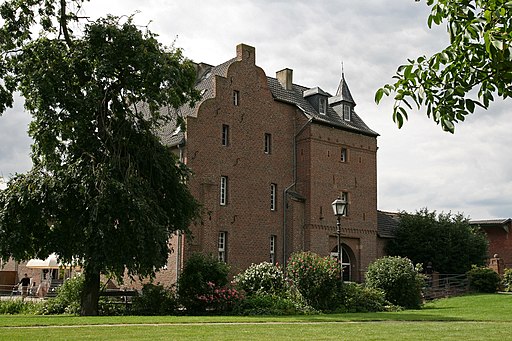
Burg Obbendorf
Burg Obbendorf stands as a silent sentinel over the rolling hills of the Eifel region, its weathered stones hinting at centuries of feudal ambition and local lore. Once a formidable stronghold guarding trade routes and river crossings, today the castle ruin offers a blend of history, nature and cultural discovery. Visitors arrive to explore its crumbling keep, trace the outlines of vanished walls and wander scenic forest trails that whisper of the past.
Geography and Landscape
Location and Setting
Perched at an elevation of 450 metres on a limestone spur above the Kyll River, Burg Obbendorf occupies a naturally defensible position. The slopes below are skirted by mixed beech and oak woodland, while farmland sweeps away toward neighbouring villages. From the castle plateau, visitors can spot the distant silhouette of the Vulkaneifel hills and, on clear days, faint outlines of the Ardennes.
Flora and Trails
The forests around Obbendorf host spring carpets of wild garlic and wood anemones, followed by summer colonies of violet campion and goldenrod. A network of waymarked footpaths threads through shady groves and links the ruin to rural hamlets. Interpretive panels along the main trail describe local plant species, bird nesting sites and the geology that shaped the castle’s limestone foundations.
Historical Evolution
Founding in the High Middle Ages
Burg Obbendorf originated in the early 12th century as the seat of the Knightly House of Obbendorf, vassals of the Counts of Luxembourg. Its initial design featured a timber palisade and a wooden motte on the limestone knoll, erected to secure a nearby ford on the Kyll River. Rapidly, local prosperity spurred a shift to stone construction, transforming the motte into a quadrangular keep by the mid-1100s.
Expansion and Military Role
By the late 13th century, the castle expanded to include curtain walls, a gatehouse and a defensive barbican. Its position along the Heerstraße trade route allowed the lords to levy tolls on merchants carrying salt, cloth and iron ores. Fortified towers on the eastern curtain commanded views of any approaching bandits, while a dry moat added an extra layer of defence against rival knights.
Conflict and Decline
The Thirty Years’ War brought repeated sieges and occupation by mercenary forces, inflicting structural damage that went unrepaired as the Obbendorf line dwindled. In the late 17th century, estate heirs favored more comfortable valley manor houses, leaving the hilltop stronghold to weather and neglect. Locals scavenged its stones for barns and homes, reducing intact walls to rubble and moss-covered foundations.
Preservation and Rediscovery
Romantic artists of the 19th century painted Burg Obbendorf’s crumbling towers against misty dawn skies, reviving interest among landowners and scholars. Early archaeological surveys in the 1880s documented surviving masonry, prompting rudimentary stabilization of collapsed sections. A comprehensive conservation plan in the 1990s cleared invasive vegetation, reconstructed key wall segments and installed safety railings on steep terraces.
Architectural Highlights
The Keep and Curtain Walls
The heart of Burg Obbendorf remains its rectangular keep, rising three storeys above the base with arrow slits interrupting thick stone walls. Original lime mortar and hand-carved voussoirs still hold the structure together. The surrounding curtain walls once formed a compact inner bailey, their foundations revealing the layout of vanished workshops, stables and a small prison cell.
Gatehouse and Bridge
Visitors approach the ruin via a reconstructed wooden bridge spanning the remnant ditch. The gatehouse features twin pilasters where a portcullis once slid into place. Traces of putlog holes above the archway suggest a former timber hoarding that allowed defenders to drop projectiles on aggressors below.
Chapel and Domestic Quarters
On the north side of the inner ward, the lower walls of a Romanesque chapel survive, barely six metres high but still bearing the outline of a semicircular apse. Adjacent stone hearths mark the domestic wing, where vaulted cellars once stored grain and mead. Window embrasures carved deep in the wall reveal how indoor light was controlled during times of siege.
Cistern and Earthworks
A vaulted cistern carved directly into bedrock collects rainwater channeled from gutters around the courtyard. Its vaulted ceiling and buttressed walls testify to advanced medieval engineering. Beyond the main enclosure, earth ramparts reinforced with rubble from earlier renovations show how the castle’s outer defences evolved to meet changing military technology.
Modern Exploration
Hiking Routes and Viewpoints
Three marked hiking loops converge on Burg Obbendorf, ranging from a gentle two-kilometre meadow path to a six-kilometre ridge trail that ascends through beech woods. Each route offers scenic overlooks of the Kyll valley, with benches at strategic points for rest and photography. Sunrise hikes reward early risers with golden light filtering through mist above the ruin.
Visitor Centre and Exhibits
A small timber-framed visitor centre at the base of the hill houses exhibits on daily life in the castle, from medieval pottery shards to iron arrowheads. Interactive touchscreens allow guests to explore digital reconstructions of vanished walls. A kiosk offers maps, guidebooks and locally produced honey and craft beers named after the castle.
Guided Tours and Workshops
Heritage volunteers lead guided tours that bring Burg Obbendorf’s story to life, demonstrating medieval cooking techniques in an open hearth and offering hands-on masonry workshops using traditional lime mortar. Seasonal archaeology digs invite enthusiasts to uncover fragments of pottery and nails while learning excavation methods under professional supervision.
Cultural Life and Events
Annual Castle Festival
Every July, the hilltop transforms into a bustling festival site where artisans in period costume demonstrate blacksmithing, leather carving and woodblock printing. Musicians play medieval tunes on lutes and hurdy-gurdies as costumed dancers perform traditional courtly dances on the courtyard terrace. Local bakeries sell spiced gingerbread and ale brewed with valley herbs.
Medieval Reenactment Day
In September, history buffs stage dramatic skirmishes in the outer bailey, complete with authentic armour and wooden siege engines. Archery competitions invite visitors to test their aim under the supervision of certified instructors. Storytellers weave legends of vanished Obbendorf knights and hidden treasure, inspiring eager metal-detector searches around designated areas.
Educational Programs
Local schools visit Burg Obbendorf for curriculum-linked workshops on medieval crafts, siege tactics and the feudal system. Biology classes study forest ecology on guided nature walks, while geology students examine limestone formations in the moat’s stonework. Creative writing groups use the evocative setting for storytelling retreats, penning original tales of chivalry and adventure.
Surrounding Attractions
Nearby Villages and Artisan Workshops
The village of Obbendorf itself offers a restored watermill where millers demonstrate stone grinding of rye and barley. Just a ten-minute drive away, a family pottery studio invites guests to try wheel-throwing local clay. Seasonal craft markets in neighbouring villages feature woodturners, weavers and candle-makers preserving traditional Eifel arts.
Rivers and Lakes
A short hike down the Kyll valley leads to crystal clear pools popular for summer swims and trout fishing. Kayak rentals at a riverside boathouse allow visitors to paddle through gentle rapids. In winter, frozen stretches draw ice-skaters and photographers capturing frost-clad branches reflected in still water.
Regional Culinary Specialties
Local taverns serve hearty Eifel fare such as warm potato pannenkoeken topped with wild mushrooms and smoked ham. Game stews simmered with juniper berries and root vegetables reflect centuries-old recipes. Bakeries pride themselves on crusty rye breads and chewy seed loaves, perfect accompaniments to sharp farmhouse cheeses and valley-brewed ales.
Practical Information
Getting There
Burg Obbendorf lies off the L24 federal road between Stadtkyll and Hillesheim. A small parking lot sits at the trailhead, with bicycle racks for two-wheeled adventurers. Regional buses link Obbendorf to nearby towns, and taxis are available on request for the final uphill stretch.
Opening Hours and Fees
The castle grounds open daily from 8 AM until dusk, free of charge. The visitor centre operates from April through October, Tuesday to Sunday, with a nominal admission fee covering exhibits and guided tour supplements. Family tickets and group discounts are available online.
Amenities and Accessibility
Restrooms and a picnic shelter stand at the base of the hill. A refreshment kiosk sells drinks, snacks and simple lunches on festival days. While the outer grounds and visitor centre are wheelchair-accessible, steep stone steps and uneven terrain limit access to the keep and inner ward; staff offer assistance upon request.
Tips for Visitors
Pack sturdy footwear and water, especially in summer when temperatures can climb. Early morning or late afternoon visits provide softer light for photography and fewer other guests. Check the online events calendar before arrival to coincide with medieval markets, guided ghost walks or archaeological open days. Respect all signage around fragile masonry and stay on marked paths for safety.
Conclusion
Burg Obbendorf may stand in quiet solitude today, but its storied walls and panoramic vistas speak of feudal power, military innovation and community resilience. Whether you seek a peaceful forest hike, a hands-on glimpse of medieval life or a festive weekend among costumed artisans, this Eifel hilltop ruin rewards every curious traveller. Each stone and shadow invites you to piece together centuries of human endeavour against the enduring backdrop of nature.
