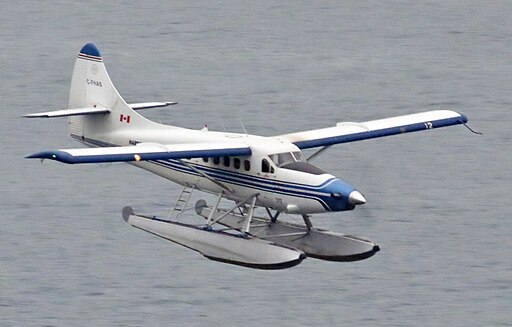
de Havilland Canada DHC-3 Otter: The Quintessential STOL Workhorse
The de Havilland Canada DHC-3 Otter has carved out an enduring legacy as one of the world’s most versatile single-engine, high-wing utility aircraft. Introduced in 1951, its robust construction, impressive short takeoff and landing (STOL) capabilities, and adaptability to wheels, skis or floats have made it the go-to platform for bush pilots, scientific researchers, sky-divers and remote-area operators across six continents.
Design & Development
Origins & Design Philosophy
Following the tremendous success of the pioneering DHC-2 Beaver, de Havilland Canada sought to create a larger, more powerful sibling capable of carrying greater loads into even tighter strips. The Otter’s design brief emphasized:
- Payload flexibility (up to nine passengers or equivalent cargo)
- Rugged simplicity for austere maintenance
- Short-field performance in subarctic, jungle and mountain environments
Canadian engineers extended the Beaver’s lineage—retaining the proven wing and empennage geometry while introducing a stretched fuselage, new landing-gear arrangements and more potent powerplants.
Airframe & Materials
- Wing & Empennage: Metal-skinned, dual-spar construction with robust ribs and integral fuel tanks.
- Fuselage: Semi-monocoque aluminum alloy shell reinforced by welded steel bulkheads at high-load points.
- Control Surfaces: Fabric-covered ailerons and rudder for weight savings and easy field repairs.
Every structural component emphasizes corrosion resistance—critical for operations on salt-water floats or in humid conditions.
Powerplant & Performance
Engine Options
- Pratt & Whitney R-1340 Wasp: 600 hp radial engine (standard on early production), known for proven reliability and torque.
- PT6A-34 Turbine Retrofit: Many airframes have been re-engined with 750 shp Pratt & Whitney Canada PT6A turboprops, boosting climb rate and cruise speed.
Performance Metrics
| Metric | R-1340 Otter | PT6A Turbo Otter |
|---|---|---|
| Takeoff Distance (ground roll) | 320 ft (98 m) | 260 ft (79 m) |
| Landing Distance (over 50 ft) | 640 ft (195 m) | 520 ft (158 m) |
| Rate of Climb | 1,250 ft/min | 1,600 ft/min |
| Cruise Speed (@65% power) | 135 kt (250 km/h) | 160 kt (296 km/h) |
| Service Ceiling | 18,000 ft (5,500 m) | 20,000 ft (6,100 m) |
| Range (with 45 min reserve) | 650 nm (1,200 km) | 700 nm (1,300 km) |
These figures underscore the dramatic improvements in climb, cruise and hot-&-high performance achieved through turbine conversions.
Landing Gear & Float Configurations
Wheeled Gear
- Fixed-tailwheel with large, low-pressure tires suited for gravel bars and rough strips.
- Strengthened shock absorbers handle repeated hard landings.
Ski and Float Options
- Straight-tail floats provide stability in calm waters.
- Amphibious floats with retractable wheels unlock beach, lake and gravel-bar operations without gear swaps.
- Skis enable year-round access to frozen lakes, snowfields and isolated arctic camps.
Modular attachment points and quick-change fittings let operators switch landing-gear sets in under a day.
Cockpit & Avionics
Layout & Ergonomics
Pilots benefit from a high-mounted windshield offering an unobstructed view of obstacles on short approaches. Seats adjust longitudinally by 25 cm; rudder pedals and rudder trim cater to pilots from 1.60 to 1.95 m tall. A large baggage door on the right side eases cabin loading.
Avionics Suite
Typical configurations range from basic VFR packages to glass-cockpit upgrades:
- Basic VFR: Steam-gauge flight panel, dual comm radios, standby attitude indicator.
- Modern Retrofit: Garmin G600 TXi or Aspen Evolution displays with ADS-B In/Out, GPS-NAV-COM integration, synthetic vision and autopilot coupling.
Removable side panels hide cargo-floor-mounted avionics pods, simplifying future upgrades.
Dimensions & Technical Specifications
| Parameter | Specification |
|---|---|
| Wingspan | 65 ft 0 in (19.8 m) |
| Length | 39 ft 4 in (12.0 m) |
| Height | 12 ft 11 in (3.94 m) |
| Wing Area | 546 ft² (50.7 m²) |
| Empty Weight | 5,800 lb (2,630 kg) |
| Maximum Takeoff Weight | 8,800 lb (3,992 kg) |
| Useful Load | 3,000 lb (1,360 kg) |
| Fuel Capacity | 151 gal (571 L) |
| Cabin Volume | 155 ft³ (4.4 m³) |
Operational Roles & Use Cases
Bush Flying & Remote Access
The Otter’s STOL prowess and payload capacity make it the default choice for:
- Scientific outposts in polar regions
- Mining and exploration camps in rugged terrain
- Humanitarian relief drops where runways vanish
Tourism, Sky-diving & Aerial Work
- Sightseeing flights over glaciers, canyons and volcanic fields
- Sky-diving operations capitalizing on the spacious cabin and large cargo door
- Aerial survey and photography thanks to stable handling and customizable windows
Maintenance & Support
Inspection Intervals
- 50-hour: Oil change, engine run-up, tire and brake check
- 100-hour / Annual: Comprehensive airframe inspection, torque checks on wing-root fittings
- 500-hour: Engine top-end inspection (radial models) or hot-section check (turbine models)
Cost of Ownership
While radial-engine Otters have higher hourly maintenance (around $200–$250/hr), PT6A retrofits marginally reduce direct-operating costs ($180–$200/hr) through extended TBOs and improved fuel efficiency.
Variants & Modernizations
Turbo Otter Conversions
Multiple STC holders offer turnkey conversions replacing the R-1340 with PT6A-34 or PT6A-27 engines—significantly enhancing payload-carry capability at high altitudes and temperatures.
Amphibian and Long-Range Kits
- Extended-range fuel tanks up to 300 gal total
- Amphib Float STCs with carbon-composite floats for lower drag and maintenance
Glass Cockpit Retrofitting
Aspen, Garmin and Avidyne modules transform the Otter’s instrument pod into a modern IFR-capable flight deck.
Pilot’s Perspective: Handling & Feel
Climb aboard and you immediately sense the Otter’s commanding presence. Taxiing on floats or skis feels planted; takeoff is a rapid, gentle surge as its powerful engine lunges into the sky. In the pattern, approach speeds near 60 kt allow you to assess winds aloft—then a slight flare and you settle onto the landing surface with reassuring shock absorption. Stall behavior remains benign, with ample buffet warning before any wing drop.
Legacy & Continuing Influence
The DHC-3 Otter bridged the era between simple piston bush planes and today’s turbine-powered utility transports. Its design ethos—robust, modular and STOL-focused—directly inspired modern aircraft like the Quest Kodiak and GippsAero GA8 Airvan.
Conclusion
More than 70 years after its first flight, the DHC-3 Otter still thrives in the world’s toughest environments. Its adaptability, payload and STOL performance make it unmatched for remote-area operations. Whether hauling supplies to an arctic research station or giving glacier tours in Alaska, the Otter remains the gold standard for utility aviation.
.jpg)