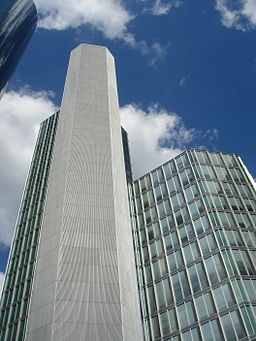
Garden Tower
Located in the heart of Frankfurt’s financial district, the Garden Tower is a striking example of modernist architecture fused with sustainable engineering. Originally constructed in the 1970s and extensively renovated in the early 2000s, this high-rise office complex is known for its twin-tower configuration and signature conservatories carved into the façade. It serves as a hub for financial institutions, consultancies, and tech firms, offering both prestige and performance.
Architectural and Structural Overview
Design and Composition
- Architects: Novotny Mähner Assoziierte
- Construction Period: 1973–1976
- Renovation Period: 2003–2005
- Location: Neue Mainzer Straße 46–50, Frankfurt am Main
Tower Configuration
- Tower A: 127 meters tall, 25 floors
- Tower B: 70 meters tall, 14 floors
- Connection: Central glazed atrium linking both towers
- Total Gross Floor Area: Approx. 85,000 m²
Structural System
- Foundation: Deep pile foundation with 1.5-meter-thick concrete base slab
- Frame: Reinforced concrete skeleton with steel framing in conservatory zones
- Wind Resistance: Aerodynamic façade and integrated dampers absorb up to 35% of wind energy
Façade and Environmental Envelope
Glazing and Insulation
- Glass Area: 12,500 m² of low-emissivity double glazing
- Frame Material: Slim aluminum profiles
- Thermal Shielding: External shading louvers reduce solar gain
Conservatories
- Quantity: 12 two-story winter gardens
- Function: Provide natural light, greenery, and microclimate zones
- Integration: Accessible from most office floors
Interior Layout and Flexibility
Office Space Configuration
- Floor Plate Size: 1,000–2,500 m² per level
- Layout: Open-plan zones surrounding a central core
- Partitioning: Modular walls allow reconfiguration without structural impact
Amenities and Common Areas
- Lobby and Reception: Double-height space with concierge services
- Meeting Rooms: Multiple conference suites with AV integration
- Breakout Zones: Conservatories and lounges for informal gatherings
Vertical Transportation and Access
Elevator System
- Total Elevators: 12 high-speed passenger lifts
- Technology: Destination dispatch system reduces wait times
- Service Elevators: 2 dedicated freight lifts for logistics and maintenance
Accessibility
- Public Transit: 200 meters from Taunusanlage metro station
- Parking: 5 underground levels with EV charging stations
- Bicycle Storage: Secured racks and shower facilities
Sustainability and Energy Management
Renewable Energy
- Solar Panels: 200 kWp rooftop array on Tower A
- Energy Contribution: Covers up to 7% of shared space consumption
Water Conservation
- Rainwater Harvesting: 250 m³ tank for irrigation and toilet flushing
- Greywater Recycling: Closed-loop system for washbasin water reuse
Building Management System (BMS)
- Functions: Controls HVAC, lighting, access, and surveillance
- Data Visualization: Real-time dashboards for energy and maintenance metrics
Safety and Resilience
Fire Protection
- Sprinkler Coverage: Full building network
- Smoke Detection: Zoned sensors with automated alerts
- Evacuation Routes: Clearly marked with emergency lighting
Seismic and Wind Stability
- Structural Redundancy: Designed to withstand lateral forces
- Dampers and Bracing: Minimize sway and vibration in upper floors
Urban Context and Surroundings
Neighborhood Integration
- Proximity: Adjacent to Commerzbank Tower, Main Tower, and Japan Center
- Local Amenities: Cafés, restaurants, and cultural venues within walking distance
- Business Ecosystem: Hosts firms like Société Générale, Cerberus Capital, and BNY Mellon
Conclusion
The Garden Tower is more than just a high-rise—it’s a symbol of adaptive reuse and forward-thinking design. Its dual-tower silhouette, lush conservatories, and advanced technical systems make it a standout in Frankfurt’s skyline. Whether you’re seeking a dynamic workspace or a sustainable architectural model, Garden Tower delivers on every front.
