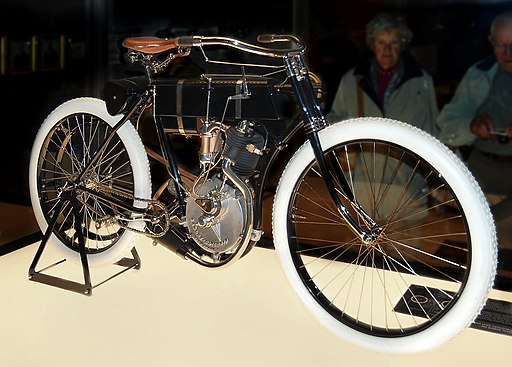
The Harley-Davidson Model 1 represents the foundational motorcycle that established the technical and manufacturing principles of what would become one of the most influential motorcycling brands in history. Developed in the early years of the 20th century, this machine emerged during a period when motorized transport was transitioning from experimental concepts into practical personal vehicles. The Model 1 was engineered as a motorized bicycle with reinforced structural elements, blending lightweight construction with the mechanical robustness needed to handle the limitations of early internal combustion technology. Its design reflected the necessity for simplicity, serviceability, and mechanical efficiency, laying the groundwork for all subsequent Harley-Davidson motorcycles.
Engine Configuration and Mechanical Layout
At the heart of the Harley-Davidson Model 1 was a small-displacement, single-cylinder four-stroke engine that embodied the basic principles of early motorcycle powertrains. The engine utilized an air-cooled design with finned cylinder walls to dissipate heat under continuous operation. Mounted within the frame cradle, the power unit featured a side-valve configuration that simplified valve actuation while maintaining reliability. Fuel delivery was managed through a basic carburetion system that mixed air and fuel for combustion without the sophistication of later metering technology. Ignition was typically achieved through a battery and coil system or early magneto variants, ensuring consistent spark generation for combustion under varying conditions.
Power Output and Performance Characteristics
While modest by modern standards, the performance characteristics of the Model 1 were groundbreaking for its era. The engine delivered enough power to significantly surpass the capabilities of pedal-driven bicycles, enabling sustained speeds suitable for urban transportation and short-distance travel. The torque curve favored low-speed drivability, allowing the motorcycle to handle uneven road surfaces and inclines with reasonable efficiency. The simplicity of the engine design contributed to durability and facilitated easy maintenance, a crucial factor when spare parts and specialized servicing were limited.
Transmission and Drivetrain System
The drivetrain of the Harley-Davidson Model 1 was designed for minimal complexity, featuring a direct belt drive system that transferred power from the engine to the rear wheel. This arrangement eliminated the need for complex gearboxes and chain systems, reducing mechanical losses and improving reliability. The early transmission setup often relied on a freewheel mechanism or basic clutch arrangement that allowed rudimentary control over power engagement. This simplicity made it easier for riders to operate and maintain the motorcycle, although it required a certain level of mechanical understanding due to the manual nature of the controls.
Frame Construction and Structural Integrity
The frame of the Model 1 was constructed using a reinforced steel tube layout that closely resembled contemporary bicycle frames, but with added strength to accommodate the increased stresses generated by the engine. This lightweight yet sturdy construction provided adequate support for the powertrain while maintaining manageable overall weight. The positioning of the engine within the frame contributed to balanced weight distribution, improving stability and rider confidence on unpaved or poorly maintained roads. The frame geometry emphasized practicality and ease of manufacture, enabling consistent production quality during the company’s formative years.
Suspension and Ride Dynamics
Suspension on the Harley-Davidson Model 1 was minimal, reflecting the technological limitations of the time. The front end typically featured a rigid fork or basic spring-assisted system designed to absorb minor road irregularities. The rear section was rigid, relying on the inherent flex of the frame and the cushioning effect of the saddle to provide ride comfort. Despite this simplicity, the Model 1 offered a significant improvement over conventional bicycles in terms of ride stability and power-assisted mobility.
Braking System and Control Mechanisms
The braking system of the Model 1 was equally straightforward, often consisting of a mechanical brake operated by a hand lever that applied friction directly to the wheel rim or rear hub. This system provided basic stopping capability suitable for the speeds achievable by the motorcycle. Control mechanisms were manually operated and required careful modulation by the rider, emphasizing the importance of skill and awareness. The simplicity of these systems contributed to ease of repair and operational reliability.
Ergonomics and Rider Interaction
Ergonomically, the Harley-Davidson Model 1 featured an upright riding position that prioritized visibility and comfort during short to moderate journeys. The saddle was typically sprung to reduce vibration transmission, while the handlebars provided direct control over steering and throttle input. The overall layout encouraged intuitive operation, allowing riders to adapt easily to the new experience of motorized travel. The design balanced functionality with rider comfort, reflecting its intended role as a practical transportation solution.
Materials and Manufacturing Techniques
The Model 1 showcased early manufacturing techniques that focused on durability and cost-effective production. Steel was the primary material used for both the frame and mechanical components, chosen for its strength and availability. Assembly methods were largely manual, reflecting the handcrafted nature of early motorcycle production. This approach allowed for precise control over component quality while fostering a reputation for robustness and dependability.
Legacy and Technical Significance
The Harley-Davidson Model 1 played a pivotal role in shaping the technical and cultural identity of Harley-Davidson as a brand. Its straightforward engineering, reliable performance, and practical design established a foundation upon which more advanced models would be built. The lessons learned from its development influenced future innovations in engine design, frame construction, and overall motorcycle engineering. As a pioneering machine, the Model 1 stands as a testament to the early spirit of innovation and mechanical ingenuity that defined the birth of the modern motorcycle industry.
