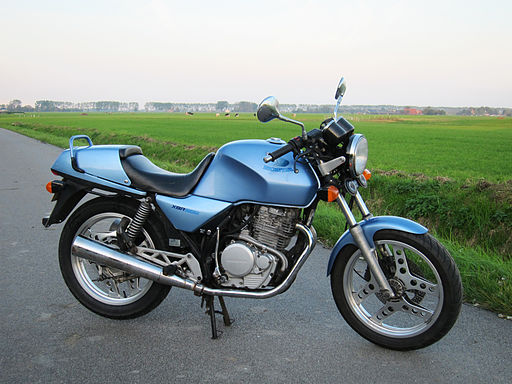
Honda XBR500
The Honda XBR500 is a quintessential 500 cc single-cylinder sports motorcycle introduced in 1985. It combines a torquey air-cooled engine with a lightweight chassis, delivering engaging performance and timeless style. Designed to rival the Yamaha SR500, the XBR500 quickly gained a reputation for reliability and character on both urban streets and open roads.
Historical Background
Launch and Market Position
Honda launched the XBR500 in 1985, aiming to capture the spirit of British thumpers and the growing demand for retro-styled singles. It arrived with a 498 cc RFVC (Radial Four Valve Combustion Chamber) engine derived from Honda’s off-road XR series but tuned for road use. Early reviews praised its blend of vintage appeal and modern engineering finesse.
Single-Cylinder Heritage
The engine’s RFVC head traces its lineage to Honda’s XL250R, where the design first appeared in 1984. By arranging four valves radially to match the hemispherical chamber, Honda maximized airflow and combustion efficiency. This configuration became a hallmark of the XBR500’s spirited midrange performance and distinctive exhaust note.
Design and Aesthetics
Frame and Chassis
At its core, the XBR500 uses a single-downtube, dual-cradle steel frame that balances rigidity with manageable weight. A box-section swingarm anchors the rear suspension, enhancing stability under acceleration and cornering. The overall structure contributes to a dry weight of just 150 kg, making the bike nimble at low speeds and confidence-inspiring at pace.
Ergonomics and Styling
Honda gave the XBR500 a slender fuel tank with subtle knee indents, flat seat, and a removable pillion cowl to evoke café-racer flair. Handlebar position and footpeg placement create a slightly forward-leaning stance without compromising comfort on longer rides. Wire-spoked wheels and a two-into-one exhaust system complete the classic silhouette.
Engine and Performance
RFVC Engine Architecture
The heart of the XBR500 is a 498 cc single-cylinder, four-stroke engine featuring a single overhead camshaft and radial four-valve head. A quasi-dry sump lubrication system stores most oil in a separate tank beneath the seat, with a small reserve in the crankcase to optimize lubrication and packaging. The RFVC design ensures strong torque delivery across the rev range.
Power Output and Torque
Honda rated the XBR500 at 44 hp (32.8 kW) at 7 000 rpm, with maximum torque of 42.7 Nm (31.5 ft-lb) at 6 000 rpm. The engine’s 9.0 : 1 compression ratio and 39 mm CV carburetor tuning deliver smooth throttle response and effortless midrange pull. Riders report lively acceleration from low revs and a relaxed top-end suitable for highway cruising.
Transmission and Final Drive
Power is sent through a five-speed gearbox into a roller chain final drive. Gear ratios are spaced to balance strong off-the-line acceleration in first and second gears with comfortable engine speeds on the motorway in top gear. A positive shift feel and well-balanced ratios contribute to the XBR’s usability in varied riding conditions.
Suspension and Handling
Front Suspension
The front end features 35 mm hydraulic telescopic forks with 140 mm of travel. Damping is tuned to soak up urban bumps while maintaining firm feedback under braking and corner entry. The fork performance allows precise steering without sacrificing comfort on uneven surfaces.
Rear Suspension
At the rear, twin hydraulic dampers offer 100 mm of travel and adjustable preload. This setup strikes a blend between compliant ride quality and cornering composure, ensuring the rear wheel remains planted when pushing through sweeping bends or navigating quick direction changes.
Braking and Wheels
Braking hardware includes a single 276 mm front disc with a two-piston caliper and a classic 140 mm rear drum. The combination suits the bike’s modest weight and power, delivering progressive stopping force and easy modulation. Standard 18-inch wire-spoked wheels wear 100/90-18 tires up front and 110/90-18 at the rear for period-correct grip and feel.
Dimensions and Capacities
Weight, Tank, and Range
With a dry weight of 150 kg and wet weight around 180 kg, the XBR500 remains agile and responsive. A generous 20 L fuel tank offers a practical range exceeding 300 km between refills when ridden conservatively. Compact dimensions—2 100 mm long, 700 mm wide, and 1 050 mm tall—aid maneuverability in traffic and tight parking situations.
Tires and Ground Clearance
The bike’s 1400 mm wheelbase and 160 mm ground clearance strike a harmonious balance between stability at speed and obstacle negotiation in urban environments. The tubed tires and wire wheels not only reinforce the retro aesthetic but also deliver predictable feedback under lean.
Complete Technical Specifications
| Specification | Detail |
|---|---|
| Engine | 498 cc air-cooled SOHC single, RFVC |
| Bore × Stroke | 92 mm × 75 mm |
| Compression Ratio | 9.0 : 1 |
| Induction | 39 mm CV carburetor |
| Ignition | CDI |
| Starting | Electric and kick |
| Power | 44 hp (32.8 kW) @ 7 000 rpm |
| Torque | 42.7 Nm (31.5 ft-lb) @ 6 000 rpm |
| Transmission | 5-speed, chain final drive |
| Frame | Steel single-downtube, dual cradle |
| Front Suspension | 35 mm telescopic fork, 140 mm travel |
| Rear Suspension | Dual hydraulic shocks, 100 mm travel |
| Front Brake | Single 276 mm disc, 2-piston caliper |
| Rear Brake | 140 mm drum |
| Front Tire | 100/90-18 |
| Rear Tire | 110/90-18 |
| Wheelbase | 1 400 mm |
| Seat Height | 780 mm |
| Ground Clearance | 160 mm |
| Dry Weight | 150 kg |
| Fuel Capacity | 20 L |
| Top Speed | 173.8 km/h (108 mph) |
The Honda XBR500 remains a celebrated blend of classic British styling cues and Japanese mechanical precision. Its accessible power delivery, engaging chassis dynamics, and distinctive engine character continue to attract riders seeking a machine that feels both authentic and reliable. Whether navigating city streets or carving backroads, the XBR500’s enduring charm lies in its simplicity and timeless design.
