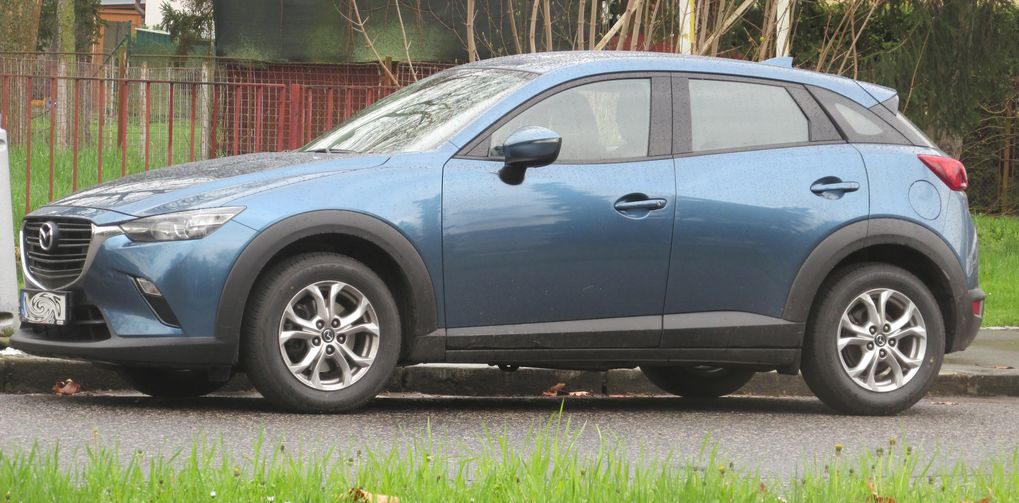
Mazda CX-3 as a Used Car: A Complete Buyer’s Guide
The Mazda CX-3 is an interesting proposition on the used-car market because it manages to combine the compact dimensions of a small hatchback with the styling, driving position and visual appeal of a crossover. Introduced in 2015, it quickly established itself as one of Mazda’s most distinctive small SUVs, and although it is not the most spacious vehicle in its class, its attractive design, high-quality interior and enjoyable driving characteristics have helped it remain desirable as a used car. It is particularly appealing to buyers who want a small vehicle for city driving but do not want the ordinary, anonymous appearance associated with many compact hatchbacks.
The CX-3 is closely related to the Mazda2, which helps explain its relatively compact footprint and lively road manners. It was offered with petrol and diesel engines, manual or automatic transmissions and, depending on the market, either front-wheel drive or all-wheel drive. Mazda’s specifications list a 2.0-litre SKYACTIV-G four-cylinder petrol engine and a 1.5-litre SKYACTIV-D four-cylinder diesel among the powertrains used in the model.
As a used purchase, however, the CX-3 is not simply a matter of finding the newest example you can afford. Different engines suit different types of driving, early cars have some age-related issues worth checking, and the limited rear-seat and luggage space can become frustrating for families. On the other hand, a well-maintained petrol CX-3 can be an exceptionally appealing small crossover for an individual, couple or small family.
What Makes the Mazda CX-3 Attractive as a Used Car?
Distinctive design and compact dimensions
One of the biggest reasons people choose the CX-3 is its appearance. Mazda gave the crossover a strong interpretation of its Kodo design language, with a long bonnet, prominent front grille, sculpted sides and relatively short rear overhang. Even several years after its introduction, the CX-3 does not look particularly dated, which is an important advantage when buying an older used car.
Its compact dimensions are equally useful. Mazda’s specifications put the CX-3 at approximately 4,275 mm long, 1,765 mm wide and 1,535 mm high, with a 2,570 mm wheelbase. These dimensions make it much easier to park and manoeuvre than a larger family SUV, while the elevated seating position provides a useful view over surrounding traffic.
This combination makes the CX-3 particularly well suited to urban environments. It feels small enough for narrow streets and crowded parking areas, yet it still gives the driver the sense of sitting in a crossover rather than a conventional supermini.
A surprisingly premium interior
The interior is another area where the CX-3 has aged well. Mazda concentrated on giving the cabin a more sophisticated appearance than many small crossovers, with relatively simple controls, good-quality materials and a driver-focused dashboard. Higher trim levels can make the car feel considerably more expensive than its used-market price might suggest.
The Mazda Connect infotainment system was also an important part of the car’s equipment package, with the manufacturer describing the system as part of its safety-focused Human Machine Interface concept.
There are, however, some signs of the CX-3’s age in early examples. Buyers should test every infotainment function, including the display, navigation, Bluetooth connectivity, reversing camera and steering-wheel controls. Used-car inspection reports have also identified infotainment glitches and occasional camera problems among things worth checking.
Which Mazda CX-3 Engine Is Best?
2.0-litre petrol: the safest all-round choice
For many used buyers, the 2.0-litre SKYACTIV-G petrol is the most attractive CX-3 engine. Mazda’s naturally aspirated four-cylinder petrol engine uses direct injection and does not rely on a turbocharger to produce its power, giving it a relatively straightforward mechanical character.
Depending on the market and model year, power outputs vary. Some versions produce around 120 hp, while other specifications offer approximately 150 hp. Mazda documentation for one market lists 109 kW and 192 Nm for the 2.0-litre engine.
The petrol engine is particularly suitable for urban and mixed driving. It is smooth, responsive and relatively uncomplicated compared with a modern diesel, and it avoids some of the concerns associated with diesel particulate filters. If your typical usage consists of short journeys, commuting, shopping and occasional longer trips, a petrol CX-3 is generally the more logical choice.
The higher-output version is preferable if you frequently travel on motorways or carry passengers, although even the lower-powered engine is adequate for normal everyday use.
1.5-litre diesel: economical, but choose carefully
The 1.5-litre SKYACTIV-D diesel can be extremely economical and produces useful torque for such a small vehicle. Mazda’s technical documentation identifies it as a four-cylinder, 1,499 cc diesel engine.
However, a used diesel CX-3 deserves more careful consideration than the petrol. Diesel engines are most comfortable when they regularly reach operating temperature and complete their emissions-system regeneration cycles. Auto Express specifically warns buyers about low-mileage diesel CX-3s because interrupted DPF regeneration can cause problems.
That does not mean the diesel should automatically be avoided. Someone covering substantial motorway mileage may actually find it an excellent choice. The problem arises when an efficient diesel is used primarily for journeys of only a few kilometres. In that situation, the petrol engine is generally a much more sensible used-car purchase.
How Does the Mazda CX-3 Drive?
The CX-3 is one of the more enjoyable small crossovers to drive. Its relatively compact dimensions, responsive steering and Mazda’s emphasis on driver involvement give it a character that separates it from many comfort-oriented rivals. It does not feel like a tall hatchback that has simply been given larger wheels; the driving position and chassis balance have clearly been developed with handling in mind.
This is one of the reasons the CX-3 can appeal to someone who normally prefers a hatchback. The vehicle remains relatively composed through corners, and the steering gives the driver a better sense of what the front wheels are doing than is typical in this segment.
There is a compromise, however. The suspension can feel firm, particularly over potholes and broken urban roads. What Car? identifies the firm ride as one of the CX-3’s weaknesses, alongside its limited interior space. Buyers should therefore take a test drive over the roads they normally use rather than judging the suspension solely from a short drive around a dealership.
Interior Space and Practicality
Front seats are the CX-3’s strong point
The front of the cabin is comfortable for most adults, and the relatively upright driving position makes getting in and out easy. The driver also benefits from good visibility toward the front and a cockpit that feels more like a driver’s car than a conventional small SUV.
The problem appears when you move to the back. The CX-3’s compact exterior dimensions inevitably limit rear-seat space, and taller passengers can find legroom and headroom restrictive. What Car? also highlights the cramped rear seating as one of the model’s main disadvantages.
For a single person or couple, this may not matter at all. For a family with teenagers, however, it is worth considering whether the rear bench will remain comfortable as children grow.
Boot space is adequate rather than exceptional
The luggage compartment is similarly modest. Mazda originally quoted a 350-litre luggage capacity under its Japanese-market measurement system, including the sub-trunk.
That is enough for everyday shopping and normal luggage, but it is not one of the CX-3’s selling points. Families who regularly carry a pushchair, large suitcases or bulky sports equipment may find themselves wishing for a larger SUV.
The rear seats can be folded to increase carrying capacity, but the CX-3 is best understood as a small crossover with occasional extra carrying ability, rather than a miniature family van.
Mazda CX-3 Reliability and Common Problems
Overall reliability is encouraging
The good news for used buyers is that the CX-3 has generally developed a positive reliability reputation. What Car? says the model has a good reliability record and reports that it previously finished 10th in its small-SUV reliability class, with reported issues tending to be relatively minor.
RepairPal likewise gives the CX-3 a strong reliability rating of 4.5 out of 5, placing it near the top of its subcompact-SUV category.
That does not mean every CX-3 is trouble-free. The age of the individual car, service history and engine choice remain extremely important.
Check the air conditioning and electronics
Air-conditioning performance deserves particular attention when viewing an older CX-3. Used-car inspection sources have reported air-conditioning problems, while other checks have identified infotainment and rear-camera issues.
Turn the air conditioning on during the inspection and make sure cold air arrives quickly. Test the fan at different speeds and make sure the temperature changes correctly. Then spend several minutes operating the infotainment system rather than assuming that a glowing screen means everything works properly.
Inspect suspension, wheels and bodywork
Because the CX-3 is frequently used as a city car, the bodywork can reveal a lot about its previous life. Check the wheels for kerb damage, look closely at the bumpers and inspect the doors and tailgate for dents or paint repairs. What Car? specifically recommends checking bodywork, wheels, rear seats and tailgate operation on used examples.
Suspension components should also be examined carefully. Listen for knocking or clunking noises over uneven roads, and check the condition of the tyres. Uneven tyre wear can sometimes indicate alignment or suspension problems rather than simply poor tyre maintenance.
Be especially careful with early diesels
The diesel requires the greatest mechanical scrutiny. Look for excessive smoke, unusual engine noises, poor starting, hesitation or evidence that the car has spent most of its life doing very short journeys. A diesel CX-3 with a full service history and substantial motorway mileage can be a very different proposition from an inexpensive, low-mileage example that was used exclusively for school runs.
Recalls and Service History
A used CX-3 should always be checked for completed recalls using the vehicle identification number and the appropriate Mazda or government database for your market. There have been several recalls affecting early examples. What Car? lists issues including tailgate struts on 2015 vehicles, potential engine damage on certain 2016–2017 cars and fuel-pump problems affecting certain 2018–2019 vehicles.
Auto Express also identifies recalls involving brake-hose clips, engine-management software and other components on early cars.
This should not scare buyers away from the CX-3. Recalls are normal for modern vehicles, and a recall campaign generally becomes much less concerning once the required repair has been properly completed. The important point is to verify rather than assume.
A complete service history is arguably more important than an impressively low odometer reading. Look for regular servicing at appropriate intervals, evidence of genuine maintenance and invoices for significant repairs. If buying a diesel, pay particular attention to records relating to the engine and emissions system.
Should You Buy a Manual or Automatic CX-3?
Both transmissions can make sense. The six-speed manual gives the driver more direct control and can suit buyers who appreciate Mazda’s emphasis on driving involvement. The six-speed automatic is more convenient in traffic and can be preferable for drivers who spend much of their time in urban areas.
Used-car buyers should concentrate on condition rather than assuming one transmission is universally better. During the test drive, the automatic should shift smoothly without hesitation, harsh engagement or unexplained noises. Manual cars should have a clutch that engages progressively without slipping, while the gearbox should select every gear cleanly.
Four-wheel drive is another consideration. AWD can be useful in snowy climates or on poor surfaces, but it adds complexity and is unnecessary for many city-based owners. If you do not need it, a well-maintained front-wheel-drive CX-3 may be the simpler and more economical choice.
Mazda CX-3 Running Costs
Running costs are one of the CX-3’s strongest arguments as a used car. The compact petrol engine does not have the fuel demands of a large SUV, while the relatively small tyres and brakes are generally less expensive than those fitted to larger crossovers.
Insurance and maintenance costs will vary by country, engine and trim level, so buyers should obtain quotes before committing to a particular version. The diesel can deliver excellent fuel economy when driven appropriately, but potentially expensive diesel-system repairs mean that fuel consumption should not be the only factor considered.
A petrol CX-3 is often the better choice for buyers who value predictable ownership. The engine’s naturally aspirated design and avoidance of diesel-specific emissions equipment can make it particularly attractive for someone planning to keep the vehicle for many more years.
Final Verdict: Is the Mazda CX-3 a Good Used Car?
The Mazda CX-3 is a very good used car for the right buyer. Its biggest strengths are its attractive design, enjoyable driving experience, high-quality cabin, compact dimensions and generally strong reliability record. It is particularly appealing to people who want the appearance and seating position of an SUV without the size and running costs of a large crossover.
Its weaknesses are just as clear. Rear-seat space is limited, the boot is relatively small, and the firm suspension may not suit drivers who prioritize a soft ride. Buyers considering a diesel need to be particularly careful about usage history and DPF-related issues. Early examples should also be checked carefully for recalls, air-conditioning problems, electronics and suspension condition.
For most private buyers, a well-maintained 2.0-litre petrol CX-3 with front-wheel drive is arguably the safest all-round used purchase. It offers enough performance for everyday driving, avoids many of the complications associated with diesel ownership and retains the characteristics that make the CX-3 enjoyable. A diesel remains worthwhile for high-mileage drivers, while AWD makes sense for those who genuinely need additional traction.
Ultimately, the best CX-3 is not necessarily the newest or cheapest one. It is the example with a convincing service history, healthy engine and transmission, good tyres, a clean underside, functioning electronics and evidence of sensible previous use. Buy on condition rather than simply mileage, arrange an independent inspection when possible, and the CX-3 can provide an appealing combination of practicality, economy and driving enjoyment for years after its first owner has moved on.
Mazda CX-3 Technical Specifications
Specifications vary by model year, market, engine and drivetrain, so the following table summarizes representative figures rather than claiming that every CX-3 has exactly the same equipment.
| Specification | Mazda CX-3 |
|---|---|
| Production period | From 2015; used examples mainly from the 2015–2022 generation |
| Vehicle type | Subcompact crossover SUV |
| Platform relationship | Closely related to Mazda2 |
| Petrol engine | SKYACTIV-G 2.0, 4-cylinder |
| Petrol displacement | 1,998 cc / approximately 2.0 litres |
| Typical petrol power | Approximately 120–150 hp, depending on version |
| Example petrol torque | 192 Nm |
| Diesel engine | SKYACTIV-D 1.5, 4-cylinder |
| Diesel displacement | 1,499 cc / 1.5 litres |
| Transmission | 6-speed manual or 6-speed automatic, depending on market |
| Drive | Front-wheel drive or all-wheel drive |
| Length | 4,275 mm |
| Width | 1,765 mm |
| Height | 1,535 mm |
| Wheelbase | 2,570 mm |
| Boot capacity | Approximately 350 litres, market measurement dependent |
| Seating capacity | 5 |
| Fuel types | Petrol / diesel, depending on market and model year |
| Main strengths | Driving dynamics, styling, cabin quality, compact dimensions |
| Main weaknesses | Tight rear seats, modest boot, firm ride |
| Best used choice for most buyers | 2.0-litre petrol, preferably with complete service history |
Mazda’s published specifications confirm the 2.0-litre SKYACTIV-G and 1.5-litre SKYACTIV-D engine configurations, while dimensions for the CX-3 include a 4,275 mm overall length, 1,765 mm width and 2,570 mm wheelbase.
In short, the Mazda CX-3 is a used crossover worth putting on your shortlist if you value style and driving enjoyment as much as practicality. It is not the roomiest small SUV, but its compact size, attractive interior and strong overall reliability make it an appealing alternative to more conventional used crossovers. The key is choosing the right engine for your driving pattern and finding an example with a documented maintenance history rather than chasing the lowest purchase price.
