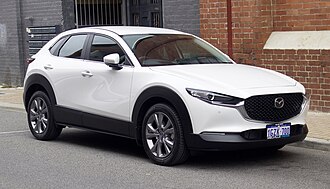
Mazda CX-30 as a Used Car: A Complete Buyer’s Guide
The Mazda CX-30 is one of the more interesting choices in the increasingly crowded used compact-SUV market. Positioned between the smaller Mazda CX-3 and larger Mazda CX-5, it was designed to offer the practicality of a crossover without becoming unnecessarily large or cumbersome. Since its introduction, the CX-30 has attracted buyers with its elegant styling, high-quality interior, naturally aspirated petrol engines, sophisticated driving characteristics and generous safety equipment. It is particularly appealing to motorists who want something more substantial than a supermini but who do not need a large family SUV.
The CX-30 arrived at a time when manufacturers were increasingly moving toward small turbocharged engines and increasingly complex drivetrains. Mazda took a somewhat different approach, retaining relatively large naturally aspirated petrol engines and developing its innovative Skyactiv-X technology alongside conventional Skyactiv-G units. Depending on the market and model year, buyers can also find mild-hybrid versions, automatic or manual transmissions and either front- or all-wheel drive. The exact combination varies considerably between countries, so anyone shopping for a used CX-30 should always verify the specifications of the individual vehicle rather than relying on generic model information.
As a used car, the CX-30 is especially attractive because its design has aged well. Even early examples still look modern, while the cabin feels more expensive than many rivals in the same price bracket. However, it is not perfect. Rear-seat space is merely average, the ride can become firm with larger wheels, and reliability is good rather than flawless. There have also been recalls and reports of battery, electrical and infotainment problems.
What Is the Mazda CX-30 Like as a Used Car?
A compact SUV with a premium feel
The CX-30 occupies a useful middle ground. It is larger and more practical than the CX-3 but considerably easier to live with in cities than a CX-5. Mazda’s design philosophy gives the car a distinctive appearance without relying on excessive styling details, and the result is a vehicle that still looks relatively sophisticated several years after its launch.
Inside, the CX-30 is arguably even more impressive. Mazda concentrated heavily on the quality and presentation of the cabin, using soft-touch materials and a relatively uncluttered dashboard. The driving position is comfortable, while the controls are generally straightforward to understand. This gives the CX-30 a more upmarket atmosphere than some of its mainstream competitors.
That quality is one of the principal reasons to consider the CX-30 second-hand. A well-kept example can feel considerably more expensive than it actually is, particularly in higher trim levels with leather upholstery, heated seats, premium audio and additional driver-assistance technology.
Why the CX-30 makes sense for everyday driving
The CX-30’s dimensions are another major advantage. Mazda’s technical information lists an overall length of 4,395 mm, a width of 1,795 mm and a height of 1,540 mm, with a 2,655 mm wheelbase. Ground clearance is listed at 180 mm in the referenced specification.
These dimensions give the car enough road presence for motorway driving while keeping it relatively easy to manoeuvre and park. It is large enough to accommodate four adults reasonably well and has a useful luggage compartment, but it does not have the cumbersome feel of some larger SUVs.
For an individual, couple or small family, this can be an excellent compromise. The CX-30 works equally well as a commuter, a weekend-trip vehicle and a general-purpose family car, provided the buyer does not require exceptional rear-seat or luggage capacity.
Which Engine Should You Choose?
2.0-litre Skyactiv-G petrol
For most used-car buyers, the 2.0-litre Skyactiv-G petrol is the engine that deserves the closest attention. It is a naturally aspirated four-cylinder engine rather than the small turbocharged unit used by many competitors, and that gives it a smooth and predictable character.
Depending on market and model year, power output varies, but the 2.0-litre engine has generally been available in versions around the 120–150 hp range. Mazda paired it with either a six-speed manual or six-speed automatic in different markets.
The major advantage of the Skyactiv-G is simplicity. There is no small turbocharger being asked to produce a large amount of power from a tiny displacement, and there is no diesel particulate filter to worry about. That makes the petrol CX-30 particularly attractive to drivers who do lots of short urban journeys.
The engine is not particularly dramatic. It delivers its performance progressively and generally needs more revs than a turbocharged rival when strong acceleration is required. However, that is not necessarily a disadvantage for a used car. Its smooth response and relatively straightforward engineering suit buyers who prioritize predictable ownership over maximum performance.
What Car? specifically recommends the entry-level 2.0-litre Skyactiv-G as its preferred used CX-30 engine, describing the more powerful Skyactiv-X as quicker but requiring more effort to reveal the difference in performance.
Skyactiv-X: technically fascinating but not essential
The Skyactiv-X engine is one of Mazda’s most technically interesting petrol engines. It uses Mazda’s Spark Controlled Compression Ignition concept to combine elements of conventional spark ignition and compression ignition, with the aim of improving efficiency without abandoning the characteristics of a petrol engine.
In the CX-30, the engine was offered in higher-output versions, with mild-hybrid assistance depending on model year and market. It can provide impressive fuel economy, but its advantages may not justify paying a significant premium on the used market.
For someone who enjoys technology and wants a more sophisticated powertrain, Skyactiv-X is certainly worth considering. For someone primarily concerned with affordable, uncomplicated ownership, however, the conventional Skyactiv-G is arguably the easier recommendation.
2.5-litre petrol and turbo versions
Some markets, particularly North America, have also received 2.5-litre petrol versions, including naturally aspirated and turbocharged engines. The larger engine provides more effortless acceleration than the 2.0-litre units, while the turbocharged version offers considerably more torque.
These versions can be excellent choices for drivers who frequently carry passengers, travel on motorways or simply want stronger performance. Nevertheless, the turbocharged engine should be inspected particularly carefully when buying a high-mileage example. The Automobile Protection Association notes that the naturally aspirated 2.0- and 2.5-litre engines have a durable reputation, while turbo durability is less certain because there have been reports of engine failures at advanced mileage.
How Does the Mazda CX-30 Drive?
Driving enjoyment is one of the CX-30’s strongest selling points. Mazda has traditionally placed considerable emphasis on steering response, chassis balance and driver involvement, and the CX-30 follows that philosophy. It feels composed through corners and generally responds predictably to steering inputs.
The six-speed manual gearbox is another highlight. Its relatively precise operation suits the character of the naturally aspirated petrol engines, allowing the driver to make better use of the available power. The automatic is the more relaxed choice, particularly for urban traffic, and has generally developed a positive reputation.
The suspension is a little more complicated. The CX-30 is neither an uncomfortable vehicle nor an exceptionally soft one, but large wheels and low-profile tyres can make rough roads feel more pronounced. What Car? describes the ride as comfortable and controlled overall but notes that some rivals can offer an even better combination of ride and handling.
When inspecting a used example, therefore, do not limit your test drive to smooth roads. Drive over potholes, speed bumps and broken surfaces. Listen for suspension knocks and make sure the car tracks straight. If fitted with large alloy wheels, inspect them carefully for cracks, bends and kerb damage.
Interior Space and Practicality
A high-quality front cabin
The CX-30’s front seats are among its strongest practical features. The driving position provides a good view of the road without making the driver feel as though they are sitting excessively high. The dashboard is logically arranged and avoids the excessive number of touchscreens and menus found in some newer rivals.
The infotainment system is controlled through a physical rotary controller in many versions, which can be easier and safer to operate while driving than a touchscreen-only setup. Higher trim levels can also include features such as heated seats, dual-zone climate control, keyless entry, a reversing camera, premium audio and advanced driver-assistance systems.
Rear space is only average
The CX-30’s biggest practical weakness is its rear compartment. It has enough space for adults, but taller passengers will find the rear seats less generous than those of some competitors. What Car? specifically identifies the limited space as one of the model’s disadvantages.
This matters if you are buying the car as a family vehicle. A couple with occasional rear passengers may never consider it a problem, whereas a family with three growing children may quickly find the limitations frustrating.
The boot is considerably more useful. Mazda’s European technical information lists 430 litres of cargo capacity with the rear seats in use, or 1,406 litres with the rear seats folded in the specified configuration. That is enough for normal shopping, luggage and everyday family equipment, although it does not make the CX-30 a class leader in outright cargo capacity.
Mazda CX-30 Reliability: What Should You Check?
Overall reliability
The CX-30 generally has a good reputation for reliability, but the evidence is not completely uniform. What Car?’s 2024 Reliability Survey gave it a 93.4% reliability score and placed it 16th among 24 small SUVs. Battery problems were the most frequently reported issue in that survey, followed by other electrical faults. Owners also reported occasional infotainment freezes and connectivity problems.
Consumer Reports has also rated several CX-30 model years relatively positively, although reliability varies between years. Its data shows the 2020 CX-30 as more reliable than other cars from that model year, while its 2022 data was less favourable.
The lesson for a used buyer is simple: do not assume that every CX-30 is equally reliable just because the model has a generally positive reputation.
Check the battery and electrical systems
The battery deserves more attention than it might in an older, mechanically simple car. Modern CX-30s contain numerous electronic systems, and a weak battery can create seemingly unrelated warning messages and electrical behaviour.
Before purchasing, check that the car starts promptly and that there are no unexplained warning lights. Test the infotainment system, climate control, electric windows, mirrors, central locking, parking sensors, reversing camera and all dashboard functions.
The Automobile Protection Association also identifies items such as small timing-chain-cover leaks, rear-shock leaks, rear suspension clunks and rusty rear brake rotors as things worth checking on used examples.
Check recalls
A recall check is essential when buying any used CX-30. For example, certain 2020 all-wheel-drive CX-30s were recalled in the United States because a disconnected evaporative vent hose could allow a fuel leak, while later vehicles have been affected by other campaigns.
There have also been recalls relating to camera systems. What Car? reports a campaign affecting thousands of 2020 vehicles because rear-view or 360-degree camera images might not display correctly, as well as a later campaign involving 2023 vehicles.
A recall is not necessarily a reason to reject a car. The important thing is to verify that all applicable campaigns have been completed. A Mazda dealer should be able to check the vehicle identification number and confirm outstanding work.
Front-Wheel Drive or All-Wheel Drive?
For most owners, front-wheel drive is sufficient, particularly if the CX-30 is mainly used on paved roads. It generally costs less to run and has fewer drivetrain components than an AWD version.
All-wheel drive is more attractive for drivers who regularly encounter snow, steep roads, gravel tracks or other low-traction conditions. It can also provide additional confidence when towing or driving in poor weather, depending on the exact specification.
The important consideration is that AWD should be bought because you need it, not simply because it sounds more desirable. An unnecessary AWD system adds weight and mechanical complexity. When inspecting an AWD CX-30, check for smooth engagement and listen for unusual noises from the drivetrain.
Safety and Equipment
Safety is another major strength of the CX-30. The model received a five-star Euro NCAP rating when tested in 2019, and Mazda equipped it with a broad range of active safety systems. Depending on specification, equipment can include automatic emergency braking, blind-spot monitoring, lane-departure warning, lane-keeping assistance, rear cross-traffic alert and driver-attention monitoring.
For a used buyer, equipment levels should be considered carefully. A slightly more expensive example with heated seats, adaptive cruise control, a reversing camera and better headlights may be significantly more pleasant to own over several years.
At the same time, avoid paying a large premium simply for cosmetic upgrades. Larger wheels can make the CX-30 look excellent but may negatively affect ride comfort and increase tyre replacement costs. What Car? similarly recommends a middle trim rather than the most expensive versions, noting that larger wheels can harm ride smoothness.
Fuel Economy and Ownership Costs
One of the CX-30’s advantages is its use of relatively efficient petrol engines rather than relying exclusively on small turbocharged units. Official fuel economy varies substantially by engine, transmission, wheels and market, so used buyers should treat published figures as a comparison tool rather than a promise of real-world consumption.
The Skyactiv-X was specifically designed to improve efficiency, and current published figures show it can achieve slightly better official combined economy than some Skyactiv-G versions.
Running costs also depend heavily on wheel size. Low-profile tyres fitted to sportier versions can be considerably more expensive than ordinary tyres, and the APA specifically warns that low-profile tyres on sportier CX-30 models are costly to replace.
For predictable ownership, a normally aspirated petrol model with sensible wheel sizes and a complete service history is probably the most appealing configuration.
What to Look for When Buying a Used Mazda CX-30
Before buying, inspect the car systematically rather than relying on a short test drive. Begin with the bodywork and wheels, looking for scratches, dents, kerb damage and evidence of accident repairs. Then check the tyres for even wear and make sure all four tyres are in good condition.
During the cold start, listen carefully to the engine and look for warning lights. Once the engine is warm, test the climate control and all electrical equipment. Operate the infotainment system, reversing camera and parking sensors, and check that there are no persistent warning messages.
On the road, test the steering, brakes, suspension and transmission. Try both gentle and hard acceleration and listen for unusual noises when travelling over rough surfaces. An automatic should change gear smoothly, while a manual should have a progressive clutch without slipping.
Finally, examine the service history and verify recalls. If the car is expensive or relatively high-mileage, an independent pre-purchase inspection is money well spent.
Final Verdict: Is the Mazda CX-30 a Good Used Car?
The Mazda CX-30 is one of the more appealing used compact SUVs for buyers who value quality, styling and driving enjoyment alongside practicality. Its elegant design has aged well, the interior feels more premium than many competitors, and its driving characteristics remain a strong reason to choose it.
Its shortcomings are mostly practical rather than fundamental. Rear-seat space is not exceptional, the boot lacks some of the clever features found in competitors, and large wheels can make the ride unnecessarily firm. Reliability is generally good, but prospective buyers should check the battery, electrical systems, infotainment, suspension and recall history rather than assuming the car will be trouble-free.
For most used buyers, a 2.0-litre Skyactiv-G petrol CX-30 with a manual or automatic transmission and front-wheel drive is an excellent starting point. It offers a good balance between performance, simplicity and running costs. The Skyactiv-X is an interesting alternative for those who prioritize efficiency and technology, while larger 2.5-litre engines make sense for buyers who want stronger performance where those versions are available.
Ultimately, the best used CX-30 is one with a complete service history, sensible specification, healthy battery, good tyres and no unresolved recall work. Buy carefully and the CX-30 can offer something increasingly rare in the modern crossover market: a practical everyday vehicle that still feels genuinely special from behind the wheel.
Mazda CX-30 Technical Specifications
The following figures are representative and can vary according to model year, market, engine, transmission and drivetrain. Mazda’s European technical documentation, for example, lists dimensions of 4,395 mm × 1,795 mm × 1,540 mm and a 2,655 mm wheelbase, while engine availability differs between markets.
| Specification | Mazda CX-30 |
|---|---|
| Model type | Compact crossover SUV |
| Production | Introduced for the 2020 model year in many markets |
| Main petrol engine | 2.0-litre Skyactiv-G, 4-cylinder |
| Other petrol engines | 2.5-litre Skyactiv-G / 2.5-litre turbo in selected markets |
| Alternative petrol engine | 2.0-litre Skyactiv-X, 4-cylinder |
| Hybrid assistance | Mild-hybrid system on selected versions |
| Typical 2.0 Skyactiv-G output | Approximately 120–150 hp, depending on market/version |
| Transmission | 6-speed manual or 6-speed automatic |
| Drive | Front-wheel drive or i-Activ all-wheel drive, depending on market/year |
| Length | 4,395 mm |
| Width | 1,795 mm |
| Height | 1,540 mm |
| Wheelbase | 2,655 mm |
| Ground clearance | Approximately 180 mm |
| Seating capacity | 5 |
| Boot capacity | Approximately 430 litres |
| Maximum cargo volume | Approximately 1,406 litres with rear seats folded |
| Body construction | Five-door crossover SUV |
| Main strengths | Interior quality, styling, driving dynamics, safety equipment |
| Main weaknesses | Limited rear space, firm ride on large wheels, occasional electrical/infotainment issues |
| Best all-round used choice | 2.0 Skyactiv-G petrol with full service history |
Overall, the Mazda CX-30 is a particularly strong used-car proposition for buyers who want a compact SUV without sacrificing driving enjoyment or interior quality. It may not be the roomiest vehicle in its class, but its combination of attractive design, efficient petrol engines, strong safety equipment and sophisticated cabin makes it an excellent alternative to more conventional used crossovers.
