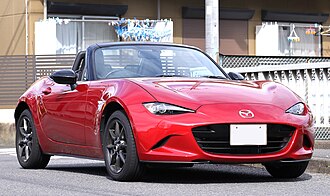
Mazda MX-5 as a Used Car: A Complete Buyer’s Guide
The Mazda MX-5 is one of the rare modern sports cars that makes sense not only as a weekend toy, but also as a genuinely affordable used car. Since its introduction in 1989, Mazda’s lightweight two-seat roadster has followed a remarkably consistent philosophy: keep the car compact, keep the weight under control, use rear-wheel drive, offer a naturally aspirated engine and make the driver the centre of the experience. Mazda itself describes the original development concept as “Jinba Ittai”, meaning a sense of unity between rider and machine. That philosophy has remained central through four generations.
The MX-5 has also become something of a modern classic. It was not designed to compete with expensive high-performance sports cars through enormous horsepower figures. Instead, Mazda concentrated on steering, balance, weight, visibility, a short manual gearbox and the simple pleasure of driving with the roof down. More than a million examples have been produced globally, and the model has become the world’s best-selling two-seat open-top sports car.
That makes the used MX-5 an especially interesting proposition. Depending on your budget, you can buy an early NA or NB as an enthusiast project, a more practical NC as an affordable modern classic, or a lightweight ND that still feels like a contemporary sports car. Each generation has its own strengths and weaknesses, however, and condition is absolutely critical. A cheap MX-5 can be one of the most enjoyable cars you can own, but a neglected example with serious rust or mechanical problems can quickly become much more expensive than a carefully selected car.
Why Buy a Used Mazda MX-5?
Lightweight performance instead of horsepower
The biggest attraction of the MX-5 is that it demonstrates how little power a sports car actually needs to be entertaining. Modern performance cars can produce several hundred horsepower, yet the MX-5 remains engaging because its relatively low weight allows modest engine output to feel lively. The rear-wheel-drive layout, compact dimensions and low seating position create a driving experience that is more about momentum and precision than outright acceleration.
This approach goes right back to the original car. Mazda’s engineers deliberately rejected unnecessary weight and concentrated on a lightweight body, rear-wheel drive and naturally aspirated power. The original MX-5 even used an aluminium bonnet to help reduce weight and lower the centre of gravity.
That philosophy remains relevant when buying used. You do not need the newest or most powerful MX-5 to have fun. An older 1.6 or 1.8-litre car can still provide enormous entertainment on a winding road, while a later 2.0-litre model adds stronger acceleration without abandoning the basic character.
It can be surprisingly affordable to own
Compared with many specialist sports cars, the MX-5 is relatively simple. It uses conventional petrol engines, manual transmissions have been available throughout its history, parts availability is generally good and the car has a huge enthusiast following. That means there is an enormous amount of knowledge available about common problems, modifications and maintenance.
Insurance, tyres and routine servicing can also be more manageable than with a powerful European sports car. The compact dimensions are another advantage: the MX-5 does not require a huge garage, and even basic versions offer enough performance to make ordinary roads entertaining.
The crucial distinction is between running costs and purchase condition. A properly maintained MX-5 can be inexpensive to run, but buying the cheapest available example is rarely the best financial strategy. Rust, neglected suspension, worn roofs and poorly executed modifications can easily erase the initial saving.
Understanding the Four MX-5 Generations
NA: the original icon
The first-generation NA MX-5 arrived in 1989 and is instantly recognizable thanks to its pop-up headlights and rounded styling. It was intentionally simple, light and mechanical, with a manual soft top and rear-wheel drive. Mazda’s development history explains that the engineers specifically rejected a 2+2 configuration because they wanted to preserve the purity and lightness of the two-seat roadster.
Today, an NA is as much a classic as it is a used car. Its greatest attraction is character: the tiny dimensions, exposed mechanical feel and simple cabin make it feel dramatically different from almost anything produced today. The downside is age. Even the youngest NAs are now decades old, so rust, previous restoration and mechanical wear are more important than mileage alone.
If you are buying an NA, inspect the sills, wheel arches, floor sections, chassis rails and suspension mounting areas extremely carefully. A mechanically imperfect engine can be repaired; extensive structural rust can turn an apparently cheap classic into a major restoration project.
NB: a more mature classic
The second-generation NB arrived in the late 1990s and replaced the pop-up headlights with fixed units. Mazda continued to offer 1.6- and 1.8-litre four-cylinder engines, while later versions gained additional equipment and increased refinement. Mazda’s own chronology notes the second generation’s increased engine output, improved roof design and larger luggage space compared with the original.
The NB is an attractive compromise for enthusiasts who want the classic MX-5 experience without paying the premium increasingly associated with pristine NAs. It still feels small and mechanical, but the cabin, safety equipment and general usability are more modern.
Rust remains the principal concern. A beautiful-looking NB with serious corrosion underneath is not a bargain. Search for evidence of previous repairs, examine the underside and do not be distracted by a freshly painted exterior. A pre-purchase inspection by someone familiar with MX-5s is highly recommended.
NC: the practical middle generation
The third-generation NC was introduced in 2005 and remained in production until 2015. It is physically larger than the earlier cars and introduced a more modern cabin and additional equipment. Mazda also offered a Power Retractable Hard Top, giving buyers an alternative to the traditional soft roof.
For many used buyers, the NC is the hidden gem of the range. It is still unmistakably an MX-5, but there is more space, more refinement and more everyday usability than in the NA or NB. The larger 2.0-litre engine gives the car enough performance for enthusiastic driving, while the optional retractable hardtop can make year-round ownership easier.
The NC is not without concerns. Rust should again be high on the inspection list, particularly around the sills, arches and underside. Buyers of early 2.0-litre cars should also investigate engine history and oil consumption carefully. Specialist buying guides identify oil level and maintenance as particularly important considerations for early NC examples.
ND: the modern MX-5
The fourth-generation ND, introduced for 2016, returned the MX-5 closer to its original lightweight philosophy. Mazda says the ND reduced curb weight by at least 148 pounds compared with the preceding generation, while retaining the two-seat rear-wheel-drive concept. The RF retractable-fastback version followed in 2017.
The ND is probably the easiest MX-5 to recommend as a daily-drivable used sports car. It is compact, economical by sports-car standards, relatively refined and significantly more modern inside than its predecessors. Early cars used a 1.5-litre or 2.0-litre Skyactiv-G petrol engine depending on market, while later 2.0-litre versions received an increase in power.
The RF is particularly appealing if you want the visual character of a coupe combined with the ability to drive open-air. Its roof mechanism adds weight and complexity compared with the conventional soft-top, but the result is an unusually stylish small sports car.
What Is the MX-5 Like to Drive?
Steering, balance and feedback
The MX-5’s driving experience is its strongest argument. Instead of trying to overwhelm the driver with acceleration, it communicates through its steering, pedals, gearbox and chassis. The relatively narrow body and low seating position make the car feel intimate, while the rear-wheel-drive layout allows the driver to adjust the car’s attitude with throttle and steering inputs.
This is particularly noticeable on ordinary roads. You do not need to drive at extreme speeds to appreciate the MX-5 because the car’s strengths appear at relatively modest speeds. A winding country road can be enjoyable without approaching the limits of grip.
The manual gearbox is an important part of the experience. Short, precise shifts are one of the MX-5’s traditional characteristics, and the original car was deliberately engineered around a direct mechanical feel.
Is it fast enough?
For most buyers, yes. An MX-5 is not supposed to be a drag-racing car. Even a modest-output version can feel quick because the car is small and light. Later 2.0-litre models provide considerably more performance and are preferable for drivers who regularly use motorways or want stronger acceleration.
The important point is that buying a more powerful MX-5 does not necessarily make it more enjoyable. The basic appeal remains balance and involvement, which is why a lower-powered roadster can still be enormously satisfying.
What to Check Before Buying a Used MX-5
Rust is the number-one concern
If there is one rule that should guide every used MX-5 purchase, it is this: inspect the body and underside before worrying about equipment or engine specification.
Older generations are particularly vulnerable to corrosion, and even later cars can suffer from rust depending on climate, road salt exposure and storage conditions. Inspect the sills, wheel arches, floor, subframes, chassis rails, suspension mounting points and areas around the drainage system.
Do not be satisfied with a visual inspection from standing beside the car. Put it on a lift if possible. A small amount of surface corrosion is not necessarily serious, but structural corrosion or poorly repaired rust can make a car economically unattractive.
Check the convertible roof
The soft top is one of the reasons to own an MX-5, so it should operate smoothly. Open and close it several times and check the fabric, seams, windows, seals and drainage channels. Look inside the cabin for damp carpets or signs of water staining.
What Car? recommends checking for roof leaks on used ND models and even suggests an automatic car wash as a practical way of identifying leaks.
A leaking roof does not necessarily mean the car is ruined, but persistent water ingress can create electrical problems, unpleasant smells and corrosion.
Inspect the suspension and steering
Because MX-5s are frequently driven enthusiastically, suspension components deserve careful attention. Listen for knocking over bumps and check for uneven tyre wear. Inspect the shock absorbers, bushes, ball joints and wheel bearings.
A modified car requires additional caution. Lowering springs, aggressive wheel fitments, aftermarket exhausts and track-oriented suspension can all be perfectly legitimate modifications, but poor-quality parts or amateur installation can create expensive problems. For most buyers seeking a dependable road car, a lightly modified or completely standard example is preferable.
Check the engine and gearbox
The petrol engines are generally robust when maintained correctly, but a used-car inspection should still include a cold start. Look for excessive smoke, unusual noises, unstable idle or warning lights. Check the oil level and examine the engine bay for leaks.
On the test drive, the engine should pull smoothly through the rev range, while the manual gearbox should engage each gear without grinding or excessive resistance. The clutch should engage progressively without slipping.
Early NC buyers should pay particular attention to oil consumption and documented maintenance, while ND buyers should investigate the exact model year and any applicable recalls. What Car? reports, for example, that certain 2016–2018 automatic cars were subject to a software recall relating to unexpected downshifts.
How Reliable Is a Used MX-5?
A strong reputation, with important exceptions
The MX-5 generally has a good reliability reputation, particularly when compared with more complicated European sports cars. What Car?’s 2025 Reliability Survey placed the MX-5 fourth out of 13 cars in its coupé, convertible and sports-car category. Reported issues included some bodywork, electrical and interior-trim problems rather than a widespread pattern of catastrophic mechanical failures.
That reputation should not encourage complacency. An MX-5’s simplicity makes neglect visible rather than impossible. Old fluids, worn suspension, corrosion and damaged roofs still cost money to repair.
Recall history also varies by generation and model year. Buyers should check the VIN with Mazda before purchasing rather than assuming that all campaigns have been completed. For example, ND cars have been affected by recalls involving automatic-transmission software and the i-ELOOP system on applicable vehicles.
Soft Top or RF?
The traditional soft top
The soft-top MX-5 is the purest expression of the car’s original concept. It is light, mechanically simple and can be opened or closed quickly. It also gives the driver the greatest sense of being exposed to the environment, which is a major part of the roadster experience.
For a buyer focused primarily on driving enjoyment, the soft top is usually the version to choose. It also has fewer mechanical components than the RF’s retractable roof.
The RF retractable fastback
The RF adds a dramatic fastback appearance and a powered retractable roof mechanism. Mazda introduced it in 2016, with production models arriving for the 2017 model year.
It is more visually distinctive and can feel more secure in poor weather, but it is heavier and more complex. If you are inspecting a used RF, operate the roof repeatedly and listen for unusual noises or hesitation. Check that all panels align correctly and that there are no leaks.
The choice is therefore largely personal. The soft top is the purist’s option; the RF is attractive to buyers who want something closer to a small coupe with open-air capability.
Is the MX-5 Practical Enough?
Practicality is probably the MX-5’s greatest weakness. There are only two seats, storage space is limited and the boot is small. This is not a car for someone who needs to carry a family, large shopping loads or bulky sports equipment.
Yet that limitation is also part of its appeal. Mazda deliberately rejected the idea of turning the MX-5 into a four-seat sports car because doing so would have compromised the lightweight roadster concept.
For a couple or single owner, however, the MX-5 can be surprisingly usable. There is enough luggage space for a weekend away if you pack carefully, and the car’s small footprint makes it easy to use in towns and cities.
Which Used MX-5 Should You Buy?
The best choice depends heavily on your budget and what you want from the car. An NA is ideal for someone who wants a classic and is prepared to deal with age-related repairs. An NB offers much of the same old-school experience for potentially less money. An NC is arguably the value sweet spot, combining traditional MX-5 character with better everyday usability. The ND is the logical choice for someone who wants modern safety, efficiency and comfort without giving up the lightweight roadster philosophy.
For many buyers, a later 2.0-litre ND is the most attractive all-round package. It has enough performance to feel genuinely sporty, while the modern chassis and cabin make it easier to use regularly. However, an immaculate NC can offer much of the same fun for substantially less money.
Whatever generation you choose, condition should come first. A rust-free, well-maintained car with a complete history is almost always preferable to a newer or higher-specification example that has been neglected.
Final Verdict: Is the Mazda MX-5 a Good Used Car?
The Mazda MX-5 is one of the best used sports cars for buyers who value driving enjoyment over outright speed or practicality. Its formula has remained remarkably consistent for more than three decades: two seats, rear-wheel drive, a manual gearbox, a folding roof and a lightweight construction philosophy. Mazda’s own history shows how deliberately the company protected those characteristics from the beginning.
The model is also unusually accessible. You do not need a huge budget to experience the MX-5 concept, and there is a generation for almost every type of enthusiast. Older cars can provide classic-car character, while the ND offers a modern interpretation that remains faithful to the original idea.
The biggest danger when buying used is rust and neglect, particularly with older examples. Roof condition, suspension wear, accident damage, modifications and maintenance history also deserve close attention. Later ND cars have their own recall and electrical checks, but overall reliability remains encouraging.
If you approach the purchase carefully, an MX-5 can be much more than an occasional toy. It can be an affordable second car, a weekend road-trip machine, a track-day project or simply a way of making an ordinary drive more enjoyable. Few used cars offer that combination of affordability, simplicity and genuine driver involvement.
Mazda MX-5 Technical Specifications
Because the MX-5 has been produced across four generations and with different engines and specifications depending on market, the table below provides representative figures rather than one universal specification. The exact dimensions, engine output and equipment should always be checked against the particular car being considered. Mazda identifies the four generations as NA, NB, NC and ND, with the ND introduced for 2016 and the RF following in 2017.
| Specification | NA | NB | NC | ND |
|---|---|---|---|---|
| Approx. production period | 1989–1997 | 1998/1999–2005 | 2005/2006–2015 | 2015/2016–present |
| Body style | 2-seat roadster | 2-seat roadster | 2-seat roadster / PRHT | 2-seat roadster / RF |
| Typical engine | 1.6L / 1.8L petrol | 1.6L / 1.8L petrol | 1.8L / 2.0L petrol | 1.5L / 2.0L petrol |
| Engine type | Naturally aspirated 4-cylinder | Naturally aspirated 4-cylinder | Naturally aspirated 4-cylinder | Naturally aspirated 4-cylinder |
| Typical power range | Approx. 90–131 hp | Approx. 90–146 hp | Approx. 126–170 hp | Approx. 132–184 hp |
| Transmission | Manual / market-dependent automatic | Manual / automatic depending on market | 5- or 6-speed manual / automatic | 6-speed manual / automatic |
| Drive | Rear-wheel drive | Rear-wheel drive | Rear-wheel drive | Rear-wheel drive |
| Seating | 2 | 2 | 2 | 2 |
| Construction | Lightweight roadster | Lightweight roadster | Lightweight roadster | Lightweight roadster |
| Roof | Soft top | Soft top | Soft top / retractable hardtop | Soft top / RF |
| Main strength | Classic character | Simple, engaging driving | Value and practicality | Modern performance and low weight |
| Main concern when buying used | Rust and age | Rust and age | Rust, engine history, roof | Recalls, electronics, condition |
| Best suited to | Classic-car enthusiast | Affordable enthusiast | Best-value used MX-5 | Modern everyday sports car |
Final recommendation
For a buyer who wants the best balance of price, usability and driving enjoyment, the later NC is well worth considering, provided the body and underside are free from serious corrosion. For someone with a larger budget who wants modern technology and a car that can comfortably serve as a regular weekend driver, the ND is the strongest all-round choice. Meanwhile, immaculate NA and NB examples are increasingly attractive to collectors and enthusiasts, making condition and originality especially important.
The enduring appeal of the MX-5 is ultimately simple: it does not need to be the fastest car on the road to be one of the most enjoyable. That is exactly why a good used MX-5 remains such a compelling purchase decades after the original car first appeared.
_by_Negawa_Bridge_(cropped).jpg)