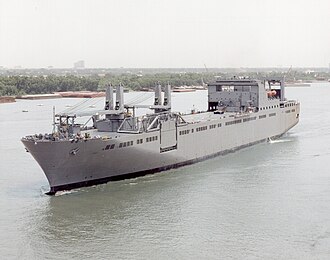
The Strategic Importance of MV Fisher (T-AKR-301)
Modern military operations depend on far more than combat aircraft, armored vehicles, and naval forces. Behind every successful overseas deployment is an enormous logistical network capable of moving thousands of tons of equipment, supplies, and vehicles across the world’s oceans. One of the vessels designed to support this mission is MV Fisher (T-AKR-301), a large cargo ship operated within the United States maritime logistics system.
Although ships such as MV Fisher rarely receive the same public attention as aircraft carriers, destroyers, or submarines, their contribution to national defense strategy is fundamental. These vessels form the backbone of strategic sealift—the ability of a nation to rapidly transport military forces and equipment from one continent to another. In times of crisis, a country’s ability to move tanks, trucks, helicopters, engineering equipment, fuel systems, and supplies can determine whether military forces arrive prepared or remain limited by transportation shortages.
MV Fisher belongs to a category of vessels commonly associated with the U.S. Military Sealift Command (MSC) and the National Defense Reserve Fleet system. As a large vehicle cargo ship, its primary purpose is to transport heavy military equipment, particularly wheeled and tracked vehicles, over long distances. Ships like Fisher were developed during the Cold War era when planners recognized that a major conflict would require the rapid movement of enormous quantities of military hardware across oceans.
The vessel represents an important chapter in the evolution of American sealift capability. Built as a commercial cargo ship and later incorporated into military transportation planning, MV Fisher demonstrates the adaptability of civilian maritime technology for defense purposes. Its design reflects a balance between commercial efficiency and military requirements, combining large cargo capacity, ocean-going endurance, and specialized loading systems.
This article explores the history, design, operational role, and technical characteristics of MV Fisher (T-AKR-301), explaining why this relatively unknown ship remains an important element of U.S. military logistics.
The Origins and Development of MV Fisher
From Commercial Shipbuilding to Military Sealift
MV Fisher was developed as part of a broader effort by the United States to expand its strategic sealift capabilities. Unlike traditional warships that are built specifically for combat missions, many Military Sealift Command vessels originate from commercial ship designs. This approach allows the United States to maintain a large transportation capability without building an entirely separate fleet of specialized military cargo vessels.
The philosophy behind ships like Fisher is straightforward: military forces require transportation capacity on a massive scale. A single armored division can require thousands of vehicles, tons of ammunition, fuel equipment, spare parts, and support systems. Air transport can deliver personnel and limited high-priority cargo quickly, but heavy equipment is generally transported more efficiently by sea.
The U.S. government therefore invested in ships capable of carrying large quantities of military cargo and maintaining readiness for emergencies. These vessels became part of a strategic reserve system designed to respond rapidly during national security crises.
MV Fisher was assigned the hull classification T-AKR-301, indicating its role as a Military Sealift Command auxiliary vessel. The “T” prefix identifies a ship operated by the U.S. Navy’s Military Sealift Command rather than a commissioned combat vessel. The “AKR” classification refers to a vehicle cargo ship, specifically a vessel designed for transporting military vehicles and related equipment.
Unlike Navy combat ships, vessels such as Fisher are normally crewed by civilian mariners working under Military Sealift Command contracts. This arrangement allows the United States to maintain a flexible and cost-effective sealift capability while preserving the ability to activate ships during military operations.
Understanding the Role of the Military Sealift Command
The Backbone of U.S. Overseas Logistics
The importance of MV Fisher becomes clearer when viewed within the larger mission of the Military Sealift Command. MSC is responsible for operating a wide range of support vessels that provide fuel, cargo transportation, towing, medical support, and other essential services for U.S. naval and military operations around the world.
While aircraft carriers and amphibious ships project military power, sealift vessels provide the logistical foundation that allows those forces to operate for extended periods. A military force deployed thousands of miles from the continental United States requires a constant flow of equipment and supplies. Without transportation ships, even the most advanced military units would face severe operational limitations.
Vehicle cargo ships like MV Fisher have a particularly important mission because heavy equipment cannot easily be moved by air. Main battle tanks, armored personnel carriers, construction machinery, and large support vehicles are far too heavy or expensive for routine air transport. Instead, they are loaded aboard specialized cargo ships designed to carry large numbers of vehicles efficiently.
This capability became especially important during large-scale operations such as the Gulf War, where the United States transported enormous amounts of military equipment to the Middle East. Strategic sealift vessels played a critical role in moving armored formations and support units across the Atlantic and Pacific Oceans.
The Design Philosophy Behind MV Fisher
A Ship Built Around Cargo Efficiency
The defining feature of MV Fisher is its cargo-carrying capability. Unlike container ships designed primarily for standardized cargo boxes, vehicle cargo ships are optimized for transporting large military vehicles and equipment. Their internal layouts are designed around accessibility, allowing vehicles to be driven aboard, secured, transported, and unloaded efficiently.
A major characteristic of this ship type is the use of multiple internal cargo decks connected by ramps. These decks allow vehicles to be stored throughout the vessel’s interior rather than only on exposed deck spaces. The arrangement maximizes available cargo volume while protecting equipment from ocean conditions.
Vehicle carriers also require specialized loading systems. Instead of relying exclusively on large cranes, many roll-on/roll-off (Ro-Ro) cargo ships allow vehicles to enter and exit under their own power. This dramatically reduces loading times and makes the vessel highly suitable for military deployments, where speed and flexibility are critical.
The Ro-Ro concept transformed military logistics because it enabled thousands of vehicles to be transported with minimal handling. A tank, truck, or armored vehicle can simply be driven onto the ship, secured for the voyage, and driven off when the ship reaches its destination.
MV Fisher’s design reflects this philosophy. Its large internal spaces and vehicle-handling systems make it particularly valuable for transporting combat support equipment and military vehicles.
Roll-On/Roll-Off Capability and Military Advantages
The roll-on/roll-off capability is one of the most important features of modern military sealift vessels. Traditional cargo ships require cranes, pallets, and extensive cargo-handling operations, which can slow deployment. Ro-Ro ships eliminate many of these challenges by allowing cargo to move directly between land and sea.
For military planners, this provides several advantages:
Faster Deployment
A military operation may require rapid movement of equipment following a crisis. Ro-Ro ships can load and unload vehicles much faster than conventional cargo vessels because equipment does not need to be individually lifted by cranes.
Greater Flexibility
Military equipment varies widely in size and weight. A vehicle carrier can transport tanks, trucks, trailers, engineering vehicles, and other large equipment without requiring specialized containers.
Reduced Port Requirements
Because cargo can move under its own power, Ro-Ro vessels can operate efficiently through ports with different infrastructure capabilities. This flexibility is valuable during overseas deployments where available facilities may be limited.
Improved Operational Readiness
Many strategic sealift ships are maintained so they can be activated quickly when required. Their purpose is not daily commercial operation but readiness for national emergencies.
MV Fisher’s Place in U.S. Strategic Sealift Planning
Supporting Global Military Mobility
The United States maintains worldwide military commitments requiring the ability to move forces quickly between regions. Strategic sealift provides the transportation capacity necessary to support these commitments.
Ships like MV Fisher contribute to a concept known as global force projection. This means the ability to move military forces from the United States to distant locations and sustain them after arrival. Without sufficient maritime transportation, even a powerful military force would struggle to deploy heavy equipment overseas.
A modern military campaign requires much more than soldiers and weapons. It requires fuel trucks, repair vehicles, communications equipment, spare parts, medical supplies, and engineering systems. Vehicle cargo ships are essential because they transport the supporting infrastructure that allows combat units to function.
MV Fisher’s mission therefore extends beyond simply carrying vehicles. The vessel represents strategic flexibility. Its existence allows military planners to maintain options during international crises by ensuring that transportation capacity is available when needed.
MV Fisher (T-AKR-301): Operational History, Systems, and Strategic Value
The Operational Life of MV Fisher
The operational story of MV Fisher (T-AKR-301) is closely connected to the broader history of American strategic sealift. Unlike combat ships that are frequently visible during naval exercises, deployments, and international patrols, large cargo ships often operate quietly behind the scenes. Their success is measured not by battles fought but by their ability to deliver the equipment required for military operations.
As part of the U.S. military transportation network, MV Fisher was designed to provide a dependable method of moving large quantities of vehicles and equipment across oceans. The vessel belongs to a class of ships that represent an important transition in maritime logistics: combining commercial cargo efficiency with military readiness requirements.
During peacetime, ships in this category may spend much of their time maintained in reserve status or conducting limited support missions. However, their true purpose is revealed during periods of heightened tension, when the United States requires rapid access to additional transportation capacity.
The strategic concept behind ships such as Fisher is similar to maintaining a large reserve force. The United States does not need every strategic sealift ship operating at maximum tempo every day, but it requires the ability to activate these vessels quickly during emergencies. This approach provides military planners with additional transportation capacity without the enormous expense of continuously operating a full active fleet.
The Importance of Vehicle Cargo Ships During Military Deployments
Moving the Heavy Equipment of Modern Warfare
The modern military depends heavily on mobility. Soldiers, aircraft, and ships receive much of the public attention, but the vehicles that support those forces are equally important. Armored vehicles, fuel trucks, repair platforms, construction equipment, and logistics vehicles allow military units to operate effectively once they arrive in a theater of operations.
A single armored brigade can contain thousands of vehicles, ranging from combat systems to maintenance and supply vehicles. Transporting such a force requires specialized vessels capable of handling extremely heavy and oversized cargo.
MV Fisher’s role as a vehicle cargo ship addresses this requirement. The ship’s internal arrangement allows it to carry a large number of vehicles in an organized manner while protecting them during long ocean voyages.
The importance of this capability became especially clear during major overseas military operations. In conflicts where the United States needed to reinforce allies or establish a major military presence abroad, sealift vessels provided the bridge between continental bases and distant operational areas.
Air transport remains essential for personnel and urgent supplies, but sea transport remains unmatched for heavy cargo. A single large vehicle carrier can move cargo equivalent to many aircraft sorties at a fraction of the cost.
Ship Layout and Cargo Handling Features
Multiple Decks Designed for Military Vehicles
One of the defining characteristics of MV Fisher and similar T-AKR vessels is their internal cargo arrangement. These ships are essentially floating vehicle warehouses designed around efficient loading, transportation, and unloading.
The vessel’s cargo spaces are arranged across multiple decks connected by ramps. This configuration allows vehicles to be distributed throughout the ship while maintaining structural balance and stability.
Cargo decks must be carefully engineered because military vehicles vary significantly in size and weight. A lightweight utility vehicle places very different demands on the ship compared with a heavily armored vehicle. The ship’s internal design must therefore support different load conditions while maintaining safe operations at sea.
The decks also require securement systems that prevent vehicles from shifting during rough ocean conditions. Proper vehicle restraint is critical because cargo movement can affect stability and potentially create dangerous conditions during long voyages.
Roll-On/Roll-Off Operations
The Ro-Ro capability of MV Fisher is central to its mission. Instead of loading cargo using traditional lifting methods, vehicles can be driven directly onto the ship through large access points.
This process provides several operational benefits:
- Vehicles can be loaded rapidly.
- Cargo handling equipment requirements are reduced.
- Vehicles remain organized according to deployment requirements.
- Unloading can occur quickly when the ship reaches its destination.
For military operations, this capability is particularly valuable because deployment schedules are often determined by rapidly changing political and security conditions. A force that arrives without its vehicles and support equipment may not be operationally effective.
Propulsion and Maritime Performance
A Commercially Derived Ocean-Going Design
Although MV Fisher serves a military logistics role, its design philosophy reflects its commercial maritime origins. Many Military Sealift Command vessels use proven commercial technologies because reliability and operating efficiency are essential.
Large cargo ships are generally designed for long-distance ocean voyages rather than high-speed maneuvering. Their primary requirements are endurance, fuel efficiency, cargo capacity, and reliability.
The propulsion system provides the power necessary for sustained transoceanic operations. Unlike warships, which prioritize speed and tactical maneuverability, sealift vessels focus on carrying maximum cargo over long distances.
A strategic cargo ship may spend days or weeks crossing oceans, making dependable propulsion and efficient fuel consumption critical factors.
Crew and Daily Operations
Civilian Mariners Supporting Military Missions
A unique aspect of Military Sealift Command operations is that many vessels are operated by civilian mariners rather than active-duty naval crews.
MV Fisher’s crew responsibilities include:
- Navigation and ship handling
- Engineering operations
- Cargo management
- Maintenance
- Safety procedures
- Communications
- Emergency response
These mariners are trained professionals who operate under demanding conditions similar to those faced by commercial shipping crews. Their work ensures that strategic sealift vessels remain ready to support military missions whenever required.
The civilian-military partnership used by MSC allows the United States to maintain a flexible maritime transportation system. During normal conditions, ships can operate with a smaller permanent structure, while wartime requirements can be supported through expanded activation procedures.
MV Fisher and the Ready Reserve Concept
Maintaining Capability Without Constant Deployment
A major component of U.S. sealift strategy involves maintaining ships that can be activated quickly. The Ready Reserve concept recognizes that national emergencies may require sudden increases in transportation capacity.
Instead of operating every ship continuously, certain vessels are preserved in a condition that allows rapid return to service.
This approach provides several advantages:
Cost Efficiency
Operating a large fleet continuously would require significant personnel, fuel, maintenance, and infrastructure costs. Reserve status reduces expenses while preserving strategic capability.
Crisis Response
When military planners identify a transportation requirement, reserve ships can be activated and prepared for deployment.
Strategic Depth
A large reserve fleet ensures that the United States retains transportation capacity even during major conflicts or simultaneous global commitments.
MV Fisher represents this philosophy: a vessel maintained as part of a larger strategic transportation system designed to support national objectives.
Comparing MV Fisher With Other Military Sealift Ships
Vehicle Cargo Ships Versus Traditional Cargo Ships
Traditional cargo ships and military vehicle carriers share many similarities, but their missions are different. Commercial cargo ships are usually optimized for profitability, carrying standardized goods between major ports.
Military vehicle carriers are designed around flexibility and rapid deployment. Their cargo spaces, ramps, and handling systems are tailored for military equipment.
A commercial container ship might carry thousands of standardized containers, while a vessel like MV Fisher is intended to transport equipment that may have unusual dimensions, heavy weight, or special handling requirements.
Vehicle Cargo Ships Versus Amphibious Assault Ships
It is also important to distinguish MV Fisher from amphibious naval vessels.
Amphibious assault ships are combat-capable warships designed to deliver Marines and equipment directly into contested environments. They carry aircraft, landing craft, and defensive systems.
MV Fisher, by contrast, is a logistics vessel. It does not participate in combat operations and does not assault hostile beaches. Its role is transportation: moving equipment from one location to another so military forces can operate effectively.
The two ship types serve different but complementary purposes. Amphibious ships provide tactical capability, while strategic sealift vessels provide the large-scale transportation required to sustain military power.
The Continuing Relevance of MV Fisher’s Mission
Why Strategic Sealift Remains Essential Today
Even with advances in aircraft, technology, and precision weapons, geography remains a major challenge for military operations. Moving heavy equipment across oceans continues to require specialized maritime transportation.
The increasing complexity of modern military operations has made logistics even more important. Forces deployed overseas require continuous support, including replacement vehicles, maintenance equipment, fuel systems, and supplies.
Ships like MV Fisher represent a strategic insurance policy. They provide the ability to move large amounts of material when commercial transportation alone may not be sufficient or when national security requirements demand dedicated capability.
The importance of sealift is especially clear in a world where military commitments may occur far from a nation’s borders. Maintaining transportation capacity ensures that military forces are not limited by distance.
Technical Specifications of MV Fisher (T-AKR-301)
The following table summarizes the publicly available technical characteristics associated with MV Fisher and its class of military vehicle cargo ships. Exact figures may vary depending on configuration, modifications, and operational status.
| Specification | Details |
|---|---|
| Ship Name | MV Fisher |
| Hull Number | T-AKR-301 |
| Vessel Type | Large vehicle cargo ship / Roll-on Roll-off (Ro-Ro) vessel |
| Operator | U.S. Military Sealift Command (MSC) |
| Primary Mission | Strategic sealift and transportation of military vehicles and equipment |
| Classification | Auxiliary Cargo Roll-on/Roll-off Ship (AKR) |
| Role | Military logistics support |
| Crew | Civilian merchant mariners |
| Propulsion Type | Diesel-powered marine propulsion system |
| Propulsion Arrangement | Conventional single-screw configuration (typical for this vessel category) |
| Speed | Approximately 20+ knots class capability |
| Range | Transoceanic operational range |
| Cargo Type | Military vehicles, wheeled vehicles, tracked vehicles, and equipment |
| Cargo Handling System | Roll-on/Roll-off vehicle loading system |
| Cargo Decks | Multiple internal vehicle decks |
| Hull Type | Steel ocean-going cargo vessel |
| Length | Approximately 950–1,000 feet class |
| Beam | Approximately 100+ feet class |
| Displacement | Tens of thousands of tons depending on loading condition |
| Service Category | Strategic sealift vessel |
| Operational Purpose | Rapid movement of heavy military equipment worldwide |
| Home Organization | U.S. Department of Defense sealift system |
Conclusion: The Quiet Power of MV Fisher
MV Fisher (T-AKR-301) represents a type of military capability that often operates outside public attention but remains essential to national defense. It is not a warship designed to engage an enemy directly, yet its contribution to military effectiveness is profound.
The ability to move heavy equipment across oceans determines whether forces can respond quickly, whether allies can be supported, and whether large-scale operations can be sustained. A modern military requires transportation as much as it requires weapons, and strategic sealift vessels provide that transportation foundation.
Through its large cargo capacity, Ro-Ro design, and role within the Military Sealift Command system, MV Fisher demonstrates the importance of maritime logistics in global security. The vessel embodies a simple but powerful principle: military strength depends not only on what a nation can build, but also on what it can move.
For that reason, ships like MV Fisher remain a critical part of the United States’ ability to project power, support allies, and respond to challenges anywhere in the world.
.jpg)