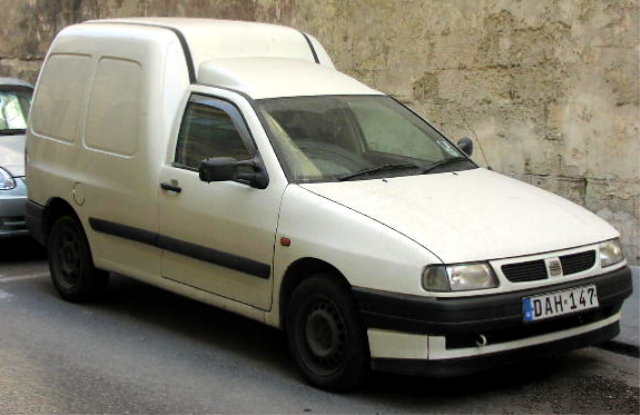
SEAT Inca faults
Engine and Drivetrain
Oil Leaks
- Valve-cover gasket and camshaft-cover seals harden with age, allowing oil to seep and pool around the rocker cover.
- Oil-cooler o-rings on the 1.9 diesel corrode, dripping oil onto the exhaust manifold and risking smoke or smell in the cabin.
- Front crankshaft seal failures send oil onto the timing belt and pulleys, accelerating belt wear and inviting catastrophic failure if not addressed.
Rough Idle and Stalling
- Vacuum hoses around the intake manifold become brittle, causing air leaks that manifest as unstable idle, surging or stalling at tick-over.
- Throttle-body carbon buildup on petrol models and clogged idle control valves on diesels contribute to hesitation and inconsistent throttle response.
DPF and EGR Problems
- Slow-moving runs block the diesel particulate filter with soot, forcing limphome modes or constant warning lamps unless a forced regeneration is performed.
- EGR valves on TDI variants clog with carbon, reducing low-end torque and causing rough running; cleaning or fitting an uprated cooler cures most symptoms.
Overheating and Cooling Leaks
- Plastic end-tank radiators develop micro-fractures, particularly at the inlet/outlet joints, leading to coolant loss and rising operating temperatures.
- Thermostat bodies crack and electric cooling-fan resistors fail, causing intermittent fan operation and overheating in slow-moving traffic.
Transmission and Clutch
Manual Gearbox Issues
- Synchro rings in the 1.4- and 1.6-litre boxes wear out, making shifts into third and fourth gear crunchy, especially when cold.
- Gearbox-mount bushings perish, transmitting added vibration into the cabin under acceleration or when selecting ratios.
Clutch and Dual-Mass Flywheel
- City use accelerates clutch-disc wear, manifesting as slipping or a jerky engagement; full clutch-kit replacement restores smooth take-up.
- Dual-mass flywheels on high-mileage cars develop rattles or judder under load; swapping to a solid-flywheel spec removes noise at the cost of added NVH.
Automatic Transmission Gremlins
- Four-speed automatics suffer harsh up-shifts and late kick-down if torque-converter lockup clutch packs wear or valve bodies clog with debris.
- Regular fluid and filter changes extend life, but some units ultimately require a professional overhaul.
Suspension and Steering
Bush Wear and Clunks
- Rear torsion-beam trailing-arm bushes crack at around 100 000 km, producing loud knocks over bumps and slight instability cornering.
- Anti-roll-bar and lower-control-arm bushes perish, causing creaks on steering input and uneven tyre wear.
Worn Shock Absorbers
- Oil-filled dampers lose damping force after roughly 80 000 km, yielding a bouncy ride and reduced roadholding; renewing all four struts revises ride quality.
Steering Rack Play
- Torn rack gaiters admit dirt, accelerating rack-mount and pinion-bearing wear; symptoms include light knocks through the steering wheel and vague self-centring.
Brakes
Vacuum Hose Cracks
- The plastic vacuum pump pipe to the brake servo develops hairline fractures, reducing servo assistance and making the pedal feel excessively stiff.
- A known safety recall replaced the hard-plastic pipe with a flexible rubber hose; retrofit if missing.
Corroded Calipers and Handbrake Seizure
- Rear-caliper slide pins corrode, causing uneven pad wear or stuck pads that drag.
- Handbrake cables rust in their sheath, either seizing the rear wheels on release or jamming the lever; regular lubrication prevents binding.
Electrical and Electronics
Central Locking Failures
- Door-module actuators admit moisture, gumming up the internal motor gearing and causing intermittent or total loss of remote locking on affected doors.
Glow-Plug and Relay Faults
- Diesel glow-plug relays (relay 109) stick or weld shut, leaving glow plugs permanently on and draining the battery overnight.
- Individual glow plugs also fail, extending crank time in cold weather or preventing startup altogether.
Parasitic Battery Drain
- Faulty alarm modules, aftermarket trackers or control-unit errors draw current when parked, often leaving the van immobile without a jump start.
- Isolate circuits with a multimeter to locate the offending load.
ABS Sensor Errors
- Wheel-speed sensors corrode at their mounting face, leading to intermittent ABS warnings and loss of traction-control functions until the sensors are cleaned or replaced.
Body and Interior
Water Ingress and Rust
- Blocked scuttle-drain channels allow rainwater into the passenger-footwell, wetting carpets and corroding footwell electronics.
- Early Inca models show rust around the rear-door bottom seams and subframe mounting points; proactive underbody inspections and cavity wax treatments slow the advance.
Interior Wear and Rattles
- Seat-cover fabric stretches and tears on high-wear zones; steering wheels become shiny and flake where hands rest.
- The overhead grab handles and tonneau cover on vans squeak over road imperfections; fitting nylon spacers or replacing worn trim modules silences the cabin.
Window Regulator Failures
- Cable-driven regulators on front windows fray or the plastic gear teeth strip, causing the glass to drop into the door.
- Swapping the complete regulator assembly is the only reliable fix.
Seat Inca as a used car
The Seat Inca emerged in 1995 as a practical small van and estate car solution based on the Volkswagen Caddy platform. Over its decade-long production run, it earned praise for its simplicity, ruggedness and versatile load bay. Today, the Inca remains a compelling choice for budget-conscious buyers seeking a reliable used vehicle with low running costs and a utilitarian nature. This guide dives into the technical heart of the Inca, examines its common weak points, and offers actionable advice for prospective owners.
Overview and Market Positioning
Originally conceived to fill the gap between passenger cars and light commercial vehicles, the Inca catered to tradespeople, delivery services and families in need of extra space. Its compact dimensions made urban parking manageable, while load‐area volumes of up to 2.8 m³ (van version) underlined its commercial credentials. As a used car today, the Inca undercuts rivals like the Renault Kangoo and Citroën Berlingo on initial purchase price, yet shares much of their proven VW Group mechanical underpinnings.
Technical Specifications
Engine Options & Performance
Seat offered the Inca with a range of petrol and diesel powerplants, each carrying Volkswagen Group engine codes:
- 1.4 MPI (44 kW @ 5 500 rpm / 116 Nm @ 2 800 rpm)
- 1.4 16V (74 kW @ 5 200 rpm / 131 Nm @ 3 600 rpm)
- 1.6 MPI (74 kW @ 5 800 rpm / 145 Nm @ 2 800 rpm)
- 1.9 SDI (47 kW @ 4 200 rpm / 118 Nm @ 2 200 rpm)
- 1.9 TDI (66 kW @ 4 200 rpm / 210 Nm @ 1 900 rpm)
The 1.9 TDI, with its robust torque curve, delivers the most usable performance for fully loaded runs, sprinting from 0–100 km/h in approximately 15.5 seconds and topping out near 160 km/h. Petrol variants focus on refinement over outright pace, with 0–100 km/h times ranging from 15.0 s (1.4 16V) to 17.5 s (1.4 MPI).
Transmission and Drivetrain
All Inca models pair with a five‐speed manual gearbox; an optional four‐speed automatic was available on higher‐powered petrol engines. Key details include:
- Synchromesh on all forward gears for crisp shifts.
- Torque‐converter lock‐up clutch in automatics to improve highway fuel economy.
- Front‐wheel drive layout with a torsion‐beam rear axle for space efficiency and low maintenance.
Chassis, Suspension and Dimensions
The Inca’s underpinnings blend car‐like handling with load‐carrying resilience:
- Front suspension: MacPherson struts with coil springs.
- Rear suspension: Parabolic trailing‐arm beam axle.
- Wheelbase: 2 481 mm.
- Overall length: 4 159 mm (estate), 3 776 mm (van).
- Width: 1 656 mm excluding mirrors.
- Height: 1 822 mm (estate), 1 829 mm (van).
- Curb weight: 1 125 – 1 310 kg depending on engine and trim.
Braking and Safety Features
Braking duties are handled by ventilated discs up front and drums at the rear on base models. From mid‐series onward, front and rear disc brakes became optional. Standard equipment:
- Anti‐lock Braking System (ABS).
- Driver’s airbag; passenger airbag optional on later models.
- Three‐point inertia‐reel belts at all seating positions.
Fuel Economy and Emissions
Real‐world fuel consumption figures vary by engine and load:
- 1.4 MPI: 7.2 – 7.8 L/100 km combined.
- 1.4 16V: 7.5 – 8.2 L/100 km combined.
- 1.6 MPI: 7.6 – 8.4 L/100 km combined.
- 1.9 SDI: 6.0 – 6.6 L/100 km combined.
- 1.9 TDI: 5.5 – 6.1 L/100 km combined.
Diesel variants emit between 150 – 180 g/km of CO₂, while petrol models range from 170 – 196 g/km.
Cargo and Passenger Capacity
- Van load volume: 2.3 – 2.8 m³ with a flat floor.
- Payload: up to 650 kg, depending on specification.
- Rear bench seat in estate models folds nearly flat, expanding cargo space to 1 620 L.
- Two‐seat van and five‐seat estate configurations cater to both trades and families.
Known Reliability Concerns and Maintenance
Engine and Drivetrain
- Valve‐cover and camshaft‐cover gasket deterioration leading to oil seepage.
- Crankshaft front seal leaks risking premature timing‐belt wear.
- Clogged EGR valves on TDI engines causing rough idle; periodic cleaning recommended.
- Automatic transmissions may exhibit harsh shifts if fluid changes are neglected.
Electrical and Electronics
- Central‐locking actuators prone to moisture ingress and motor failure.
- Glow‐plug relay failure on diesels can drain the battery if stuck closed.
- Aftermarket alarm modules occasionally cause parasitic battery drains; isolate circuits to diagnose.
Suspension and Steering
- Rear torsion‐beam arm bushes often crack after 100 000 km, producing knock noises.
- Steering‐rack gaiters tear, admitting dirt and accelerating pinion bearing wear.
- Worn shock absorbers yield a bouncy ride; inspect dampers during test drives.
Bodywork and Interior
- Corrosion at rear‐door bottom seams and around underbody mounting points on early examples.
- Scuttle‐drain channels become blocked, permitting water into the footwells.
- Window regulator cables fray, leading to dropped glass; full regulator replacement is the only cure.
Trim Levels and Equipment
Seat offered several trim levels, gradually evolving over the Inca’s lifespan:
- Base: manual windows, steel wheels, basic radio.
- SX: added central locking, roof rails and tinted glass.
- Comfortline: power windows, heated mirrors, upgraded upholstery.
- Sport Edition (late run): alloy wheels, sport seats and body‐coloured bumpers.
Optional extras included air conditioning, tow bar preparation and a rear‐view parking sensor kit.
Ownership Costs
Fuel and Insurance
Diesel variants typically command lower fuel bills, especially under heavy usage. Insurance groups range from 5 to 10 depending on engine size and trim.
Maintenance and Repairs
Routine servicing intervals of 15 000 km for petrol and 20 000 km for diesel keep running costs modest. Common wear items:
- Timing‐belt change every 90 000 km.
- Brake pads and discs exchanged in pairs every 40 000 km (front) and 60 000 km (rear).
- Clutch life heavily dependent on driver style; expect 120 000 – 150 000 km under moderate use.
Depreciation and Value Retention
As of 2025, Inca estates and vans exchanging hands for €2 000 – €5 000 reflect their status as workhorses rather than collectables. Well‐maintained TDI models and low‐mileage examples can fetch a premium.
Buying Tips
Pre-Purchase Inspection Checklist
- Examine engine bay for oil leaks around valve covers, cam covers and crank seals.
- Verify timing‐belt service history.
- Test‐drive slowly to detect suspension clunks and steering rack play.
- Inspect door sills and underbody for rust.
- Cycle all windows and locks to ensure regulator and actuator health.
Price Guide and Negotiation Tactics
- Vans with service records and recent timing‐belt work command the top of the price range.
- Estates lacking history or showing rust should prompt price reductions of €500 – €1 000.
- Factor in the cost of replacing worn trailing‐arm bushes or shock absorbers during negotiations.
Best Model Years and Options
- Post‐2000 facelifts brought improved door‐seals, upgraded interior trim and optional rear disc brakes.
- The 1.9 TDI is the engine of choice for durability and fuel economy.
- Look for Comfortline or Sport Edition for a richer equipment list and higher resale value.
Conclusion
The Seat Inca stands out as a no‐nonsense, versatile used car with VW‐engineered drivetrains, manageable running costs and a robust load‐carrying capability. While rust and wear‐related faults can surface on high‐mileage examples, diligent inspection and targeted maintenance keep the Inca rewarding to own. For buyers seeking an affordable, practical vehicle with proven mechanicals, the Inca remains a shrewd choice in the used‐car market.
