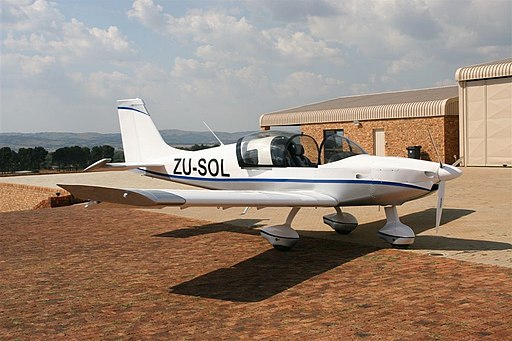
Sling Aircraft Sling 2
Urban Sling 2: South Africa’s Agile Two-Seater Revolution
The Sling 2 from The Airplane Factory blends sleek composite architecture with Rotax reliability to redefine what a light-sport aircraft can be. Whether you’re carving turnpoints on a cross-country jaunt or logging initial training hours, its combination of efficiency, handling precision and cost-effectiveness makes each flight a memorable experience.
Design & Development
Genesis & Evolution
Conceived in 2008 in Johannesburg, the Sling 2 emerged as a response to pilots craving more speed and load-carrying capability than the average ultralight. Early prototypes borrowed lessons from Sling 4’s spacious cabin, then slimmed the fuselage to two seats and refined the aerodynamics. Today’s Sling 2 reflects over a decade of field feedback—resulting in a model that’s both user-friendly for schools and performance-minded for sport flyers.
Airframe & Construction
- Composite Sandwich Panels: Foam-core skins wrapped in biaxial glass and carbon fiber yield a stiff yet lightweight shell.
- Bonded Joints: Adhesive bonding replaces most rivets, reducing drag and maintenance points.
- Removable Wings: Quick-detach fittings let a two-person crew rig or de-rig in under 30 minutes—ideal for hangar space savers or expedition logistics.
Aerodynamic Highlights
- Laminar-Flow Wing: A 13.2 m² semi-tapered planform delays boundary-layer transition, cutting drag at cruise.
- Slotted Flaps: Extendable to 40° for steeper approaches and ultrashort field performance.
- Winglets: Standard up-turned tips trim induced drag by roughly 4% in cruise, while sharpening roll response.
Powerplant & Propulsion
At the heart of the Sling 2 sits the ubiquitous Rotax 912ULS:
| Component | Specification |
|---|---|
| Engine | Rotax 912ULS |
| Type | 4-cylinder, 4-stroke, liquid-cooled |
| Power Output | 100 hp @ 5,800 rpm |
| Propeller Options | Fixed-pitch 2-blade or CS prop 3-blade |
| Fuel Type | Avgas 100LL or automotive unleaded |
| Typical Burn Rate | 4.5 US GPH (17 L/h) at 75% cruise |
This powerplant delivers a crisp climb of 1,000 fpm while sipping fuel at under five gallons per hour—letting you stretch each tank for nearly 700 nm of range.
Cockpit & Avionics
Ergonomics & Comfort
Step into a 1.18 m-wide cabin featuring sculpted seats that cradle pilots up to 1.95 m tall. Cushioned lumbar supports and an adjustable two-axis stick keep fatigue at bay. Dual 20 × 20 cm doors swing wide, easing ingress and egress—even when wearing a headset.
Instrumentation Suite
- Basic VFR: Round-dial backup with dual comm radios, standby altimeter and vertical speed indicator.
- Glass Panel Upgrade: Dynon SkyView HDX or Garmin G3X Touch with synthetic vision, traffic-aware TAS and autopilot integration.
- Audio & Comms: Dual-listen intercom, music input and optional Bluetooth for flight data streaming to your tablet.
Performance & Specifications
Dimensions & Weight
| Parameter | Metric | Imperial |
|---|---|---|
| Wingspan | 9.60 m | 31 ft 6 in |
| Length | 6.99 m | 22 ft 11 in |
| Height | 2.44 m | 8 ft |
| Wing Area | 13.2 m² | 142 ft² |
| Empty Weight | 340 kg | 750 lb |
| Max Takeoff Weight | 635 kg | 1,400 lb |
| Useful Load | 295 kg | 650 lb |
| Fuel Capacity | 100 L | 26 US gal |
Flight Envelope & Performance
| Parameter | Value |
|---|---|
| Maximum Speed (Vne) | 254 km/h (137 kt) |
| Cruise Speed (75% Power) | 222 km/h (120 kt) |
| Stall Speed (Flaps Down) | 74 km/h (40 kt) |
| Rate of Climb | 5.1 m/s (1,000 fpm) |
| Service Ceiling | 4,570 m (15,000 ft) |
| Range (no reserve) | 1,300 km (700 nm) |
| Takeoff Distance (ground) | 150 m |
| Landing Distance (over 15 m) | 250 m |
Operational Roles & Use Cases
Flight Training
The Sling 2’s benign stall behavior, responsive controls and docile spin-entry margins make it a flight-school favorite. Low operating costs—around €30/hour—keep budgets in check, while its modern avionics prepare students for complex airspace.
Cross-Country & Touring
With a 1,300 km range and cruise speeds north of 200 km/h, the Sling 2 excels on weekend escapes. Its large baggage locker behind the seats swallows gear for camping or aerial photography.
Specialized Missions
Operators tap the Sling 2 for pipeline patrol and environmental survey work. Its stable platform and superior visibility transform it into an ideal observation aircraft.
Maintenance & Operating Costs
Scheduled Inspections
- 50-hour: Oil change, filter swap, basic airframe check
- 100-hour/annual: Comprehensive structural and system inspection
- 600-hour: Engine gear-case inspection and valve servicing
Cost of Ownership
Fixed yearly outlays average €1,500 (insurance, hangar), plus variable expenses of €35–€40 per flying hour. Composite airframe repairs demand specialized skill, but the lack of corrosion checks offsets long-term upkeep.
Pilot’s Perspective: Handling & Feel
Climb into the Sling 2 and you immediately sense its planted feel. Roll inputs translate to immediate bank angles with minimal adverse yaw. In turbulence, the wing’s inertia soaks up bumps, while pitch and yaw controls remain firm yet harmonious. On approach, the slotted flaps let you dial in a slow, controlled descent without ballooning.
Variants & Upgrades
- Sling 2 – Basic: A pure LSA with fixed-pitch prop and VFR avionics.
- Sling 2 – IFR: Fully certified for instrument flight with autopilot and stormscope.
- Hybrid-Demo: Prototype electric motor assist under testing for noise and emission reduction.
Safety Features
- Ballistic Recovery System: Whole-airframe parachute option.
- Dual-Redundant Fuel Pumps: Continuous engine feed even if one pump fails.
- Energy-Absorbing Seats: Cushion crash forces and increase survival margins.
Market Position & Comparison
Facing off against the Flight Design CTLS and Tecnam P2002, the Sling 2 stands out with its bonded composite shell and superior range. While CTLS offers a more polished fit-and-finish, and Tecnam boasts metal durability, Sling 2’s modular wings and ease of kit-built assembly carve out a loyal following.
Conclusion
The Sling 2 is more than a light-sport airplane—it’s a flying community’s workhorse, an instructor’s trusty trainer and a sport pilot’s ticket to adventure. It strikes a rare balance between performance, economy and build-quality that keeps both first-timers and veterans grinning on every flight.
