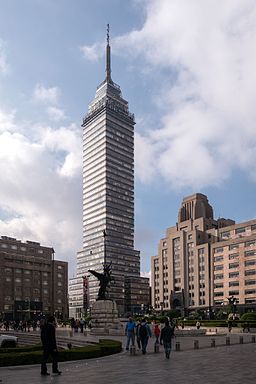
Torre Latinoamericana
The Torre Latinoamericana stands at the heart of Mexico City as a testament to mid-20th-century structural innovation. Rising above the historic downtown core, this skyscraper combines functional design with exceptional seismic resilience. Commissioned in the late 1940s and completed in 1956, it held the title of Latin America’s tallest building for decades. Beyond its skyline-defining silhouette, the tower’s technical achievements continue to inspire engineers working in challenging soils and seismic zones.
Historical Context
Planning and Architectural Vision
Early planning for the tower focused on establishing a modern hub for one of Mexico’s leading insurance companies. Architect Augusto H. Álvarez conceived a slim profile that would minimize ground footprint while maximizing panoramic views. Collaboration between civil engineers and architects prioritized both aesthetic elegance and structural safety in an earthquake-prone region. Innovative soil tests and dynamic simulations preceded the design phase, ensuring the tower could withstand intense ground motion.
Construction Timeline
Foundation works began in 1948, accelerating through systematic pile installation and concrete pours. Over eight years, the steel framework rose swiftly, floor by floor, until reaching its full height in 1956. Contractors coordinated simultaneous façade installation and interior fit-out to meet a tight schedule. At opening, the building’s 44 office levels and three sublevels welcomed tenants, marking a new era of vertical growth in Mexico City.
Technical Specifications
Dimensional Data
- Total height (antenna tip): 182 m
- Roof height: 166 m
- Above-ground floors: 44
- Basement levels: 3
- Total floor area: 27 727 m²
These dimensions made the tower one of the world’s tallest outside New York at the time of inauguration.
Foundation and Soil Mechanics
The site sits atop soft, water-saturated clay with uneven settlement tendencies. To anchor the tower securely, engineers drove 361 reinforced-concrete piles down to a dense sand layer approximately 33 m below grade. A thick mat foundation at 13.5 m depth ties the piles together and distributes loads uniformly. Early pore-pressure measurements guided excavation dewatering and prevented excessive soil creep during construction.
Structural System
A steel-frame skeleton forms the core of the tower’s load-bearing scheme. Steel columns and beams are joined by moment-resisting connections and braced frames to provide lateral stability. Concrete slabs, embedded via shear connectors into the steel beams, contribute to floor diaphragm action. This composite approach balances stiffness and flexibility, allowing the building to sway safely under wind and seismic forces.
Facade and Materials
The exterior curtain wall features glass panels set within anodized aluminum frames. Combined, these lightweight materials reduce overall dead load and enhance the tower’s modern appearance. Insulated glazing minimizes solar heat gain, while the aluminum finish reflects sunlight to limit surface temperature rise. Maintenance access is integrated into the façade design via concealed tracks and anchor points.
Seismic Design Features
Advanced seismic detailing underpins the tower’s reputation for safety. Key elements include:
- Flexible steel frame with ductile detailing
- Uniform mass distribution across floors
- Base-uplift prevention via deep piles tied to mat slab
- Moment-resisting connections designed for cyclic loading
Dynamic analysis predicted earthquake lateral forces, and full-scale tests validated the performance of critical connections.
Vertical Transportation
Originally, seven high-speed elevators served all office levels, operating at speeds up to 3 m/s. Today’s modernization programs have upgraded some lifts to travel as fast as 6 m/s, drastically reducing wait times. Elevator shafts are arranged around the central core, clustering services to optimize rentable floor plates and emergency egress routes.
Mechanical and Electrical Systems
Mechanical floors house floor-by-floor air-handling units linked to perimeter fan-coil systems for climate control. Emergency diesel generators and uninterruptible power supplies ensure continuous operation of critical services. Building automation manages lighting, HVAC, and water-recycling systems to improve energy efficiency and minimize operating costs.
Performance in Earthquakes
The tower withstood magnitude 7.9 and 8.1 earthquakes without structural damage, validating its seismic design. Observers noted minimal inter-story drift during these events, and post-quake inspections found no serious cracking or settlement issues. The resilience displayed in 1957 and 1985 solidified its status as a national symbol of engineering excellence.
Functional Layout and Usage
Office Spaces
Office floors occupy the tower’s midsection, offering column-free interiors through long-span steel beams. Flexible partition systems allow tenants to reconfigure layouts without structural alterations. Utilities are routed through raised floors and dropped ceilings to facilitate quick space planning.
Observation Deck and Public Amenities
The 44th-floor observation deck provides 360-degree views across Greater Mexico City. A dedicated museum on one level chronicles the tower’s construction and seismic feats. Ground-level retail spaces and a rooftop café complete the visitor experience.
Modernization and Sustainability Upgrades
Recent retrofits have focused on reducing energy consumption and improving occupant comfort. LED lighting, variable-speed chillers, and a rainwater harvesting system cut utility costs by over 25 percent. Plans for a smart-building management platform will further optimize resource use and extend the tower’s operational life well into the 21st century.
Symbolic and Cultural Significance
Beyond its engineering credentials, the Torre Latinoamericana serves as an emblem of postwar modernization in Mexico. Its silhouette appears in films, literature, and tourist itineraries, representing resilience and urban ambition. Each anniversary brings ceremonies that reaffirm its role in shaping Mexico City’s identity.
Conclusion
The Torre Latinoamericana remains a cornerstone of structural ingenuity and urban symbolism. Its fusion of deep foundations, composite frames, and seismic design pioneered high-rise construction in challenging soils. As it continues to evolve with new technologies, the tower stands not only as a historic landmark but also as a living laboratory for engineers and architects worldwide.
