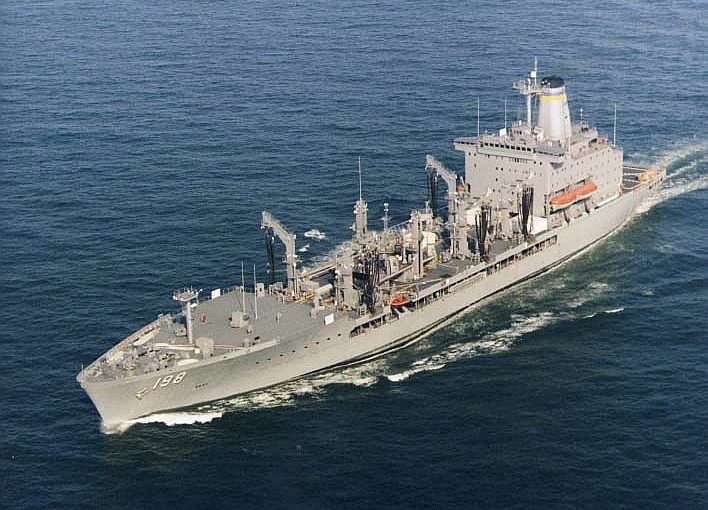
USNS Big Horn (T-AO-198): Technical Overview and Operational Significance
The USNS Big Horn (T-AO-198) is a Henry J. Kaiser-class fleet replenishment oiler operated by the United States Navy’s Military Sealift Command (MSC). Designed to supply fuel, lubricants, and limited dry cargo to naval vessels at sea, the ship plays an essential role in extending the operational reach of carrier strike groups, amphibious ready groups, and independent surface combatants. As part of a class that revolutionized underway replenishment logistics for the U.S. Navy, Big Horn represents the modern standard in fleet oilers—combining high-volume fuel capacity, efficient cargo handling systems, and robust at-sea transfer capabilities.
Commissioned in the early 1990s, USNS Big Horn is among the later units of the 18-ship Henry J. Kaiser class. Her design emphasizes endurance, safety, and operational efficiency, supporting sustained naval operations across the globe.
Development and Construction
The Henry J. Kaiser-class (T-AO 187) program was initiated in the 1980s to replace aging Cimarron-class oilers. The class introduced double-hull designs to comply with environmental safety regulations and to minimize the risk of fuel spills.
USNS Big Horn was built by Avondale Shipyards, New Orleans, Louisiana. She was laid down on January 9, 1989, launched on April 24, 1990, and delivered to the Navy on July 24, 1992. Assigned to the Military Sealift Command, she was designated T-AO-198 and placed under non-commissioned status with a primarily civilian crew.
General Characteristics
-
Class and Type: Henry J. Kaiser-class fleet replenishment oiler
-
Hull Number: T-AO-198
-
Builder: Avondale Shipyards, New Orleans, Louisiana
-
Operator: Military Sealift Command (MSC)
-
Displacement: 41,000 tons (full load)
-
Deadweight Tonnage: Approximately 26,500 tons
-
Length: 677 feet (206.3 meters)
-
Beam: 97.5 feet (29.7 meters)
-
Draft: 36 feet (11 meters)
-
Propulsion System: Diesel-electric drive
-
Engines: Two 10-cylinder Colt-Pielstick PC4.2 V diesel engines
-
Power Output: 16,700 shaft horsepower
-
Propulsion Configuration: Single shaft, controllable-pitch propeller
-
Speed: 20 knots (maximum)
-
Range: 6,000 nautical miles at 18 knots
-
Crew Complement: Approximately 89 civilian mariners and 11 Navy personnel
-
Endurance: 45 days of sustained operations at sea
Propulsion and Powerplant
USNS Big Horn’s propulsion system is centered on two medium-speed Colt-Pielstick diesel engines, providing efficient power generation for sustained endurance at moderate speeds. The engines drive a single controllable-pitch propeller through a reduction gear system, offering both reliability and fuel economy.
The ship’s electrical generation system includes multiple diesel generators to supply power for cargo pumps, control systems, communications, and hotel loads. The propulsion design provides a balance between fuel efficiency and the speed required to maintain formation with the fleet’s main combat units.
Replenishment and Cargo Systems
As a replenishment oiler, Big Horn’s primary mission is to provide underway replenishment (UNREP) of petroleum products and limited dry cargo. She is equipped with a sophisticated fuel and cargo handling system that allows for safe and simultaneous delivery operations to multiple vessels.
Key replenishment features include:
-
Five fuel transfer stations (two port, two starboard, one astern)
-
Fuel capacity:
-
Navy distillate fuel (F-76): approximately 180,000 barrels
-
JP-5 aviation fuel: approximately 500,000 gallons
-
-
Dry and refrigerated stores: 690 tons
-
Cargo pumps: multiple 3,000 gallons-per-minute pumps for rapid fuel transfer
-
Cargo control center: centralized monitoring and control of all fueling operations
-
Hose handling systems: STREAM (Standard Tensioned Replenishment Alongside Method) rigs for simultaneous transfer operations
Big Horn is capable of refueling two ships alongside simultaneously while also conducting a stern fueling operation. Typical transfer rates exceed 900,000 gallons per hour under optimal conditions.
Aviation Facilities
Aviation support is a key enhancement in later Kaiser-class ships. USNS Big Horn includes:
-
Aft flight deck designed for helicopter vertical replenishment (VERTREP) operations
-
Capability to operate one MH-60S Seahawk or similar cargo helicopter
-
Aviation fuel storage and refueling systems for embarked helicopters
-
Day and night flight operations capability with visual and instrument flight rules lighting systems
While the ship lacks a permanent hangar, it routinely conducts VERTREP missions to extend its resupply reach and speed up cargo delivery to ships unable to come alongside.
Navigation and Communication Systems
The bridge and control systems of USNS Big Horn are equipped with modern automated navigation and monitoring technologies, including:
-
Integrated Bridge System (IBS)
-
Automatic Radar Plotting Aid (ARPA) radar systems
-
Global Positioning System (GPS) receivers and electronic chart display systems
-
Gyrocompass and automatic steering integration
-
Secure military and satellite communications systems (SATCOM, UHF, VHF, HF)
-
Data networks compatible with fleet command-and-control systems
These technologies allow the ship to operate efficiently under varying conditions and maintain precise station-keeping during complex replenishment operations at sea.
Structural Design and Safety
The Henry J. Kaiser-class, including USNS Big Horn, was one of the Navy’s first oiler classes to adopt a double-hull configuration, significantly improving survivability and environmental safety. The double-hull design minimizes spill risk and provides greater structural integrity in case of collision or grounding.
Additional safety systems include:
-
Automatic fire suppression in cargo pump and engine rooms
-
Inert gas system for fuel tanks to prevent combustion
-
Ballast control system for maintaining stability during cargo operations
-
Redundant control systems for critical machinery
-
Modern sewage and waste treatment plants in compliance with MARPOL standards
Crew and Habitability
Big Horn’s crew is composed primarily of civilian mariners (CIVMARs) employed by the Military Sealift Command, with a small Navy detachment responsible for communications and replenishment coordination.
Crew facilities are designed for extended deployments and include:
-
Air-conditioned berthing and recreation areas
-
Fitness spaces, galley, and mess facilities
-
Modern communications and shipboard connectivity
-
Workshop and engineering spaces for maintenance and repairs
The high degree of automation and reliable engineering systems allow a smaller crew to operate the ship effectively.
Operational Role and Mission
USNS Big Horn’s primary mission is to provide fuel and limited supplies to U.S. and allied naval forces, enabling them to operate continuously at sea without returning to port. This capability is critical for maintaining global naval presence and power projection.
The ship typically deploys as part of Carrier Strike Groups (CSGs) or Amphibious Ready Groups (ARGs), ensuring that aviation and surface combatants remain fueled and supplied during extended operations.
Big Horn also supports:
-
Joint and multinational exercises
-
Humanitarian missions requiring fuel and logistics delivery
-
Contingency operations in remote or contested theaters
Her ability to refuel ships in heavy seas and austere conditions makes her an indispensable asset for sustained maritime operations.
Environmental and Efficiency Measures
Modernized systems aboard Big Horn support improved fuel efficiency and reduced environmental impact. These include:
-
Energy-efficient diesel engines with optimized fuel injection
-
Advanced ballast water management and treatment systems
-
Waste heat recovery for auxiliary heating
-
MARPOL-compliant waste and oil discharge prevention systems
The ship’s environmental safety systems exceed civilian maritime standards, ensuring compliance with both U.S. and international maritime regulations.
Operational History and Service Record
Since entering service in 1992, USNS Big Horn has been deployed extensively across the Atlantic Ocean, Mediterranean Sea, and Indian Ocean in support of U.S. and NATO operations. She has participated in Operation Enduring Freedom, Operation Iraqi Freedom, and numerous fleet exercises, serving alongside major carrier strike groups such as USS Harry S. Truman (CVN-75) and USS Dwight D. Eisenhower (CVN-69).
Her record demonstrates consistent reliability in fuel delivery, flexibility in logistics support, and high mission readiness. Big Horn continues to operate from MSC’s Atlantic area of responsibility, sustaining forward-deployed forces and global naval operations.
Conclusion
The USNS Big Horn (T-AO-198) exemplifies the vital but often understated backbone of the United States Navy’s operational logistics. As a Henry J. Kaiser-class replenishment oiler, she provides the fuel and supplies that keep the fleet on station and combat-ready across the world’s oceans.
