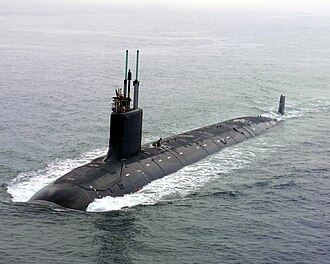
USS Arizona (SSN-803) – The Future Virginia-Class Attack Submarine Honoring a Legendary Name
Among all names carried by warships of the United States Navy, few possess the emotional weight, historical significance, and national symbolism of Arizona. For generations, the name has been inseparably connected with the battleship USS Arizona (BB-39), whose destruction during the Japanese attack on Pearl Harbor on 7 December 1941 transformed American history and marked the nation’s entry into the Second World War. More than eighty years later, the Navy chose to revive this legendary name for one of its most advanced nuclear-powered submarines: USS Arizona (SSN-803), a future Virginia-class Block V fast attack submarine.
Unlike its famous predecessor, which represented the pinnacle of battleship technology during the early twentieth century, USS Arizona (SSN-803) belongs to an entirely different era of naval warfare. Modern sea power is increasingly defined not by massive armored ships carrying giant guns, but by stealth, information superiority, underwater endurance, precision strike capability, and advanced sensor technology. Nuclear-powered attack submarines have become some of the most valuable assets in any modern navy because they combine exceptional survivability with extraordinary operational flexibility. They can gather intelligence, track hostile submarines, escort carrier strike groups, deploy special operations forces, conduct precision missile strikes, and remain hidden beneath the ocean’s surface for months at a time.
USS Arizona represents the continuing evolution of the highly successful Virginia-class submarine program, one of the most ambitious naval construction efforts undertaken by the United States since the end of the Cold War. As a Block V submarine, SSN-803 incorporates important improvements over earlier members of the class, most notably increased strike capability through the Virginia Payload Module, expanded mission flexibility, improved acoustic performance, enhanced electronic systems, and greater adaptability for future technological upgrades. These improvements ensure that the submarine will remain relevant throughout decades of expected service in an increasingly complex strategic environment.
Although USS Arizona has not yet entered active service, it already occupies an important place within the future structure of the United States Navy. Designed to replace aging Los Angeles-class submarines while complementing existing Seawolf and Virginia-class boats, SSN-803 will contribute to deterrence, intelligence collection, sea control, and global maritime security during a period characterized by renewed competition among major naval powers. This article explores the complete story of USS Arizona (SSN-803), examining the history behind its name, the evolution of the Virginia class, the engineering innovations that define Block V submarines, the vessel’s expected operational role, and the technological advances that will shape its future service.
The Legacy of the Name “Arizona”
Few ship names evoke as much reverence within the United States Navy as Arizona. The original USS Arizona (BB-39), commissioned in 1916, served as one of the most powerful battleships of its generation before being destroyed during the attack on Pearl Harbor. The explosion of its forward ammunition magazine claimed the lives of 1,177 sailors and Marines, making it one of the greatest single losses of American military personnel aboard a warship in history. Today, the wreck remains beneath the waters of Pearl Harbor as a national memorial and a lasting symbol of sacrifice, courage, and national unity.
Because of this profound historical association, the Navy intentionally refrained from reusing the name for many decades. Assigning it to a modern nuclear-powered submarine reflects both confidence in the future of the submarine force and a desire to connect past sacrifice with present and future service. Rather than replacing the memory of BB-39, USS Arizona (SSN-803) extends that legacy into a new technological era, ensuring that future generations of sailors continue to carry forward the traditions established by those who served aboard the original battleship.
The Evolution of American Attack Submarines
From Diesel Boats to Nuclear Power
The development of USS Arizona can only be understood within the broader evolution of submarine technology. Early submarines relied upon diesel engines operating on the surface and electric batteries while submerged, greatly limiting underwater endurance. The introduction of nuclear propulsion during the 1950s fundamentally transformed submarine operations by allowing vessels to remain submerged for months without surfacing for propulsion-related reasons. This technological breakthrough created an entirely new category of warship capable of operating globally with unprecedented stealth and endurance.
The Virginia-Class Program
Following the Cold War, the United States Navy sought a successor to the Los Angeles-class attack submarines that would combine advanced stealth, improved affordability, modular construction techniques, and exceptional flexibility. The result was the Virginia class, designed not only for traditional anti-submarine warfare but also for intelligence collection, special operations support, precision strike missions, surveillance, mine warfare, and operations in both deep-ocean and coastal environments. Continuous improvements through successive construction blocks have kept the class at the forefront of submarine technology.
Construction of USS Arizona (SSN-803)
USS Arizona is being built as part of the Virginia-class Block V production program through a long-standing partnership between General Dynamics Electric Boat and Huntington Ingalls Industries’ Newport News Shipbuilding division. This collaborative approach allows different sections of the submarine to be constructed simultaneously before final assembly, significantly improving efficiency while maintaining rigorous quality standards required for nuclear-powered warships.
The submarine’s construction reflects decades of experience gained from earlier Virginia-class vessels. Digital design methods, precision manufacturing technologies, advanced welding techniques, and modular construction practices reduce production time while improving consistency across the class. Thousands of engineers, naval architects, welders, electricians, pipefitters, software specialists, and quality assurance personnel contribute to the construction process, illustrating the extraordinary complexity of modern submarine engineering.
The Virginia Block V Design
The Virginia Payload Module
One of the defining improvements incorporated into USS Arizona is the Virginia Payload Module (VPM). This additional hull section significantly increases the submarine’s capacity for cruise missiles and other payloads. By incorporating large-diameter payload tubes, the Block V design substantially expands strike capability while helping compensate for the retirement of the Ohio-class guided missile submarines that previously carried large numbers of Tomahawk cruise missiles.
Enhanced Mission Flexibility
The Virginia Payload Module not only increases missile capacity but also provides greater adaptability for future technologies. As naval warfare evolves over coming decades, these payload spaces may accommodate unmanned underwater vehicles, advanced surveillance systems, future missile designs, or other emerging technologies that cannot yet be fully anticipated. This flexibility reflects the Navy’s emphasis on designing ships capable of evolving throughout lengthy service lives.
Nuclear Propulsion
USS Arizona will be powered by a modern nuclear reactor designed to operate for the entire service life of the submarine without requiring refueling. This life-of-the-ship reactor eliminates one of the most time-consuming maintenance requirements associated with earlier generations of nuclear submarines, allowing greater operational availability while reducing lifecycle costs.
The reactor generates heat used to produce steam that drives turbines connected to electrical generation equipment and propulsion machinery. Because the submarine does not depend upon atmospheric oxygen for propulsion, it can remain submerged for months, limited primarily by food supplies and crew endurance rather than fuel. Nuclear propulsion therefore provides unmatched strategic mobility, enabling rapid deployment across the world’s oceans without frequent logistical support.
Stealth Technology
Acoustic Quieting
Stealth remains the defining characteristic of every attack submarine, and USS Arizona incorporates extensive measures to reduce acoustic signatures. Advanced machinery isolation systems minimize vibration, specially designed propulsors reduce underwater noise, hull coatings absorb sonar energy, and careful internal arrangement limits the transmission of mechanical sound into surrounding water. These features make detection by hostile submarines and surface ships considerably more difficult.
Hydrodynamic Efficiency
The streamlined hull shape minimizes drag while reducing flow noise generated during underwater movement. Every external component is carefully engineered to maintain hydrodynamic efficiency, ensuring both quiet operation and high underwater performance across a wide range of speeds.
Sensors and Combat Systems
Modern submarines depend upon information superiority as much as physical stealth. USS Arizona will employ an integrated suite of sonar arrays, photonic masts, electronic surveillance equipment, navigation sensors, and advanced combat management software capable of processing enormous volumes of tactical information. Unlike traditional optical periscopes, photonic masts use high-resolution digital cameras and electronic sensors to provide commanders with detailed situational awareness while allowing greater flexibility in submarine interior design.
Powerful onboard computers combine information from multiple sensors to identify contacts, evaluate threats, support navigation, and coordinate weapons employment. Continuous software improvements ensure that combat systems remain adaptable to evolving operational requirements throughout the submarine’s expected service life.
Weapons Capability
Torpedoes
USS Arizona will carry heavyweight torpedoes designed to engage hostile submarines and surface combatants. These sophisticated weapons employ advanced guidance systems, high-performance propulsion, and powerful warheads capable of defeating even heavily defended naval targets.
Tomahawk Cruise Missiles
The submarine’s vertical launch capability enables the deployment of Tomahawk land-attack cruise missiles against targets located hundreds of miles inland. Precision guidance allows these missiles to strike with exceptional accuracy, providing naval commanders with a valuable long-range conventional strike option while minimizing exposure to enemy defenses.
Future Payloads
The flexible design of Block V submarines allows integration of future weapons as technology evolves. This adaptability ensures that USS Arizona can remain operationally relevant even as new missile systems, unmanned vehicles, and underwater technologies emerge during coming decades.
Special Operations Support
Beyond traditional combat missions, USS Arizona will support special operations forces by transporting, deploying, and recovering highly trained personnel during classified missions. Dry deck shelters and other specialized equipment enable underwater insertion of combat divers and special operations teams without exposing the submarine’s position. Such capabilities greatly expand operational flexibility and make Virginia-class submarines valuable assets for missions requiring exceptional secrecy.
Strategic Role in Modern Naval Warfare
The strategic environment confronting the United States Navy has changed considerably during the twenty-first century. Renewed competition among major naval powers, rapid technological development, expansion of anti-access and area-denial capabilities, and increasing importance of the Indo-Pacific region all place renewed emphasis upon highly survivable underwater forces. USS Arizona will contribute to maintaining undersea superiority by conducting intelligence collection, anti-submarine warfare, surveillance, deterrence patrols, and precision strike operations across diverse operational environments.
Attack submarines possess unique advantages because they can operate covertly within contested regions where surface ships may face greater risks. Their ability to gather intelligence, monitor naval activity, escort carrier strike groups, and maintain persistent presence beneath the ocean surface provides decision-makers with options unavailable through other military platforms.
Life Aboard USS Arizona
Although modern submarines incorporate sophisticated automation, life aboard remains physically and mentally demanding. Crew members operate within confined spaces for extended deployments while maintaining continuous readiness twenty-four hours a day. Every sailor receives extensive technical training covering nuclear propulsion, damage control, navigation, sonar operations, communications, weapons systems, and emergency procedures. Because crew size is relatively small compared with major surface combatants, each individual assumes significant responsibility for maintaining operational effectiveness.
Despite limited living space, Virginia-class submarines include improvements intended to enhance habitability. More efficient internal arrangements, modern galley facilities, improved environmental controls, digital workstations, and upgraded accommodation spaces contribute to crew effectiveness during prolonged underwater operations.
The Future of USS Arizona
As construction progresses toward eventual commissioning, USS Arizona represents not only another addition to the Virginia class but also an investment in the future of American maritime strategy. The submarine is expected to serve well into the second half of the twenty-first century, adapting to technological advances and evolving strategic requirements throughout decades of operational service. Continuous software upgrades, modular payload systems, and flexible mission capabilities ensure that the submarine can evolve alongside changing military needs.
Equally important is the symbolic significance of reviving the name Arizona. Every future deployment, exercise, and mission undertaken by SSN-803 will remind sailors and citizens alike of the sacrifices made aboard BB-39 while demonstrating how naval technology has evolved from heavily armored battleships to stealthy nuclear-powered submarines. The name therefore bridges two vastly different eras of naval history, linking remembrance with innovation.
Technical Specifications
| Specification | USS Arizona (SSN-803) |
|---|---|
| Class | Virginia-class Block V nuclear-powered fast attack submarine |
| Hull Number | SSN-803 |
| Country | United States |
| Builder | General Dynamics Electric Boat and Huntington Ingalls Newport News Shipbuilding |
| Status | Under construction |
| Type | Nuclear-powered attack submarine (SSN) |
| Displacement | Approximately 10,200 tons submerged (Block V) |
| Length | Approximately 460 ft (140 m) |
| Beam | 34 ft (10.4 m) |
| Draft | Approximately 32 ft (9.8 m) |
| Propulsion | One nuclear reactor driving steam turbines and pump-jet propulsor |
| Reactor | Life-of-the-ship nuclear reactor (no refueling required) |
| Maximum Speed | Over 25 knots submerged (official figures classified) |
| Endurance | Limited primarily by food supplies rather than fuel |
| Crew | Approximately 135 officers and enlisted personnel |
| Main Weapons | Mk 48 heavyweight torpedoes and Tomahawk land-attack cruise missiles |
| Payload Module | Virginia Payload Module (VPM) |
| Sensors | Advanced sonar arrays, photonic masts, electronic surveillance systems, integrated combat management system |
| Primary Missions | Anti-submarine warfare, anti-surface warfare, intelligence collection, surveillance, reconnaissance, precision strike, special operations support |
_returns_to_the_General_Dynamics_Electric_Boat_shipyard.jpg)