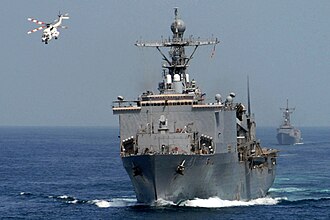
USS Whidbey Island (LSD-41) – The Pioneering Dock Landing Ship That Revolutionized Modern Amphibious Warfare
The USS Whidbey Island (LSD-41) occupies a distinguished place in the history of the United States Navy as the lead ship of the Whidbey Island-class dock landing ships. Designed during the Cold War but serving well into the twenty-first century, the vessel represented a significant leap forward in amphibious warfare capabilities. Unlike guided missile cruisers or destroyers whose primary purpose revolves around combat at sea, dock landing ships fulfill a fundamentally different mission. They serve as floating bases capable of transporting Marines, landing craft, armored vehicles, helicopters, equipment, and supplies directly to areas where conventional port facilities may not exist or may have been destroyed. This capability has made ships like USS Whidbey Island indispensable during combat operations, humanitarian assistance, disaster relief, peacekeeping missions, and multinational exercises.
Commissioned in 1985, USS Whidbey Island entered service during an era when amphibious operations remained a critical element of American military planning. While large-scale amphibious assaults similar to those seen during the Second World War had become less likely, the need to rapidly project military power ashore continued to shape naval doctrine. Regional conflicts, expeditionary warfare, and humanitarian emergencies increasingly required ships capable of delivering troops and equipment to remote coastlines without relying upon established ports. USS Whidbey Island answered that need through an innovative design centered around a large floodable well deck capable of launching modern landing craft directly into the sea.
For nearly four decades, the ship participated in deployments across the Atlantic Ocean, Mediterranean Sea, Caribbean Sea, Persian Gulf, and numerous other strategic regions. Along the way, it supported Marine Expeditionary Units, participated in multinational military exercises, assisted disaster relief efforts, enforced international security operations, and demonstrated the flexibility that has become a defining characteristic of modern amphibious warfare. Throughout its service, USS Whidbey Island proved that naval power is measured not only by missiles and guns but also by the ability to transport people, vehicles, supplies, and hope wherever they are needed.
This comprehensive article explores the complete history of USS Whidbey Island, including its origins, construction, technological innovations, amphibious capabilities, operational history, humanitarian contributions, modernization efforts, and lasting legacy. Together these elements illustrate why the ship became one of the most influential amphibious vessels of its generation and a cornerstone of the United States Navy’s expeditionary forces.
The Strategic Importance of Amphibious Warfare
Throughout naval history, the ability to project military power from the sea onto land has remained one of the defining strengths of maritime nations. Amphibious warfare combines naval mobility with ground combat capability, allowing military forces to respond rapidly to crises without depending upon foreign ports, airports, or permanent military bases. During the twentieth century, operations such as Normandy, Iwo Jima, Inchon, and the Falklands demonstrated the enormous strategic value of ships capable of transporting troops and heavy equipment directly to hostile or undeveloped shorelines.
Following the Second World War, technological advances dramatically altered amphibious doctrine. Helicopters expanded operational flexibility, air-cushion landing craft increased speed, and improved communications allowed closer coordination between naval and ground forces. These developments required new classes of amphibious ships capable of supporting increasingly sophisticated expeditionary operations. The Whidbey Island class emerged from these changing requirements, combining modern engineering with lessons learned from decades of amphibious warfare experience.
The Origins of the Whidbey Island Class
Replacing Earlier Dock Landing Ships
During the 1970s, the United States Navy recognized that its existing dock landing ships were approaching the limits of their operational usefulness. Although earlier vessels had performed admirably, new landing craft—particularly the Landing Craft Air Cushion (LCAC)—required larger well decks and improved support facilities. Designers therefore developed a new generation of dock landing ships capable of carrying heavier vehicles, transporting larger numbers of Marines, and launching advanced amphibious craft under a wide variety of operational conditions.
The Lead Ship of a New Generation
USS Whidbey Island became the first vessel of this new class, giving its name to all subsequent ships built to the design. As the lead ship, it incorporated numerous innovations intended to improve cargo handling, survivability, command capabilities, and amphibious efficiency. The success of the design would eventually influence later amphibious warship development and confirm the continuing importance of expeditionary naval forces.
Construction and Commissioning
USS Whidbey Island was constructed by Lockheed Shipbuilding and Construction Company in Seattle, Washington. Construction officially began when the keel was laid on 4 August 1981. Over the following years, thousands of skilled shipbuilders assembled the vessel’s massive steel hull, propulsion machinery, electrical systems, cargo spaces, well deck, command facilities, and living quarters. Because amphibious ships must function as both transportation vessels and operational headquarters, construction required close coordination between engineers responsible for mechanical systems, communications equipment, and military support infrastructure.
The ship was launched on 10 June 1983 before entering an extensive fitting-out period during which advanced electronics, navigation systems, defensive weapons, and cargo-handling equipment were installed. Following rigorous sea trials and inspections, USS Whidbey Island was officially commissioned on 9 February 1985, becoming the newest addition to the Navy’s growing amphibious fleet and the lead ship of an entirely new class of dock landing ships.
Design Philosophy
A Floating Expeditionary Base
Unlike destroyers or cruisers designed primarily for combat at sea, USS Whidbey Island was conceived as a mobile logistics and assault platform capable of delivering combat power ashore. Every aspect of the design reflects this mission. Spacious vehicle decks accommodate armored vehicles, trucks, engineering equipment, and supplies, while troop berthing areas provide accommodations for hundreds of embarked Marines. Extensive cargo handling systems enable rapid loading and unloading, minimizing preparation time before amphibious operations.
The Floodable Well Deck
The defining feature of USS Whidbey Island is its enormous floodable well deck. By partially flooding the stern section of the ship, landing craft can float directly into or out of the vessel while at sea. Once loaded with vehicles and personnel, these craft proceed independently toward the shoreline. This ingenious design allows amphibious operations to occur far from established ports and significantly increases operational flexibility during both military and humanitarian missions.
Propulsion and Performance
USS Whidbey Island is powered by four Colt-Pielstick diesel engines producing approximately 33,000 shaft horsepower. These engines drive two shafts, providing reliable propulsion suitable for extended deployments around the globe. Although amphibious ships are not intended to match the speed of destroyers or cruisers, the propulsion system offers an effective balance between endurance, fuel efficiency, cargo capacity, and operational reliability. The vessel can achieve speeds of approximately 20 knots while maintaining the range necessary for long-distance expeditionary operations.
Amphibious Capabilities
Landing Craft Air Cushion Operations
One of the principal reasons for developing the Whidbey Island class was the introduction of the Landing Craft Air Cushion. These high-speed hovercraft revolutionized amphibious warfare by allowing heavy vehicles to travel over beaches, mudflats, marshes, and other terrain inaccessible to conventional landing craft. USS Whidbey Island became the first Navy ship specifically designed to carry multiple LCACs within its well deck, dramatically improving the speed and flexibility of amphibious assaults.
Traditional Landing Craft
In addition to LCACs, the ship could also support conventional landing craft depending upon operational requirements. This flexibility enabled commanders to tailor amphibious operations according to mission objectives, environmental conditions, and available equipment.
Marine Expeditionary Unit Support
USS Whidbey Island regularly embarked elements of Marine Expeditionary Units, transporting infantry, combat engineers, reconnaissance teams, logistics specialists, armored vehicles, and support equipment. The ship effectively served as a mobile staging area from which Marines could conduct combat operations, humanitarian assistance, evacuations, or disaster relief efforts.
Command and Communications
Modern amphibious operations require extensive coordination among naval forces, aviation assets, ground units, and allied militaries. USS Whidbey Island therefore includes sophisticated communications systems capable of supporting secure voice communications, satellite links, tactical data exchange, and operational planning. During many deployments, the ship served not only as a transport vessel but also as a command platform coordinating complex expeditionary missions involving multiple ships and hundreds of personnel.
Defensive Armament
Although dock landing ships are not intended to function as frontline surface combatants, USS Whidbey Island possesses defensive weapons designed to protect against aircraft, missiles, and small surface threats. Throughout its service, the ship carried Phalanx Close-In Weapon Systems, heavy machine guns, and later additional remotely operated defensive weapons. Electronic warfare equipment, radar warning receivers, and decoy launchers further enhanced survivability by helping counter modern anti-ship missile threats.
Operational Deployments
Cold War Service
During the final years of the Cold War, USS Whidbey Island participated in numerous exercises demonstrating American commitment to NATO allies and amphibious readiness. These operations refined expeditionary tactics while maintaining preparedness for potential global contingencies.
Persian Gulf and Middle East
Following the Cold War, USS Whidbey Island frequently deployed to the Persian Gulf and surrounding waters. There it supported maritime security operations, transported Marine forces, participated in coalition exercises, and contributed to regional stability. Amphibious readiness groups containing USS Whidbey Island provided commanders with flexible response options ranging from humanitarian assistance to military intervention.
Mediterranean Operations
The Mediterranean became another major operating area where the ship regularly participated in multinational naval exercises, strengthened relationships with allied nations, and supported crisis response operations throughout Europe, North Africa, and the Middle East.
Humanitarian Assistance and Disaster Relief
One of the greatest strengths of USS Whidbey Island lay in its remarkable versatility during humanitarian crises. The same well deck, cargo spaces, cranes, and troop accommodations designed for amphibious assaults proved equally valuable when delivering emergency food, medical supplies, engineering equipment, and disaster relief personnel. Whether responding to hurricanes, earthquakes, or other natural disasters, the ship demonstrated that amphibious warships possess capabilities extending far beyond combat.
Medical personnel aboard the vessel frequently treated civilians affected by disasters, while embarked Marines assisted in debris removal, infrastructure repair, and distribution of humanitarian aid. The ability to operate independently offshore allowed USS Whidbey Island to deliver assistance even when ports, airports, and road networks had suffered severe damage.
Training and International Exercises
Throughout its career, USS Whidbey Island participated in countless multinational exercises involving NATO allies and partner nations. These exercises strengthened interoperability, improved amphibious doctrine, and allowed participating forces to practice complex expeditionary operations under realistic conditions. Joint training included beach landings, helicopter assaults, logistics operations, command-and-control exercises, and humanitarian response scenarios.
Such multinational cooperation has become increasingly important in the modern security environment, where coalition operations frequently involve naval forces from numerous countries working together toward shared objectives.
Life on Board
Daily life aboard USS Whidbey Island differed significantly from that aboard many surface combatants because the ship routinely carried both Navy sailors and embarked Marines. Depending upon the mission, the vessel accommodated approximately 400 sailors along with more than 500 Marines and their equipment. This created a dynamic environment in which transportation, logistics, engineering, medical support, aviation coordination, communications, and operational planning all occurred simultaneously.
Crew members maintained demanding schedules involving equipment maintenance, cargo handling, navigation, engineering operations, emergency drills, and training exercises. Despite long deployments and challenging conditions, strong teamwork and professionalism enabled the ship to fulfill its diverse responsibilities throughout decades of active service.
Modernization and Service Life Extension
Over nearly four decades of service, USS Whidbey Island underwent numerous modernization programs designed to maintain operational effectiveness. Upgrades included improvements to communications systems, navigation equipment, radar technology, defensive weapons, electronic warfare systems, damage control capabilities, and habitability. These enhancements allowed the ship to remain compatible with evolving expeditionary doctrine while extending its useful service life far beyond original expectations.
Maintenance periods also addressed structural preservation, propulsion reliability, cargo handling equipment, and support facilities for increasingly advanced landing craft. Continuous modernization ensured that USS Whidbey Island remained a valuable component of the Navy’s amphibious force throughout changing strategic circumstances.
Decommissioning and Lasting Legacy
After nearly forty years of dedicated service, USS Whidbey Island was decommissioned in 2024, marking the conclusion of an extraordinary operational career. During its lifetime, the ship had participated in military deployments, humanitarian missions, multinational exercises, and countless training operations while serving as the lead vessel of a class that fundamentally influenced modern amphibious warfare.
Its legacy extends well beyond individual missions. USS Whidbey Island demonstrated the enduring value of flexible expeditionary forces capable of responding rapidly to crises anywhere in the world. The ship’s innovative well deck design, compatibility with Landing Craft Air Cushion vehicles, and exceptional cargo-handling capabilities established standards that influenced later amphibious ship development. Equally important, generations of sailors and Marines who served aboard the vessel carried valuable operational experience throughout the fleet, ensuring that the lessons learned aboard USS Whidbey Island would continue shaping naval doctrine for years to come.
Technical Specifications
| Specification | USS Whidbey Island (LSD-41) |
|---|---|
| Class | Whidbey Island-class dock landing ship |
| Builder | Lockheed Shipbuilding and Construction Company, Seattle, Washington |
| Country | United States |
| Keel Laid | 4 August 1981 |
| Launched | 10 June 1983 |
| Commissioned | 9 February 1985 |
| Decommissioned | 2024 |
| Displacement | Approximately 16,100 tons (full load) |
| Length | 610 ft (186 m) |
| Beam | 84 ft (26 m) |
| Draft | Approximately 20 ft (6.1 m) |
| Propulsion | 4 × Colt-Pielstick diesel engines, 2 shafts |
| Total Power | Approximately 33,000 shaft horsepower |
| Maximum Speed | Approximately 20 knots (37 km/h) |
| Range | Approximately 8,000 nautical miles at economical speed |
| Crew | Approximately 400 officers and sailors |
| Embarked Marines | Over 500 Marines (mission dependent) |
| Primary Amphibious Craft | 4 × Landing Craft Air Cushion (LCAC) or conventional landing craft |
| Aircraft Facilities | Flight deck supporting helicopter operations (no permanent hangar) |
| Defensive Armament | Phalanx CIWS, heavy machine guns, remote weapon systems |
| Primary Missions | Amphibious assault, expeditionary logistics, Marine transport, humanitarian assistance, disaster relief |
| Status | Decommissioned |
