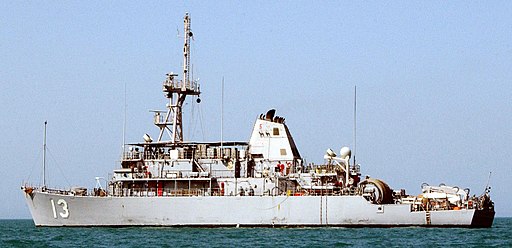
USS Dextrous (MCM-13)
USS Dextrous (MCM-13): A Vital Force in Maritime Security
The USS Dextrous (MCM-13) is an Avenger-class mine countermeasures ship of the United States Navy, designed to ensure safe passage for naval and commercial vessels through mine-infested waters. As part of a fleet of specialized ships, the USS Dextrous plays a pivotal role in safeguarding vital maritime routes, clearing mines that pose a significant threat to navigation, and supporting the Navy’s overall mine warfare strategy. With a mission that emphasizes precision, risk mitigation, and operational flexibility, the USS Dextrous has earned its place as a critical asset in the U.S. Navy’s mine countermeasures (MCM) fleet.
This article takes an in-depth look at the ship’s design, capabilities, operational history, and the essential role it plays in ensuring maritime security in some of the world’s most dangerous waters.
Design and Construction
The USS Dextrous (MCM-13) is part of the Avenger-class, a series of mine countermeasure ships designed for a specialized mission: to clear underwater mines without causing undue risk to naval or commercial ships. These vessels are particularly valuable because they are engineered to minimize their magnetic signature, making them harder to detect by enemy mines that rely on magnetic fields to detonate.
Ship Specifications:
- Class and Type: Avenger-class mine countermeasures ship.
- Displacement: 1,312 tons (fully loaded).
- Length: 224 feet.
- Beam: 39 feet.
- Draft: 12 feet.
- Propulsion: Four Isotta Fraschini ID-36 diesel engines, delivering a top speed of around 14 knots.
- Crew: Approximately 80 personnel, including officers and enlisted sailors.
Construction:
The keel for the USS Dextrous was laid down on July 15, 1988, at the Peterson Builders, Inc. shipyard in Sturgeon Bay, Wisconsin. The ship was launched on December 9, 1989, and commissioned on April 6, 1991. The Avenger-class ships, including the USS Dextrous, are made with a wooden-hull design, overlaid with fiberglass, which reduces their magnetic signature—crucial for the performance of mine countermeasures.
The Avenger-class ships were designed for shallow waters and are capable of operating in confined spaces such as harbors and narrow straits, where many of the world’s mines are likely to be deployed.
Mission and Role
The primary role of the USS Dextrous is to perform mine countermeasures, ensuring the safety of both military and civilian vessels by detecting, neutralizing, and clearing underwater mines. Mines remain one of the most dangerous and effective asymmetric weapons available to adversaries, and the USS Dextrous’s mission is crucial to maintaining freedom of navigation in critical waterways around the world.
Key Missions of the USS Dextrous:
- Mine Detection: Using sonar systems and other advanced technologies, the USS Dextrous is equipped to detect a wide variety of underwater mines. These mines are designed to be invisible to the naked eye and often rely on magnetic, acoustic, or pressure-based triggers. The USS Dextrous can detect mines through its specialized sonar systems and methods.
- Mine Neutralization: Once mines are detected, the USS Dextrous uses a variety of techniques to neutralize the threat. This includes deploying remotely operated vehicles (ROVs), using mechanical sweepers to physically detonate or disarm the mines, and employing specialized equipment to sever the lines of anchored mines.
- Safe Passage for Naval Forces: The USS Dextrous clears maritime paths for larger naval vessels, particularly during amphibious landings or high-stakes military operations. Ensuring that mines do not obstruct the movement of critical assets like aircraft carriers, landing ships, and supply vessels is one of its most vital roles.
- Supporting Commercial Traffic: The USS Dextrous also works to ensure that vital shipping lanes are safe for civilian trade, reducing the risk to global commerce that may be threatened by mines.
Capabilities and Technology
The USS Dextrous is equipped with state-of-the-art technology to perform its mine countermeasures mission with high precision. The combination of advanced sonar systems, mine neutralization technologies, and its low-profile design makes it a highly capable vessel for mine warfare operations.
Mine Countermeasures Systems:
- Sonar Systems:
- The USS Dextrous is equipped with high-frequency sonar capable of detecting mines on the ocean floor or in the water column. These systems can identify a variety of threats, including bottom mines, moored mines, and drifting mines.
- The ship uses an AN/SQQ-32 sonar system, which is specifically designed for mine detection, providing the crew with real-time data to assess threats accurately.
- Remotely Operated Vehicles (ROVs):
- The ship carries mine neutralization vehicles (MNVs), which are remotely controlled submersible vehicles. These ROVs are designed to approach mines safely, inspect them, and neutralize the threat using explosive charges or other means.
- The use of ROVs helps mitigate the risk to the crew and allows mines to be dealt with at a safe distance.
- Mechanical Sweep Systems:
- The ship deploys mechanical sweep systems to physically sever the moorings of mines or move them to the surface. This allows mines to be rendered ineffective or detonated safely, reducing the risk to nearby vessels.
- The mechanical sweeps are effective in neutralizing bottom mines that are anchored to the seabed.
- Magnetic and Acoustic Sweep:
- The USS Dextrous employs a variety of sweeps, including magnetic and acoustic systems designed to simulate the characteristics of a ship. These sweeps activate mines that are triggered by the presence of ships, allowing the mines to be detonated in controlled environments.
Operational History
Since its commissioning, the USS Dextrous has been actively involved in numerous mine-clearing operations worldwide, supporting both U.S. Navy missions and multinational efforts to protect maritime trade routes and ensure regional security.
Middle East Deployments:
The USS Dextrous has been a significant presence in the Persian Gulf, operating in an area known for frequent mine threats. Its role in clearing mines has been crucial during the Iraq War and subsequent operations in the Gulf region, where both military and commercial vessels face the risk of mine attacks.
The USS Dextrous also participates in Freedom of Navigation Operations (FONOPS), ensuring that strategic chokepoints such as the Strait of Hormuz and the Persian Gulf remain free of hostile interference, enabling the safe passage of global trade.
Multinational Exercises:
The USS Dextrous is a frequent participant in multinational exercises like IMCMEX (International Mine Countermeasures Exercise), held in the Persian Gulf. These exercises involve navies from multiple nations, testing and improving joint tactics and strategies for mine detection and neutralization. The USS Dextrous, as part of the U.S. Navy’s fleet, plays a key role in these operations, contributing to international maritime security.
Humanitarian and Disaster Relief Operations:
While primarily focused on military mine warfare, the USS Dextrous has also contributed to humanitarian operations. In some instances, mine-clearing operations in the aftermath of natural disasters or conflicts have been necessary to ensure the safe movement of relief supplies and aid. The ability of the USS Dextrous to quickly deploy and neutralize underwater mines has been a critical factor in facilitating these efforts.
Strategic Importance
The role of the USS Dextrous is indispensable in today’s global security environment. Naval mines are one of the most cost-effective asymmetric threats posed by adversaries, and their use has the potential to severely disrupt both military operations and international trade. In regions where mines are frequently employed, the USS Dextrous ensures that critical chokepoints, such as the Strait of Malacca and the Bab-el-Mandeb Strait, remain free for use by both military and commercial traffic.
The ship’s ability to operate in shallow, confined spaces allows it to clear mines in harbors and coastal regions where larger, more heavily armed ships cannot venture safely. This versatility, combined with its low magnetic signature and specialized equipment, makes the USS Dextrous an essential asset for U.S. Navy operations and maritime security.
The Avenger-Class Legacy
As the U.S. Navy begins to transition to newer mine countermeasures platforms like the Littoral Combat Ship (LCS), the Avenger-class ships, including the USS Dextrous, continue to play a crucial role in the mine warfare domain. While newer technologies are integrated into future fleets, the USS Dextrous and its sister ships have proven themselves invaluable over decades of service.
Conclusion
The USS Dextrous (MCM-13) is a vital asset in the U.S. Navy’s mine warfare strategy, providing unmatched capabilities in detecting, neutralizing, and clearing underwater mines. Its low-profile design, advanced systems, and versatile mission set make it an indispensable tool in safeguarding the world’s busiest and most strategic waterways.
With its long-standing commitment to maritime security, the USS Dextrous exemplifies the U.S. Navy’s dedication to ensuring free and safe passage for both military and civilian vessels, playing a crucial role in maintaining global stability and security. Whether in combat operations, humanitarian missions, or multinational exercises, the USS Dextrous remains a symbol of excellence in the U.S. Navy’s mine countermeasures operations.
