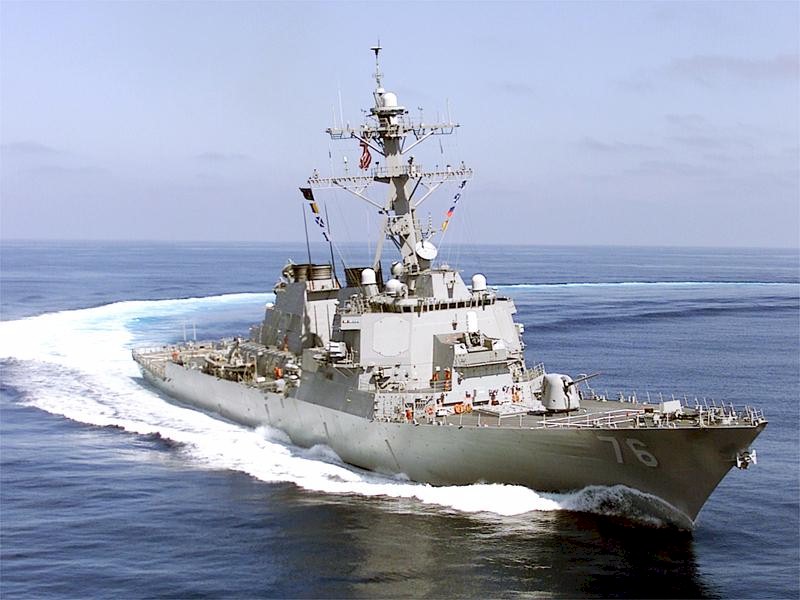
USS Higgins (DDG-76)
The USS Higgins (DDG-76) is a distinguished Arleigh Burke-class guided-missile destroyer of the United States Navy, renowned for its multi-mission capability and cutting-edge technology. Since its commissioning, the vessel has played a vital role in ensuring maritime security, demonstrating exceptional versatility in operations ranging from anti-air warfare to surface combat and strike missions. This article provides a comprehensive overview of the USS Higgins, exploring its history, design philosophy, and detailed technical specifications that underline its status as one of the Navy’s premier surface combatants.
Historical Background and Operational Role
Commissioned as part of the Navy’s continuous efforts to maintain technological superiority at sea, the USS Higgins has been a central asset in the United States’ forward-deployed forces. Named in honor of individuals who have made significant contributions to naval operations and heritage, the ship carries a legacy of valor and innovation. Over the years, the Higgins has participated in numerous multinational exercises, maritime security operations, and real-world deployments that underscore its readiness to respond to a variety of challenges on the high seas.
Designed with the future in mind, the USS Higgins serves as a cornerstone in the modern multi-domain operational concept. It supports a range of missions including:
- Air Defense: Leveraging advanced radar and missile systems to protect carrier strike groups and other high-value assets.
- Surface Warfare: Engaging enemy vessels and providing a deterrent presence in contested maritime regions.
- Strike Operations: Launching precision-guided munitions against strategic targets when necessary.
- Maritime Security and Anti-Terrorism: Contributing to regional stability by protecting shipping lanes and deterring illicit activities.
Design Philosophy and Construction
The USS Higgins embodies the design principles of the Arleigh Burke-class destroyers, which emphasize a balance between firepower, speed, and survivability. The ship’s design focuses on stealth, rapid maneuverability, and a robust combat system that integrates various sensor and weapons platforms seamlessly.
Key design aspects include:
- Stealth and Survivability: The hull design minimizes radar cross-section, enhancing survivability in hostile environments. Advanced materials and coatings further reduce the vessel’s detectability.
- Modular Combat Systems: Integration of the Aegis Combat System enables simultaneous tracking and engagement of multiple targets, allowing the Higgins to respond swiftly to evolving threats.
- Network-Centric Operations: Designed for seamless communication with allied forces and command centers, the ship’s architecture supports real-time data sharing and decision-making across platforms.
Technical Specifications
The USS Higgins (DDG-76) boasts a range of technical features that make it one of the most capable surface combatants in the world. Below are the detailed technical specifications that highlight its engineering excellence:
- Dimensions and Displacement:
- Length: Approximately 505 feet (154 meters) overall, offering extensive deck space for operations and equipment.
- Beam: Around 66 feet (20 meters), contributing to stability and internal volume.
- Draft: Roughly 31 feet (9.4 meters) when fully loaded, ensuring optimal performance across various sea states.
- Displacement: Approximately 9,200 tons when fully loaded, reflecting a robust design that can endure harsh operational conditions.
- Propulsion and Performance:
- Propulsion System: The Higgins is powered by four General Electric LM2500 gas turbines coupled with two shafts in a Combined Gas and Gas (COGAG) configuration. This setup allows for rapid acceleration and high-speed maneuvers.
- Speed: The destroyer can exceed speeds of 30 knots, making it agile and capable of quickly repositioning during combat or pursuit scenarios.
- Range: With its efficient propulsion system, the vessel is capable of transoceanic voyages and extended deployments without frequent refueling, ensuring operational persistence.
- Power Generation:
- Onboard generators supply electrical power to critical systems including sensors, weapons, and communications, ensuring reliable operation under all conditions.
Armament and Combat Systems
A central feature of the USS Higgins is its comprehensive suite of weapons and combat systems designed for multi-threat engagement:
- Missile Systems:
- Vertical Launch System (VLS): The ship is equipped with 90 VLS cells, capable of launching a variety of missiles including the Standard Missile (SM-2/SM-6) for air defense, Tomahawk Land Attack Missiles (TLAMs) for precision strikes, and potentially anti-submarine missiles.
- Anti-Air Warfare: The integration of the Aegis Combat System, paired with advanced radar, enables the Higgins to intercept and neutralize incoming aerial threats with high efficiency.
- Guns and Close-In Weapons:
- 5-inch (127 mm) Gun: A versatile naval gun that can engage surface targets, provide naval gunfire support, and contribute to self-defense.
- Close-In Weapon Systems (CIWS): These automated systems are designed to counter incoming missiles and aircraft at close range, ensuring an additional layer of defense.
- Torpedo Tubes:
- The destroyer is also outfitted with torpedo tubes to counter submarine threats, providing a well-rounded defensive capability in anti-submarine warfare scenarios.
- Integrated Combat System:
- The Aegis Combat System integrates data from various sensors, including radar and sonar arrays, and coordinates the ship’s response to threats. This system supports simultaneous tracking of hundreds of targets, facilitating quick and precise missile engagements.
Sensor and Communication Suite
The operational effectiveness of the USS Higgins is further enhanced by its state-of-the-art sensor and communications systems, which ensure exceptional situational awareness and connectivity:
- Radar Systems:
- The SPY-1D or SPY-1F radar, integral to the Aegis Combat System, offers long-range detection and tracking capabilities for air and surface threats.
- Sonar and Electronic Warfare:
- Advanced sonar systems provide comprehensive underwater surveillance, enabling the ship to detect and track submarines. Electronic warfare systems complement this by identifying and neutralizing potential electronic threats.
- Communications Infrastructure:
- Secure satellite links, high-frequency (HF) and ultra-high-frequency (UHF) radios, and digital data networks ensure uninterrupted command and control, allowing the Higgins to operate as part of a larger integrated force.
Crew and Habitability
A critical aspect of the USS Higgins’ operational capability is the quality of life and training provided to its crew. The destroyer is designed with extensive support facilities to maintain crew readiness during long deployments:
- Crew Complement:
- Typically, the vessel accommodates around 300 personnel, including officers, enlisted sailors, and technical specialists. This complement is trained to manage the complex systems aboard and execute diverse mission profiles.
- Living Quarters and Amenities:
- Modern berthing areas, dining facilities, and recreational spaces are provided to support crew well-being. This attention to habitability helps maintain morale and operational efficiency over extended periods at sea.
- Training and Simulation:
- Onboard training facilities and simulation systems allow crew members to practice emergency procedures, combat scenarios, and routine maintenance, ensuring they remain proficient and ready to respond to any situation.
Strategic Impact and Future Developments
The USS Higgins (DDG-76) exemplifies the U.S. Navy’s commitment to maintaining a technological edge and operational flexibility in an ever-changing global security environment. Its advanced systems and multi-mission capability allow it to adapt to new threats and operational challenges, making it a crucial element in joint and coalition maritime operations.
Looking ahead, ongoing modernization programs aim to further enhance the combat systems, sensors, and electronic warfare capabilities of the Higgins and its sister ships. These upgrades will ensure that the vessel remains at the forefront of naval warfare technology, capable of countering emerging threats and adapting to new mission requirements.
Conclusion
The USS Higgins (DDG-76) stands as a testament to modern naval engineering and strategic innovation. With its robust propulsion, advanced weapon systems, and integrated combat capabilities, the vessel represents a formidable force on the high seas. Serving as a critical asset for the U.S. Navy, the Higgins not only protects maritime interests but also projects power and stability across global maritime regions. As threats evolve and technological advancements continue, the USS Higgins remains a dynamic platform, embodying the principles of versatility, resilience, and operational excellence that define America’s maritime strategy.
